Original article: 30 años de ahogo: Colombia redefine el financiamiento de las universidades públicas y rompe con la trampa del IPC
Colombia Marks 30 Years of Financial Strain: New Law Transforms Public University Funding
In a momentous historical and political event, President Gustavo Petro signed into law on Tuesday, from the University of Cauca in Popayán, Law 2568 of 2026, a reform that alters Articles 86 and 87 of Law 30 of 1992, fundamentally changing the funding structure for public higher education institutions in Colombia. This legislation ends over three decades during which university funding growth was tethered to the Consumer Price Index (CPI), a mechanism the government labeled a «trap» that perpetuated the financial suffocation of the public university system.
The choice of location for the signing was deliberate. Cauca, a department marked by some of the deepest social gaps in the country, and the University of Cauca, the main public institution in a region scarred by years of armed conflict, forced displacement, and rural poverty, provided a poignant backdrop for what the progressive government considers a pivotal moment in Colombian education policy.
End of Three Decades of Financial Asphyxiation and Break from the CPI
The new law signifies a milestone against a model that has been in place for more than thirty years. Previously, the growth in funding for public universities was linked to the CPI, an indicator designed to measure household living costs rather than reflect the actual expenses in the education sector.
According to calculations from the Colombian government, this disconnection has created an accumulated gap of unmet needs: the operational costs of universities have grown by an average of 9% per year, while the CPI has historically been below this threshold, preventing institutions from adequately sustaining their academic training, research, infrastructure, and faculty maintenance functions, despite continual increases in student enrollment.
In his speech, President Petro starkly explained the perverse logic of the previous model: «We all know that for decades, the government’s movement to advance, develop, and deepen public education in Colombia has virtually stopped,» said the president, pointing out that the old funding scheme functioned as a systematic brake on university development.
The core of the reform lies precisely in the change of indicator. Law 2568 replaces the CPI with the Higher Education Cost Index (ICES), a measure calculated by the National Administrative Department of Statistics (DANE) that more accurately reflects the behavior of education sector expenditures: faculty salaries, infrastructure, research, and related services.
This new framework not only ensures a more realistic update of resources but also includes additional allocations aimed at expanding coverage, closing historic regional gaps, and advancing the formalization of university faculty employment.
Progressively, the law ties public higher education investment to the growth of the Gross Domestic Product (GDP), establishing a long-term goal equivalent to 1% of GDP, as noted by Radio Nacional de Colombia.
This objective represents a qualitative leap in the conception of education as a structural priority for the nation, comparable to the standards of OECD member countries.
An Unprecedented Legislative Process
The Congress of the Republic approved the initiative on December 15, 2025, with a vote that reflected broad consensus regarding the need to transform the model: 116 votes in favor and none against. With the presidential sanction given on Tuesday, the law takes effect for the 2027 budget cycle, the first corresponding to the next government, thereby ensuring an orderly transition to the new scheme.
The initiative fulfills the provisions in the National Development Plan 2022-2026 and is the result of an extended dialogue with students, faculty, rectors, and other stakeholders in the university system. The government emphasized that the reform also addresses the historical demands of the Colombian student movement, which has defended public education as a fundamental right for decades and denounced the systematic defunding of institutions.
Education Minister Daniel Rojas Medellín explained the technical details of the government’s fiscal proposal and indicated that the resources increased by the CPI plus 30 points were intended to create a budget base for ensuring that free education ceases to be a temporary policy and becomes a structural component of the system.
This formula, according to the minister, will allow the benefits of the free education policy, which currently covers 97% of students at public universities and technological institutions, to be sustained over time regardless of governmental changes.
State Transfers to Public Universities Double
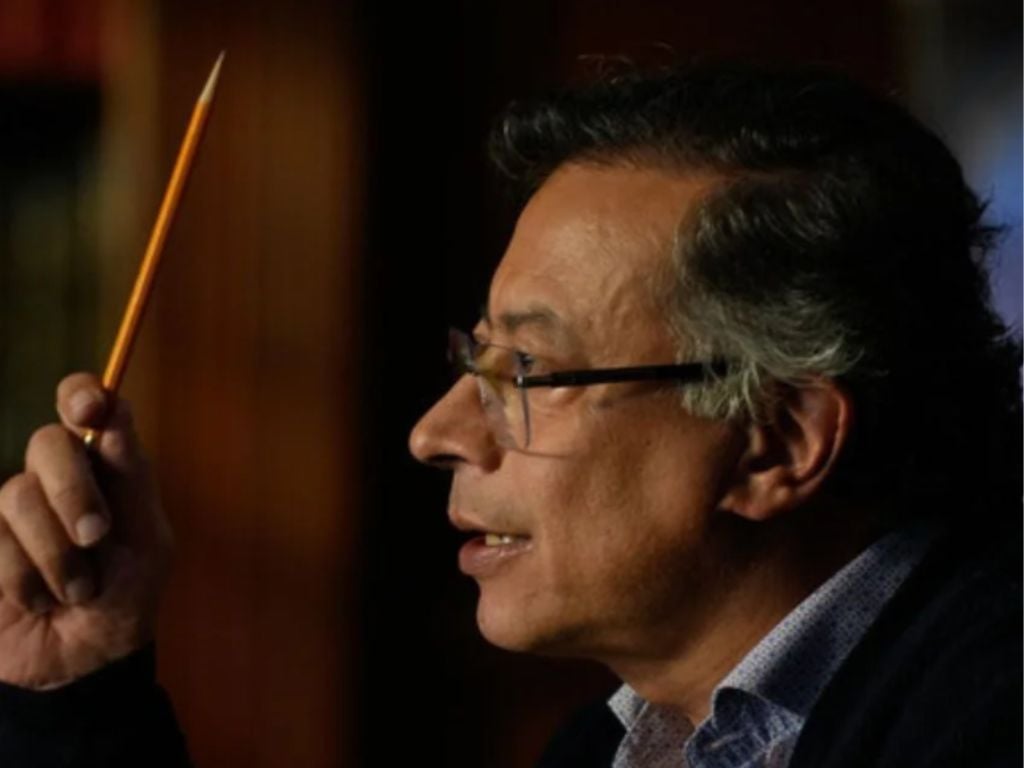
During his address, President Petro provided a detailed account of the advancements in funding during his administration. State transfers to public universities doubled, increasing from 5.5 billion Colombian pesos at the beginning of his term to nearly 12 billion in 2025. For 2026, the allocated budget exceeds 13.3 billion, representing a 104% increase in operational resources compared to 2022.
With the reform now in effect, the public university system will receive approximately one billion pesos more in 2027. This funding is intended to support the process of expanding coverage, improving academic quality, and closing regional gaps.
The results regarding access to higher education were also highlighted by the president. The coverage rate increased from 54.9% in 2022 to 60% in 2025, which corresponds to the creation of 347,710 new places in the system.
The challenge set by the president is ambitious: to raise it to 70% during the next administration, taking as a reference the OECD average of 75% and South Korea’s achievement of universal coverage at 100%.
Among the indicators that the government celebrated was the increase in the immediate transition rate, which refers to the percentage of young people entering higher education in the year following their high school graduation. This figure rose from 41.1% to 49.8% nationally. In rural areas, where access opportunities have historically been more limited, the progress was even more significant, increasing from 24.7% to 32.5%. In urban areas, the immediate transition rose from 46.2% to 53.7%.
The University as the «Cement of Peace»
Beyond the figures and technical indicators, President Petro asserted that education is the «cement of peace» and the most robust instrument for overcoming the structural violence that has marked Colombian history. He argued that ignorance has historically fueled political violence, and that public universities must integrate academic knowledge with indigenous and popular wisdom, rather than suppress them in the name of supposed cultural superiority.
The progressive leader also rejected views of cultural superiority on the international stage and defended the notion that Latin America should promote dialogue between civilizations rather than confrontation, a stance aimed at positioning Colombia as a proactive player in the global concert of nations.
Towards the end of his speech, President Petro surprised attendees with a direct and emphatic message aimed at Colombia’s financial sector, reminding that the resolution to the fiscal deficit cannot rest on the majority but must be grounded in the effective contribution of the more powerful sectors:
«Bankers are mistaken, and I notify them here: the fiscal deficit will only be extinguished—and I want it to be extinguished—when the most powerful pay their taxes according to the law,» he stated.
Pending Goals and New Challenges in Education
With Law 2568 now ratified, the Ministry of Education must complete several pending tasks in the remaining months of the government, including the opening of new university branches and surpassing the creation of 400,000 new places established since 2022 before the mandate concludes. The 2027 budget will need to incorporate the new funding scheme established by the law, ensuring the continuity of the model regardless of the outcomes of the upcoming presidential elections.
Among the recent achievements mentioned during the event in Popayán was the opening of university branches in Nazareth, La Guajira, and the establishment of a medical faculty in Riohacha, areas historically excluded from higher education opportunities. These new branches represent, in the government’s vision, the realization of the principle of closing regional gaps that inspired the reform.
With the enactment of Law 2568, Colombia now has, for the first time in its history, a university financing scheme linked to the actual costs of the sector and tied to the overall performance of the economy. This model surpasses the «trap of the CPI,» which for thirty years kept public universities in a state of chronic financial suffocation, hindering their development and deepening inequalities in access to higher education.
*Featured photo: Radio Nacional de Colombia.
Relacionados

End of Funding for CR2 Raises Concerns Over Chile's Ability to Combat Climate Change Challenges
Hace 2 meses
Public Universities Dominate Colombian Science: Ranking Confirms Their Superiority Over Private Institutions
Hace 3 meses
Improvements to Ricarte Soto Law: Funding Boost Approved for High-Cost Diagnostics and Treatments
Hace 1 mes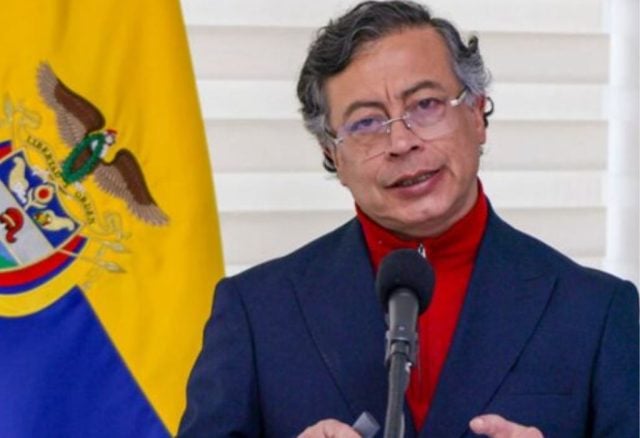
Gustavo Petro Advocates for Constituent Assembly, Assures It Won't Occur During Election Season or His Administration
Hace 2 meses
University Strike in Argentina: Unions Accuse Milei of Undermining Education Financing Law with "Poverty Budget"
Hace 3 meses