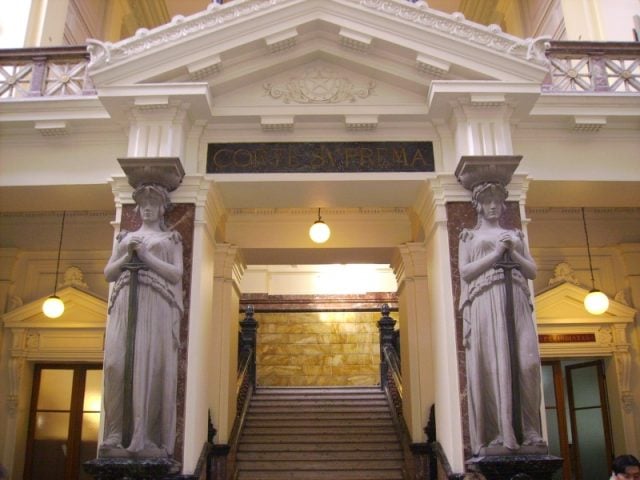
Original article: La corrupción en la Corte Suprema de Chile: Un sistema bajo tensión y la urgencia de reformas estructurales
By Leopoldo Lavín Mujica
Introduction: A Multifaceted Phenomenon
The situation of Chile’s Judiciary, particularly the Supreme Court, cannot be reduced to a simple dichotomy between institutional strength and isolated corruption cases.
It is a complex landscape where normative advances intersect with high-impact judicial cases revealing systemic practices, a deep crisis of social legitimacy, and structural conditions that facilitate capture by networks of influence.
This analysis incorporates the multiple dimensions of the phenomenon, focusing particularly on the most recent cases that have shaken the institution.
A Theoretical Framework for Understanding the Crisis: The Sociology of Criminal Elites
My first work on the subject was in November 2014 in an article on elciudadano.cl.
To transcend case-by-case analysis and comprehend the systemic depth of judicial corruption in Chile, the insights of French jurist and sociologist Pierre Lascoumes have proven illuminating.
From his perspective, the corruption of ruling elites is not an exceptional pathology but a sociologically normal phenomenon in power structures where ruling groups, operating with uncontrolled margins of action, have managed to co-opt and distort formal control mechanisms, replacing them with opaque corporate self-regulation.
This perspective is crucial to understanding that Chilean judicial scandals are symptomatic manifestations of a moral economy within judicial elites.
The «moral economy,» in Lascoumes’ terms, is the internal system of values, justifying norms, and codes of conduct that a power group develops to legitimize its privileges and actions, even when these actions transgress laws or common ethics.
It is an «economy» because there is a system of exchange (of favors, loyalties, silences) operating with its own «currencies» (influence, information, protection), and a «moral» because the group creates its own framework for what it deems acceptable or necessary for its survival and dominance.
This dynamic creates a «gray zone» where ethical transgressions become normalized, and where the citizenry may exhibit ambivalence, sometimes prioritizing electoral pragmatism or perceptions of efficacy over strict probity.
The cases we will analyze below are, therefore, not isolated exceptions in a healthy system, but expected manifestations of a system whose elites have constructed a bubble of impunity, resorting to justification strategies such as denial or trivialization when discovered.
1. The Regulatory Framework and Evidence from Judicial Cases
Chile has a relatively robust formal anti-corruption architecture, which includes a National Integrity Strategy, criminal liability laws for legal entities, and specialized bodies such as the Comptroller General.
This framework partly explains its prominent position in regional corruption perception indices. However, this structure coexists with a series of criminal investigations that have reached the highest levels of the judiciary.
The Judicialization of the Judicial Leadership has ceased to be a suspicion and has become a documented reality. The most emblematic cases include:
The «Hermosilla Case» or the «Audio» Scandal (2023-2024)
This revealed the existence of a network of influence operated by lawyer Luis Hermosilla for appointing judges, designating the National Prosecutor, and interfering in cases, exposing the operation of internal cliques.
Private conversations obtained from his cellphone uncovered a web of influence trafficking involving high judicial officials, politicians, and businessmen, functioning with total opacity and outside institutional channels.
The «Bielorussian Doll Case» (2024-2025)
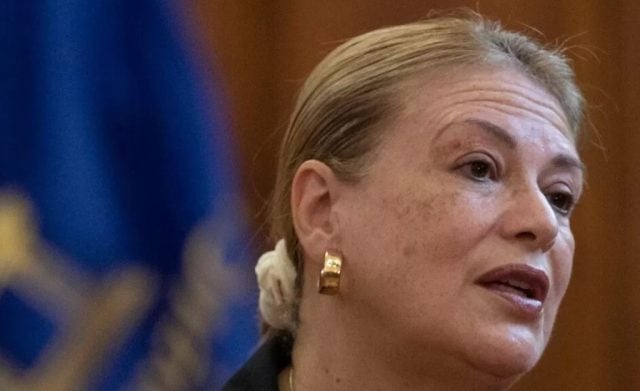
Former Supreme Court Minister Ángela Vivanco was formally charged by the Prosecutor’s Office for alleged bribery and money laundering, becoming the first Supreme Court minister in democratic history to face such a process.
Her case highlighted how networks of influence reached the highest level of the Judiciary and how the concentration of power at the top allowed practices that blurred the lines between public and private.
The Letelier Case (2025-2026)
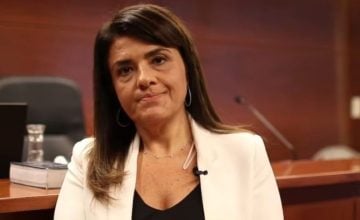
Former Supreme Court minister María Teresa Letelier, who left office in December 2025 upon reaching the maximum legal age, has been charged with influence peddling, dereliction of duty, and violation of secrets, all on a repeated basis.
The investigation, linked to the “Hermosilla Case,” connects her to political maneuvers for judicial promotions, including that of former minister Antonio Ulloa. A critical episode occurred when, after being requested by the Prosecutor’s Office for her cellphone, Letelier reported it stolen. However, the PDI found inconsistencies in her story, including that the phone chip was activated in her daughter’s cellphone, Minister Bárbara Quintana.
These events led to a raid on her home in January 2026. The alleged obstruction of justice in this case exemplifies the self-regulation and justification mechanisms that a minister at the peak believed were available.
The Antonio Ulloa Márquez Case (2024-2025)
The then-Minister of the Santiago Court of Appeals faced a constitutional accusation approved by the Senate in November 2025, resulting in his dismissal and disqualification from public office for five years due to “notable dereliction of duty”.
The charges, arising from the «Audio Case» investigation, included the leak of confidential court information to lawyer Luis Hermosilla and his intervention to influence the appointment of at least 11 judicial positions.
His case is emblematic of the crisis in internal control mechanisms: previously, in September 2025, the Full Court of the Supreme Court failed to achieve the majority needed for his removal (voting 7 to 7), a decision criticized as a «signal of impunity» that forced extraordinary political intervention by Congress.
The Manuel Guerra Fuenzalida Case (2024-2026)
Here, it is worth expanding on its current relevance and significance. Former regional prosecutor Manuel Guerra extends the corruption web beyond the judiciary to the Public Ministry.
Guerra, who was involved in high-profile cases such as Penta, Dominga, and Exalmar, faces an investigation for aggravated bribery, violation of secrets, and repeated dereliction of duty.
The investigation, led by regional prosecutor Mario Carrera, stemmed from chats extracted from Luis Hermosilla’s phone. These conversations revealed that while Guerra served as regional prosecutor, he maintained close communication with Hermosilla, providing him with confidential information about the cases he was investigating.
The messages reveal coordination in the Penta Case to close the case with alternative resolutions to avoid an oral trial against the owners of the Holding, Carlos Alberto Délano and Carlos Eugenio Lavín.
They also demonstrate how Guerra passed Hermosilla information regarding the case of former PDI director Héctor Espinosa, aiming to find a way to reduce the bribery charge to a lesser offense.
According to the prosecution’s accusation, Guerra “would have repeatedly requested from lawyer Luis Hermosilla personal and ‘extra positional’ benefits, taking advantage of his position as Regional Prosecutor.”
These benefits included: arranging private meetings with high-level Executive authorities and former president Sebastián Piñera; facilitating an eventual designation as a counselor for the State Defense Council (CDE); repeated requests for jobs, both in the private and academic sectors (which ultimately materialized at San Sebastián University and municipalities in the eastern sector); and arrangements in favor of third parties.
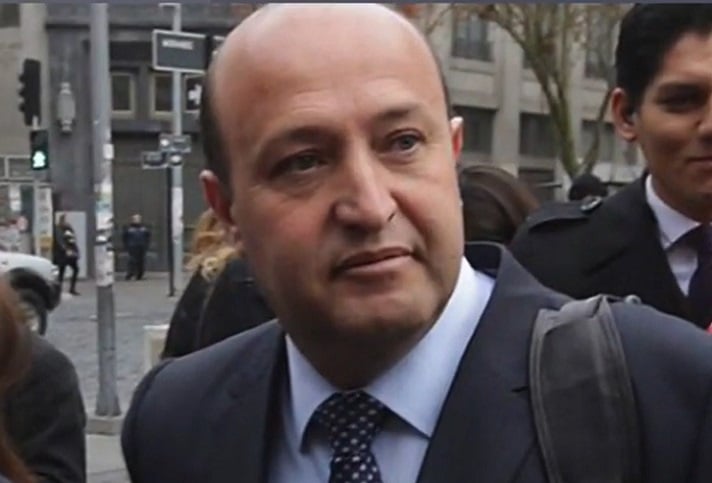
Former prosecutor Jorge Abbott testified that he was “manipulated” by Guerra, who had sent him an email requesting the reallocation of illegal political financing cases to justify procedural decisions, which are now revealed to be part of an underlying agreement with the accused.
Abbott stated: “I now reach the conviction that Manuel Guerra’s action was manipulation. At that moment I thought I was just paying the costs of an honest decision by a regional prosecutor, but now I know that was not the case, and the email he sent me was to justify not having a prior commitment to close the case.”
The Supreme Court confirmed the complaint against him in February 2026, removing his immunity and allowing for his formal indictment. This took place on March 9, 2026, at the 4th Guarantee Court of Santiago.
During the hearing, regional prosecutor Mario Carrera detailed the severity of the alleged conduct, revealing that Guerra shared confidential information on high-sensitivity public investigations, including the Hurricane Operation setup, corruption cases in Vitacura, investigations linked to the social uprising, and inquiries against senators Iván Moreira and Manuel José Ossandón, among others.
According to the prosecution, Guerra would have conducted these investigations “deviating from technical and legal criteria” to ensure favorable outcomes for the accused.
In the Penta case, for example, he is accused of facilitating the application of abbreviated procedures with substantially lighter penalties, “seriously affecting the public interest and the criminal prosecution.”
In exchange, he allegedly requested personal benefits from Hermosilla, such as his appointment to the State Defense Council (CDE), incorporation into the Hermosilla and Chadwick law firm, and support for his academic and municipal career.
After leaving the Public Ministry, Guerra joined San Sebastián University, the Association of Municipalities for Security in the Eastern Zone (AMSZO), and the Municipality of Providencia, fulfilling the benefits arranged through the network.
In the same hearing, a significant procedural situation occurred: while the Public Ministry requested total house arrest as precautionary measures, the State Defense Council (CDE) and other complainants requested preventive imprisonment for the former prosecutor, reflecting the differing assessments of the case’s severity and the risk of flight or obstruction of justice.
2. Structural Conditions Facilitating Malpractices
Corruption cases flourish in an environment nurtured by specific institutional characteristics of the Chilean judicial system.
From Lascoumes’ theoretical framework, these conditions are not mere administrative deficiencies but mechanisms allowing the judicial elite to maintain their moral economy and dysfunctional self-regulation:
Hyperconcentration of Power: The Supreme Court accumulates jurisdictional, internal governance, administrative, and disciplinary functions without effective checks and balances. This concentration creates broad spaces of discretion where influence networks can thrive, allowing the ruling group to control the admission, promotion, and punishment of its members, establishing a system of exceptions in their favor.
Opaque Appointment System: The co-optation mechanism, where sitting judges select new members, fosters the creation of cliques based on personal or political loyalties, to the detriment of meritocracy and transparency. This system ensures the reproduction of the group’s moral economy, incorporating only those who share its codes and loyalties.
Extreme Procedural Overload: The doubling of the workload in the Supreme Court in recent years limits oversight capacity and can be used as a justification for opacity and lack of effective controls.
Culture of «Complicit Silence»: Loyalty to the group and the preservation of its reputation become the supreme value, above truth or abstract justice. Silence is not passivity but an active demand of the moral economy: to remain silent to avoid harming the group. Those who break this code face professional ostracism, as evidenced by the lack of internal complaints despite the magnitude of the revealed cases.
Self-Regulation as a Protection Mechanism: The ability of the judicial elite to investigate and sanction their own members, without effective external controls, has led to a corporate protection rather than real accountability. The Ulloa case, where the Supreme Court failed to remove him (voting 7 to 7), is the clearest example of this dysfunctionality: internal control mechanisms were co-opted and distorted, turning into tools for the protection of the group.
3. The Crisis of Legitimacy: A Structural Distrust
Lascoumes’ theory helps explain why a crisis of this nature inevitably leads to a deep crisis of legitimacy.
The moral economy of the judicial elite, with its internal codes and justifications, clashes fundamentally with the moral economy of the citizenry, which expects impartiality and adherence to common law.
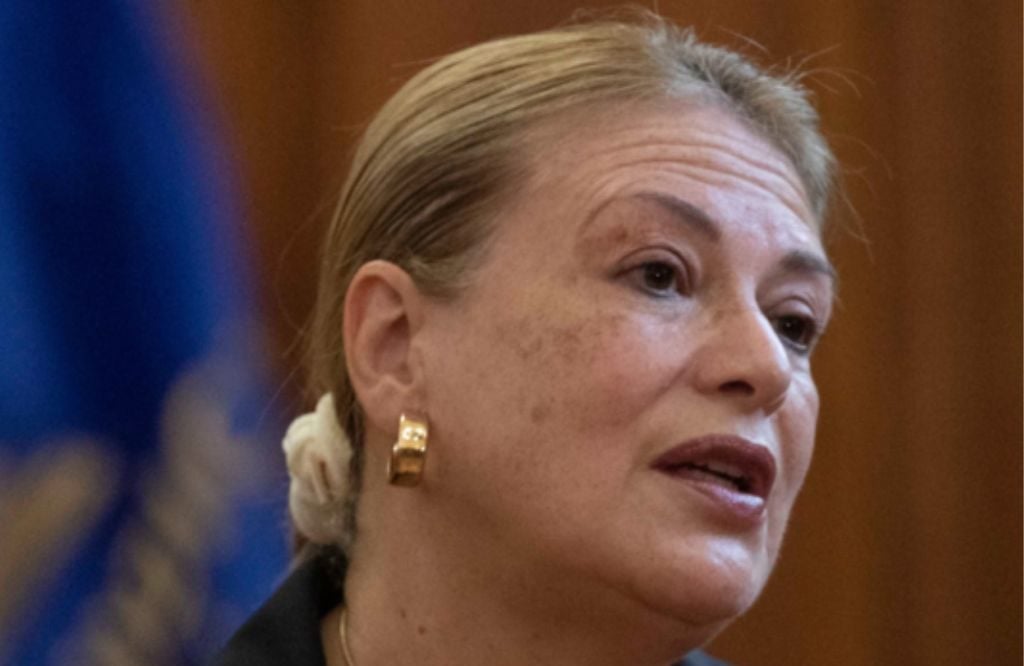
Surveys reflect a massive citizen distrust: 78% of Chileans believe that judicial decisions are influenced by powerful individuals and money, and 66% think political parties exert pressure on the courts. Only 14% express trust in the courts, and 57% identify corruption as the main problem of the Judiciary.
This crisis feeds off the perception of unequal justice, where those with resources and connections operate under different rules.
The collusion between judicial operators and political figures, evidenced in the cases of Hermosilla, Letelier, Vivanco, Ulloa, and Guerra, validates this perception and erodes the social base of the Rule of Law.
Decisions such as that of the Supreme Court Full Court, which did not remove Ulloa, or the revelation that Guerra coordinated favorable procedural outcomes while receiving job benefits, are publicly interpreted as acts of selective impunity that deepen distrust.
Society no longer perceives the Judiciary as a neutral power but as another interest group, captured by its own corporate logics and external networks of political (Hermosilla, Chadwick) and economic influence.
Ulloa’s dismissal by the Senate, while partially restoring confidence in the system of checks, also highlighted the failure of the natural disciplinary body. Guerra’s case, in turn, extends this crisis to the Public Ministry, demonstrating that corruption networks are not limited to judges but also affect prosecutors in charge of the most sensitive criminal investigations.
That a prosecutor of such high rank could manipulate emblematic cases like Penta or interfere in investigations of the social uprising reveals a systemic capture that compromises the credibility of the entire criminal justice system.
4. Responses and Reforms: Dismantling Conditions of Dysfunctional Self-Regulation
From Lascoumes’ theoretical framework, the reforms necessary transcend mere sanctioning of individuals or drafting new ethical codes. It’s about dismantling structurally the conditions that allow for dysfunctional self-regulation and creating gray zones.
The analyzed cases—Hermosilla, Vivanco, Letelier, Ulloa, and Guerra—have starkly exposed the failures of internal control and the need for the political system to act as the ultimate guarantor, an exceptional situation that cannot institutionalize as a rule:
Fragmenting Concentrated Power: The establishment of an External Justice Council for governance and appointments is not just an administrative improvement. It’s an institutional reengineering aimed at breaking the judicial elite’s monopoly over its system, introducing transparency and cross-controls.
Transparency in Appointments: It is urgent to reform the co-optation system, replacing it with merit-based mechanisms, with public criteria and participation from accredited external actors, following models like the Judiciary Councils in Spain or Portugal.
External Investigation and Control Mechanisms: The investigation of serious offenses or misconduct by judges and prosecutors cannot remain in the hands of the judicial hierarchy itself. The experiences of the Ulloa case (where Congress had to intervene due to the Supreme Court’s paralysis) and Guerra (whose investigation only progressed due to chat leaks and the appointment of an external prosecutor, and where there’s now even disagreement among prosecutors about precautionary measures) underscore the need to create independent units, similar to Ontario’s Judicial Complaints Commission (Canada).
Effective Whistleblower Protection: Legislating a Judicial Whistleblower Statute that ensures safe and external channels, anonymity, and protection against workplace retaliation is critical, inspired by the EU Whistleblower Directive.
Proactive Transparency: Legally compel the publication of administrative records, asset declarations of ministers, and assignment criteria for sensitive cases, as is done by the Judiciary of Costa Rica. This means taking procedures out of the opacity of the gray zone and subjecting them to public scrutiny, where justification routines lose effectiveness.
The success of these measures critically hinges on one factor: sustained political will and informed social pressure.
Reforms seeking to open historically closed institutions face natural resistance. Their advancement requires a broad political coalition and a citizenry that, through a free press and active civil society, demands concrete changes.
Conclusion: Sociological Normality and Opportunity for Change
In summary, Pierre Lascoumes’ sociology of criminal elites offers a powerful lens to reinterpret the Chilean judicial crisis. What seems, at first glance, a contradiction (formally solid institutions with serious corruption cases) from this theory is the expected manifestation of a system where an elite has operated with opacity, uncontrolled margins of action, and a self-regulation co-opted for corporate ends.
The cases of the Hermosilla network, former minister Vivanco, former minister Letelier, former judge Ulloa, and former prosecutor Guerra are not anomalies in a healthy system. They are severe symptoms of structural dysfunctions that require deep intervention. They all share a common pattern: the use of institutional position for personal gain (promotions, positions, jobs, influence) through informal networks operating outside legal channels.
The Ulloa case starkly exposed internal control failures and the need for the political system to act as the last guarantor. The Guerra case, in turn, reveals that the problem is not limited to judges but also extends to prosecutors, expanding the gray zone towards the Public Ministry and undermining the credibility of the most sensitive criminal investigations for democracy.
The March 9, 2026 hearing, with differentiated precautionary measure requests, shows that even among prosecutors there are varying assessments of how to address these elite crimes, reflecting the complexity of judging behaviors that operated in absolute opacity for years.
The path of reform, therefore, does not solely involve punishing transgressors, but rather radically redesigning the institutional rules of the game to dissipate gray zones, weaken opaque self-regulation, and restore trust through real and effective accountability to society.
The Senate’s dismissal of Ulloa and the formal charging of Guerra set precedents for external intervention; the task now is to institutionalize those checks so that democracy does not depend on exceptional acts, but on the ordinary, transparent, and legitimate functioning of its judicial institutions.
The challenge is monumental, but the cost of inaction for Chilean democracy would be even greater.
Leopoldo Lavín Mujica
Relacionados
Angela Vivanco Bets Everything on the Supreme Court: Appeals to Overturn Corruption Charges
Hace 3 meses
Ángela Vivanco: Unraveling the Influence Network and Controversial Rulings Favoring SQM and the Ponce Pinochet Family
Hace 3 meses
Security Minister Cordero Comments on Vivanco's Arrest: "A Very Severe Institutional Blow"
Hace 1 mes