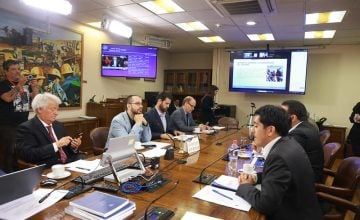
Original article: Legado de Clotario Blest en los 73 años de la CUT: La defensa de los derechos de los trabajadores más presente que nunca
CUT Celebrates 73 Years with Call for Social Unity and Union Autonomy Against Right-Wing Offensives
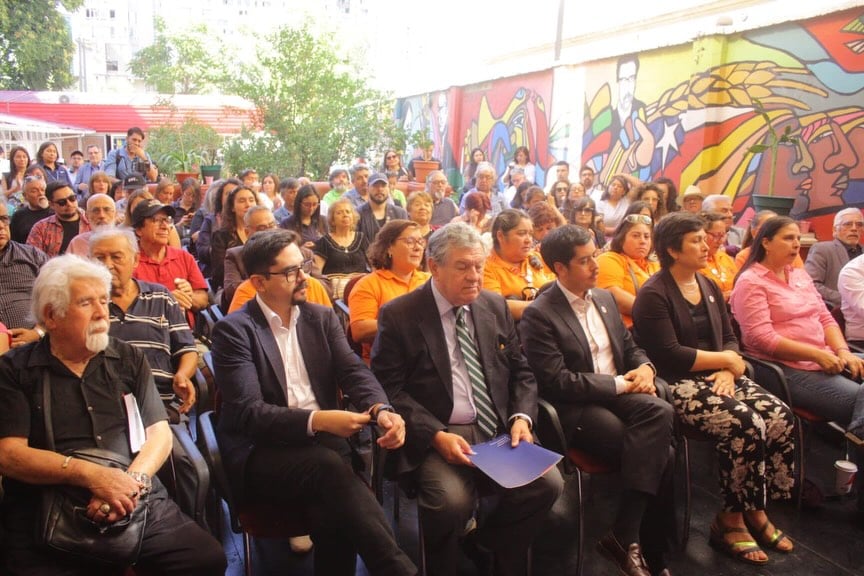
On Thursday, February 12, at its headquarters in Santiago, the Central Unitaria de Trabajadores de Chile (CUT) celebrated its 73rd anniversary, commemorating its foundation in 1953 as a milestone in labor movement unity, spearheaded by Clotario Blest.
The event, which attracted a significant turnout of leaders and social organizations, as highlighted by ElSiglo.CL, featured remarks from the secretary general of the multisectoral organization, Eric Campos, who provided a thorough historical and political analysis of the current moment in Chile. During the proceedings, a gesture of historical memory was presented by the Communist Party, whose president, Lautaro Carmona, emphasized CUT as the “historical continuity of the central founded by Clotario Blest and notable union leaders,” highlighting its role as a “tool for the fight and dignity of the working world.”
As reported by ElSiglo.CL, Eric Campos highlighted the significance of the commemoration, noting that the establishment of CUT during a four-day congress at the Coliseum Theater was “a turning point and a synthesis for the working class.” In his reflection, he addressed the “short century” of the working class in Chile, marked by struggles that secured fundamental rights, such as the Silla Law, alongside tragedies like the Santa María School of Iquique. He emphasized that the unity achieved in 1953 was possible because “even the hegemonic parties ceded leadership to Clotario Blest because he was a builder of unity.” Furthermore, he stressed that CUT was not weakened by internal disputes but by the civic-military dictatorship, which, through José Piñera’s Labor Plan, fragmented unionism by imposing negotiations at the company level. “The problem is not how many unions exist; it’s the thousands of unions that do not belong to any. The challenge is to build social unity because our role is not just union-related, it’s socio-political,” he asserted.
In light of the current political landscape, Campos cautioned that “the right repeats a familiar script where the business sector seeks to exercise power directly.” He proposed two central pillars for the Central: social unity and union autonomy. “Unity among parties alone is not enough; we need unity with the people. And the CUT will engage with governments from a standpoint of autonomy,” he stated.
Finally, according to ElSiglo.CL, he expressed international solidarity with the peoples of Gaza and Cuba, who are facing “suffocating dynamics,” and acknowledged advancements in individual rights, such as the reduction of work hours. However, he insisted that the fight for sectoral negotiation is a struggle that must also take place on the streets, stating, “the government has made progress on individual rights, but we are not satisfied with the delay in the sectoral negotiation project.”
Clotario Blest: The Legacy of the «Rebel Christian» Guiding Today’s Labor Struggle?
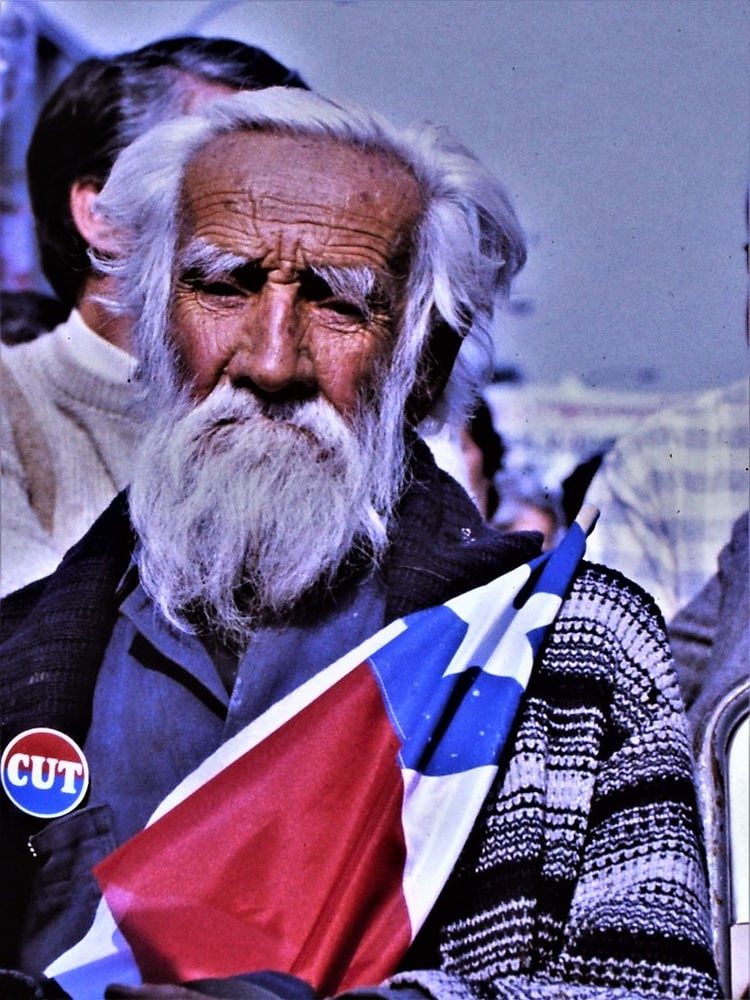
The commemoration of CUT’s 73rd anniversary inevitably brings a reconnection with the figure of its founder and first president, Clotario Blest Riffo. Born in Santiago in 1899 and educated at the Pontifical Seminary, Blest was deeply influenced by the Jesuit priest Fernando Vives, who instilled in him the necessity for an active role of Catholics in social struggles. Working as a public official in the General Treasury of the Republic, he became aware of his colleagues’ hardships and dedicated his life to labor organizing, despite laws prohibiting the unionization of civil servants. His tireless work led him to establish the National Association of Public Employees (ANEF) in 1943 and ultimately to realize his dream of uniting all wage earners with the creation of the Central Única de Trabajadores (CUT) in 1953, leading until 1961.
Human rights advocates highlight that Blest’s significance lies in his utilization of all peaceful means available—collective negotiations, general strikes in 1954, 1955, and 1956, and opinion columns—to bring visibility to and channel workers’ demands amid a hostile political context. However, his legacy transcends mere union matters. During Augusto Pinochet’s dictatorship, Blest became a staunch opponent of human rights violations. He re-established the Human Rights Defense Committee, offered shelter to victims in his home, and assisted in founding the Association of Families of Detained Disappeared Persons, which operated for years from his own house. For this humanitarian work, he was nominated for the Nobel Peace Prize in 1980. As noted by Memoria Chilena, in his later years, his figure—with his long white beard, blue coverall, and Franciscan cord—became an icon of integrity and struggle, passing away in Santiago on May 31, 1990.
Relacionados
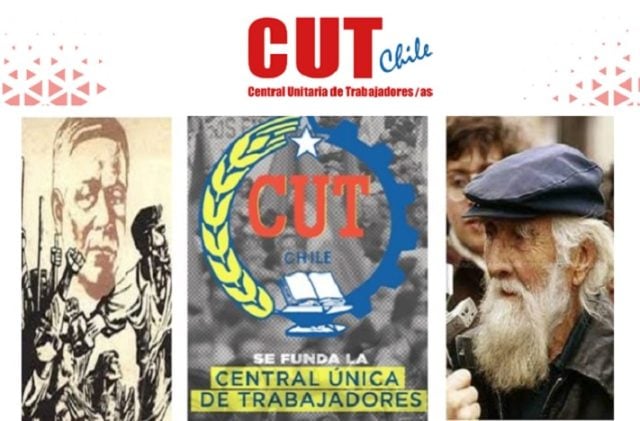
Legado de Clotario Blest en los 73 años de la CUT: La defensa de los derechos de los trabajadores más presente que nunca
Hace 2 minutos
Government and Public Sector Union Conclude 3.4% Salary Adjustment and 5% Raise for Low-Income Workers
Hace 2 meses
Diputados escucharon a representantes de la CUT y la CPC por proyecto de negociación colectiva multinivel
Hace 4 semanas