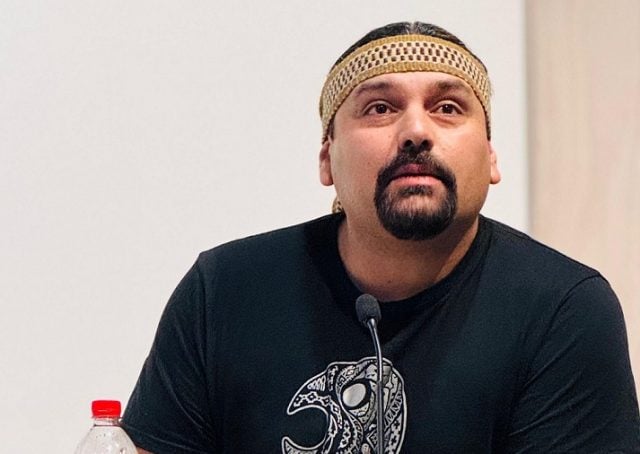
Original article: Danko Mariman: “Hay dirigentes que denominan este fenómeno como una Segunda Pacificación de la Araucanía”
Interview with Danko Mariman: «The Main Setback Is Due to Urban Expansion and Neoliberal Real Estate Pressure»
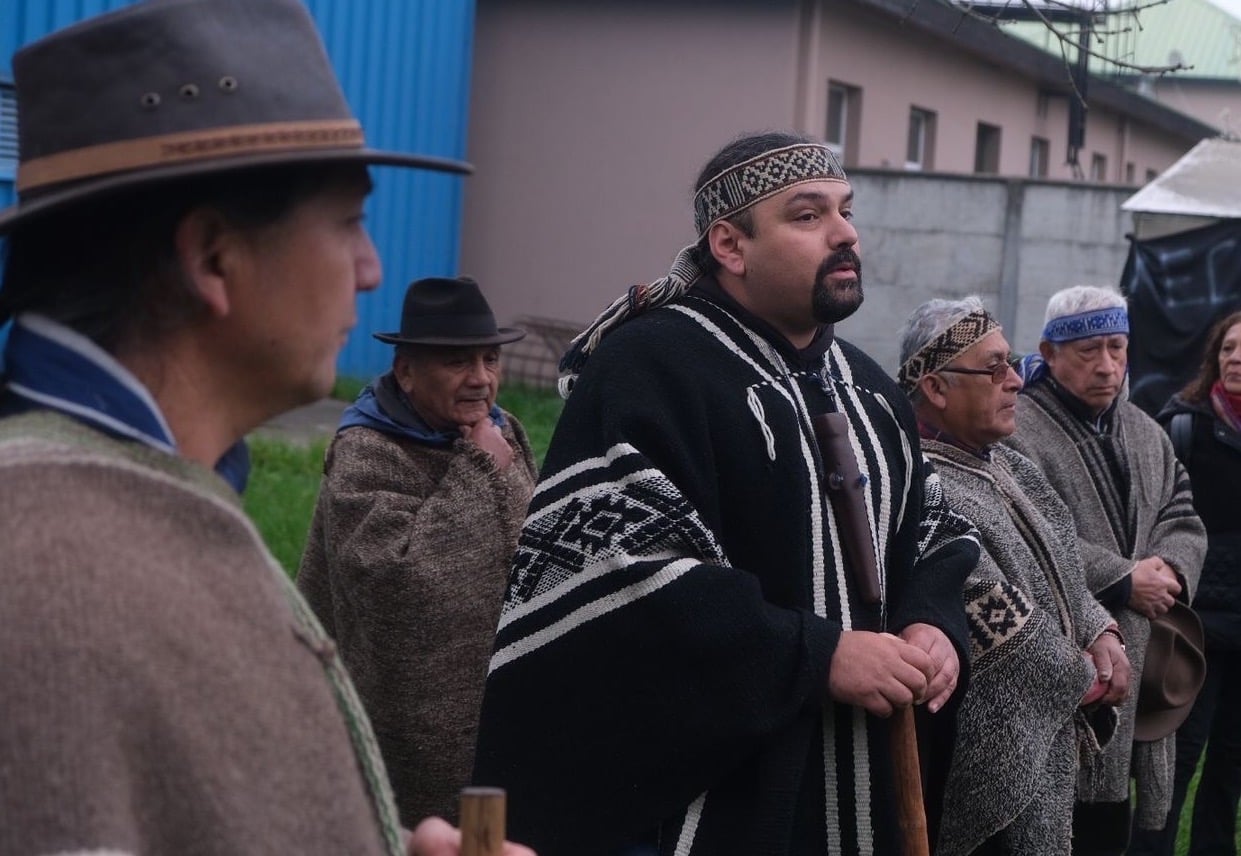
Danko Mariman, a 41-year-old Mapuche anthropologist, PhD candidate in Intercultural Studies, and candidate for the Indigenous Council of CONADI, outlined his 20-year journey in the political and territorial defense of his people. Hailing from Fütronwe/Botrolhue-Trañi Trañi, Mariman has actively participated in organizations such as the Kolectivo We Newen, Wallmapuwen, and currently the Txawün of Mapuche Communities of Temuko, with a goal of occupying institutional spaces to enhance collective rights advocacy.
The leader identified urban and real estate expansion as the primary current threat to Mapuche lands, referring to it as the «Second Pacification of Araucanía.» He noted that in Temuco alone, over 2,000 hectares of land under merced titles have been lost, with 29% of the non-Indigenous population living on them. He criticized various actors, including the State, through ministries and municipalities, for enabling this dispossession by violating Indigenous Law.
Mariman also addressed specific issues such as the illegal taxation of urban Indigenous land—an issue that can be reversed—and the historic debt represented by the «right of absence.» He stressed the need to ensure that the defense of territory does not cost the lives of peñi and lamgen, highlighting the necessity of a State that upholds Indigenous rights against capitalist interests.
To delve deeper into his analysis and proposals, visit the full interview.
Interview with Danko Mariman
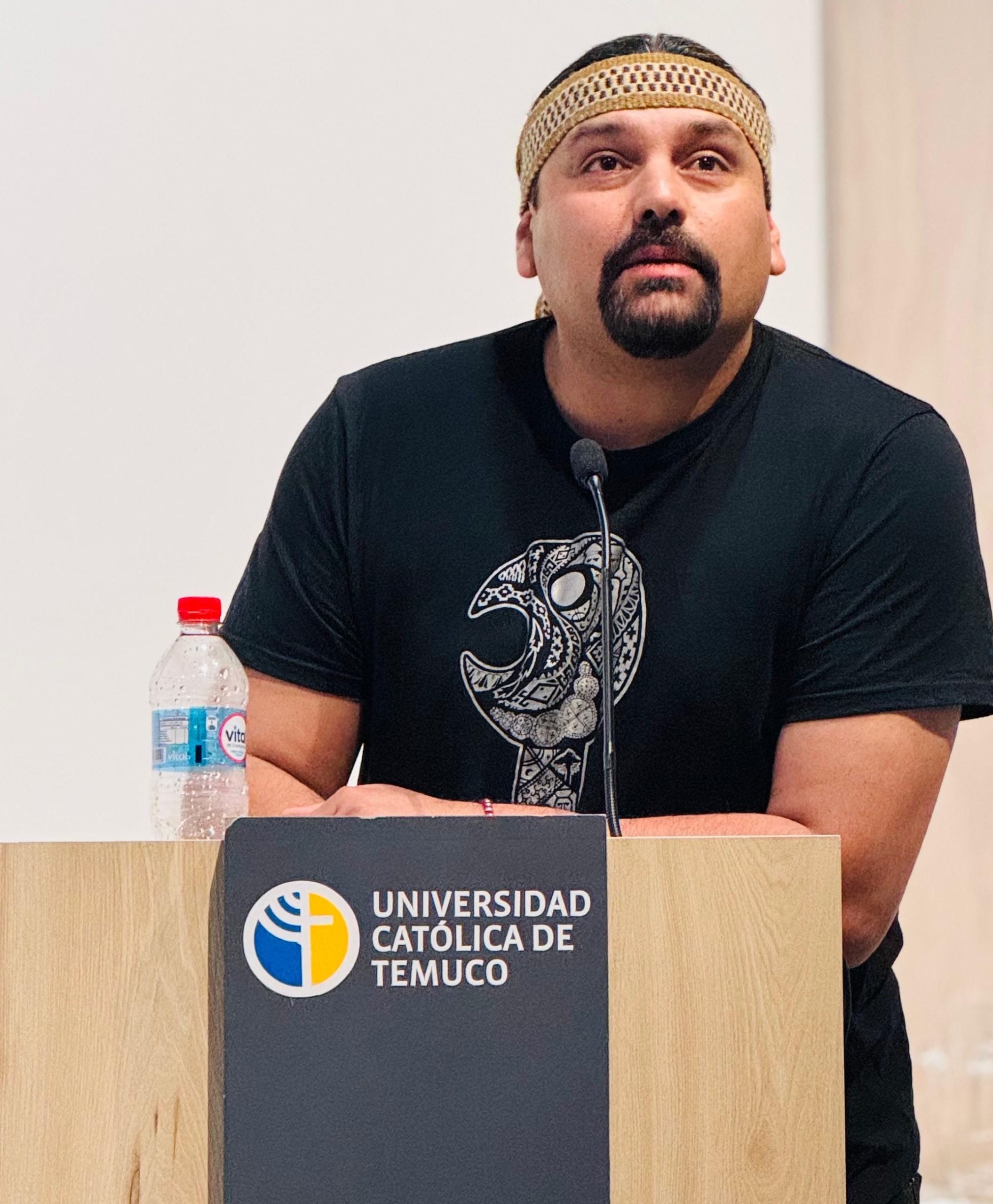
Who is Danko Mariman?
A: My name is Danko Mariman Gallegos, I am from Temuko, spelled with a «k» as it is written in Mapuzugun. I was born in the regional hospital 41 years ago and currently reside in Fütronwe/Botrolhue-Trañi Trañi, close to Labranza, which is where my paternal grandparents, Glovis Mariman and Margarita Quemenao, are from. I am a member of the We Folil Mariman community, which stems from three merced titles: Antonio Mariman, José Mariman, and Carmen Ñancucheo. I have two wonderful children, Mañkel and Koyam, who study at the intercultural school in Trañi Trañi. My family participates in the gillatun of Trañi Trañi as well as in Maiten, the birthplace of my mother, Isabel Cañet. These are important spaces for us where our children also grow as lofche. I enjoy engaging in multiple activities; I find it hard to sit still. At home, we raise sheep, alpacas, birds, and fish, keep bees, manage a greenhouse, and cultivate as much as we can. Both my partner and I are professionals working in our respective fields. I am an anthropologist, having studied at the University of Massachusetts in Boston, where I lived for two periods. I completed my Master’s in Applied Social Sciences at Universidad de la Frontera, and currently, I am a PhD candidate in Intercultural Studies at Universidad Católica de Temuko.
What are your main interests and motivations for becoming an Indigenous Councilor at Conadi?
A: Two decades ago, I began to take an interest in what was happening to the Mapuche people within the hierarchical relationship we have with the Chilean State and our global situation as a people. Since then, I have organized and sought spaces to develop my interests and contribute to our community’s struggle. I was part of the Kolectivo We Newen, a group of young Mapuche who expressed their ideas through art and community management. Later, I participated in Wallmapuwen until it was legalized as a regional party in 2016, where we raised the idea of a political force for the Mapuche to occupy representative spaces in our territories. After these experiences shared with various Mapuche people from different areas, I began to question my political-social work and realized the need to contribute in my own territory. Thus, in 2013, I became a member of my community and by 2015, I was serving as its president, where we began advocating for land demands in collaboration with neighboring communities. I started to blend my concern for territorial defense and our rights with my professional work as an anthropologist; I realized we needed to produce land reports but lacked resources to finance them, which limited our ability to address this pressing need. Consequently, a few years later, in 2018, I responded to a call from young people in the territory to organize against the proposed modifications to Articles 12 and 13 of the Indigenous Law, which the Piñera government was promoting. This led to the formation of the Txawün of Mapuche Communities of Temuko, allowing us to grow as community leaders and organizations and become principal representatives of the Mapuche in Temuko, where we have been able to raise our banners regarding the defense of territory and the exercise of our collective rights. Along this journey, we have engaged with State institutions and have spoken with each one of them, which has made it clear to us that we need more and better tools, keys that can open doors that, as leaders, we have not yet been able to access. The Indigenous Council of Conadi is key to advancing our processes.
What is your perspective on regulatory plans, Mapuche communities, and real estate expansion?
A: Until recently, this issue was superficially addressed, but as Txawün of Temuko, we have shown that the main setback currently faced by Mapuche lands under merced titles is due to urban expansion and neoliberal real estate pressures, which have «consumed» over 2,000 hectares of Mapuche land just in the Temuko commune. We know that this phenomenon is systematically occurring throughout the territory. Existing data indicates that in Temuko, 29% of non-Indigenous individuals reside on merced title lands, translating to almost 90,000 people. This figure rises to 35% of the population in Araucanía, encompassing 420,000 people across the Biobío and Los Lagos regions, expressed in various forms such as informal subdivisions, parcels, industrial zones, municipal encampments, and more. Some leaders have referred to this phenomenon as a «Second Pacification of Araucanía,» referring to ongoing dispossession—a micro-politics that reflects subordinated ethnicity and the colonial system designed in our territory. In this situation, real estate developers are heavily involved; we witness daily how they apply pressure to decision-makers through the media. The Chilean Chamber of Construction (CCHC) complains about unfavorable conditions for their industry in the region, stating that Mapuche activism affects them along with the Indigenous Law. However, hard evidence from the «Construction Barometer» (published by UFRO) contradicts this, showing it is currently one of the top three industries in Chile, the second-largest in Araucanía, with industrial growth of 30% in Temuko, Pucón, and Angol by 2025. Their main issue is with the Indigenous Law 19.253, which they argue disrupts their intentions to limit minimal protections for Indigenous lands. This involves multiple actors, both private and governmental, which is alarming. If the State undermines its legal framework, then there is little that can be done; we are helpless. I say this because the Ministry of Housing purchases land under merced titles for social housing, municipalities issue permits through DOM, Public Assets regularize it, and CONADI turns a blind eye during inspections. This must end; not only should there be oversight, but regulatory plans should also be established that embrace an intercultural perspective and are aligned with rights, among other mechanisms that can safeguard the remaining Mapuche territory and promote healthy coexistence within the framework of rule of law.
Is there a tax on Indigenous land?
A: Unfortunately, yes, this situation violates Indigenous Law once again. This occurs when Indigenous lands are incorporated into urban zones of a commune’s regulatory plan, transitioning from agricultural to residential land, leading to tax charges. Many people are unaware that this can be reversed through a process at CONADI, where the land can be re-registered as Indigenous. CONADI then issues a certificate which is taken to the Internal Revenue Service (SII), prompting the Tax Office to revert the situation. Senator Huenchumilla made significant efforts with the national director of the SII and the National Controller, resulting in Office No. 1908 from the Controller’s Office, which states that Indigenous land retains its status and protection under Law 19.253, regardless of whether it is in an urban or rural area of a commune. The rest are interpretations that reflect economic interests and, in some cases, racism.
What is your opinion on cases of missing Mapuche individuals?
A: Indeed, there are still families who have not found their missing loved ones, individuals who cannot find peace, and this must be addressed. The State should play a stronger role in this matter. Furthermore, it must ensure that this situation does not happen again with peñi and lamgen who defend their territories, nature, and the spaces that allow for our development as a people. In this regard, the case of Julia Chuñil’s disappearance is serious, with the State taking a passive role, even obstructing processes as families and lawyers have pointed out. In a rule of law, the rights of individuals, including Indigenous people, must also be upheld. We must advocate for this because the reality demonstrates that, despite the existing legal framework concerning Indigenous issues, capitalist interests penetrate our territories with various practices to achieve their goals, which is the history of the current Indigenous law—a law subordinated to sectoral interests since the return to democracy.
Danko Mariman’s Social Media:
Instagram: www.instagram.com/danko_mariman
