Original article: Desmontando la ilusión imperial: Una respuesta al nuevo intento de Elliott Abrams de justificar un cambio de régimen en Venezuela
By Michelle Ellner
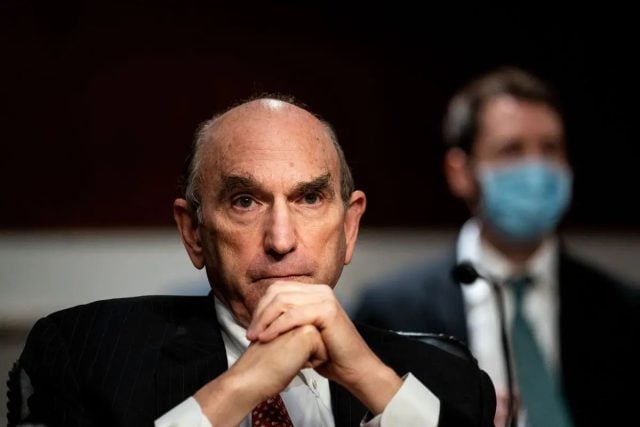
Elliott Abrams (pictured) has re-emerged with the same old instructions on how to «fix» Venezuela, a country he neither understands nor respects, yet feels entitled to redesign as if it were a piece of furniture in Washington’s living room.
His new proposal is steeped in the same Cold War delusion and colonial mentality that characterized his work in the 1980s, when U.S. foreign policy turned Central America into a graveyard.
My childhood in Venezuela was shaped by stories from our region that the world rarely sees: tales of displacement, death squads, villages erased from maps, and governments overthrown for daring to act outside Washington’s orbit. I know exactly who Elliott Abrams is, not from think tank biographies, but from the pain etched in the Central American landscape.
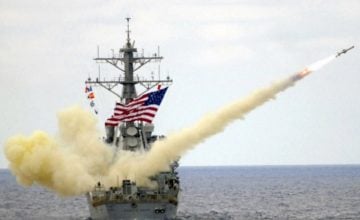
Abrams writes with the confidence of someone who has never lived in the countries his policies destabilized. His latest argument rests on the most dangerous assumption of all: that the United States has the authority, as if its power alone is reason enough, to decide who governs Venezuela. This is the original sin of U.S. policy in the continent, justifying everything else: sanctions, blockades, covert operations, and warships in the Caribbean. The assumption that the continent remains an extension of U.S. strategic space, rather than a region with its own political will.
In this narrative, Venezuela becomes a “narco-state,” a convenient villain. However, anyone who takes the time to study the architecture of global drug trade knows that the largest illegal market in the world is in the United States, not Venezuela. Money laundering occurs in New York and London, not in Caracas. The weapons that fuel drug trafficking corridors, used to threaten, extort, and kill, overwhelmingly come from American manufacturers. And the very history of the «war on drugs,» from its intelligence partnerships to its paramilitary arms, was written in Washington, not in the neighborhoods of Venezuela.
Even U.S. government data contradicts Abrams’ narrative. Reports from the DEA and UNODC have long shown that the vast majority of cocaine destined for U.S. consumers originates in Colombia and travels by the Pacific, not through Venezuela. Washington knows this. But the fiction of a «Venezuelan narco-route» is politically convenient: it turns a geopolitical disagreement into a criminal case and prepares the public for escalation.
What’s striking is that Abrams never looks to the actual frontline of the drug trade: U.S. cities, U.S. banks, U.S. arms fairs, and U.S. demand. The crisis he describes originates in his own country but seeks a solution through foreign intervention.
For decades, the U.S. has armed, funded, and politically shielded its own ‘narco-allies’ when it suited larger strategic ends. The Contras in Nicaragua, paramilitary blocs in Colombia, death squads in Honduras. All were tools of foreign policy, many operating with the direct diplomatic support of Abrams.
I grew up hearing stories of what that machinery did to our neighbors. It’s unnecessary to visit Central America to understand its scars; you just need to listen. In Guatemala, Maya communities still mourn a genocide that U.S. officials refused to acknowledge, even as entire villages were wiped out and survivors fled to the mountains.
In El Salvador, families still light candles for hundreds of children and mothers murdered in massacres that Abrams dismissed as “leftist propaganda.”
In Nicaragua, the wounds left by the Contras, a paramilitary force armed, funded, and politically endorsed by Washington, persist in accounts of burned cooperatives and murdered teachers.
In Honduras, the term “missing” is not a distant echo; it is living memory, a reminder of the death squads empowered under the banner of U.S. anti-communism.
So, when Abrams warns about “criminal regimes,” I do not think of Venezuela. I think of mass graves, of charred villages, of secret prisons, and of tens of thousands of Latin American lives shattered under the policies he promoted. And those graves are not metaphors. They are the map of an entire era of U.S. intervention, the very intervention Abrams insists on resurrecting.
Today, Abrams adds new threats to the old script: warnings of “narco-terrorism,” alarms about “Iranian operatives,” anxieties regarding “Chinese influence.” These are decontextualized topics, inflated or selectively chosen to manufacture a security crisis where none exists.
Venezuela is not under attack by drugs, Iran, or China. It is being targeted because it has built relationships and development pathways that do not subordinate themselves to Washington. Independent diplomacy, South-South cooperation, and diversified alliances are treated as threats, not because they endanger the hemisphere, but because they erode U.S. domination.
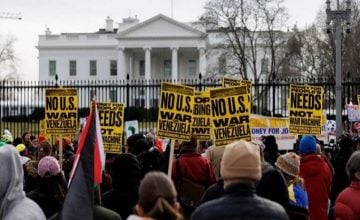
Abrams’ fantasy for Venezuela rests on another imperial illusion: the idea that the United States can bomb military installations, sabotage infrastructure, deploy special forces in a sovereign country, tighten sanctions until society buckles, and then “install” a compliant government as if Venezuela were an uninhabited outpost. Venezuela is a nation of 28 million people, marked by a history of resistance to foreign control, especially over its oil.
Abrams presents a military-assisted overthrow as mere administrative procedure, erasing its human cost, its regional impact, and the absolute certainty of popular resistance. It is the same imperial fantasy that has pursued Latin America for generations: the belief that our countries can be redesigned by force and that our peoples will obediently accept.
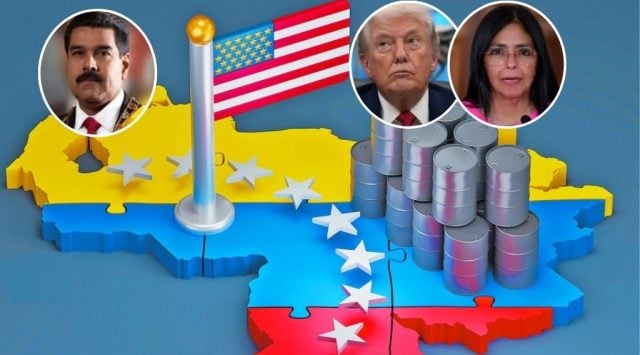
He also assumes that once the government Washington desires is installed, oil will flow like magic. Nothing reveals more ignorance about Venezuela. Oil in Venezuela is not simply an export or a source of revenue; it is the terrain where sovereignty has been fought, lost, and regained. It was the axis of foreign concessions, the site of the 2002 sabotage, the backbone of the Bolivarian project. Refusing to see that foreign troops would be received as administrators of that intimate sovereignty is sheer arrogance.
Then, there are the sanctions. In Washington, they are treated as technical measures, policy levers, bargaining chips. In Venezuela, they mean shortages in hospitals, long lines at pharmacies, collapsing incomes, a plummeting currency, and families forced to migrate.
And here, the fingerprints of Abrams are impossible to ignore: during Trump’s first term, he was the “Special Representative for Venezuela,” helping to design and defend the same sanctions he now uses to blame the government for the crisis he helped create.
Abrams claims the sanctions “failed,” as if they were designed to improve the lives of Venezuelans. But the sanctions did not fail. They fulfilled their objective of destabilizing society, suffocating public services, and manufacturing the humanitarian crisis that is now used as justification for greater intervention. It’s a circular logic: create the conditions for collapse and then point to the collapse as evidence that the government must be removed.
Abrams now presents regime change as a solution to migration, but history tells a different story. U.S. interventions do not stop migration; they generate it. The largest waves of displacement in our region arose after U.S.-sponsored coups, civil wars, counterinsurgency campaigns, and, more recently, the weaponization of sanctions.
People fled not because their governments were left alone, but because Washington treated their countries as battlefields or, in Venezuela’s case, as a laboratory for economic collapse. Central Americans fled from bullets and death squads; Venezuelans have been driven away by a siege designed to break the economy and fragment society. The result is the same: migration produced by U.S. policy, then used as a pretext for more intervention.
As long as Washington clings to the notion that it owns the hemisphere, Latin America will never be safe. Not from Abrams, not from coups, not from CIA programs, not from blockades, not from the Monroe Doctrine.
And perhaps the clearest signal of this imperial hypocrisy is seeing Trump accuse his internal opponents of “sedition” for a mere video where lawmakers remind U.S. military personnel that they are legally obligated to reject illegal orders.
Meanwhile, those same political factions cheer on the idea that Venezuelan officials violate their own constitutional order to overthrow a government that Washington detests. Latin America has lived too long under this double standard, and we are no longer willing to continue paying the price.
By Michelle Ellner.-
Relacionados
The Real Enemy is Within: Remembering Rosa Luxemburg Amid Economic Warfare Against Venezuela
Hace 3 meses