Original article: Diplomacia y sospecha: El temor del Estado a la libre determinación
By Elisa Loncon Antileo
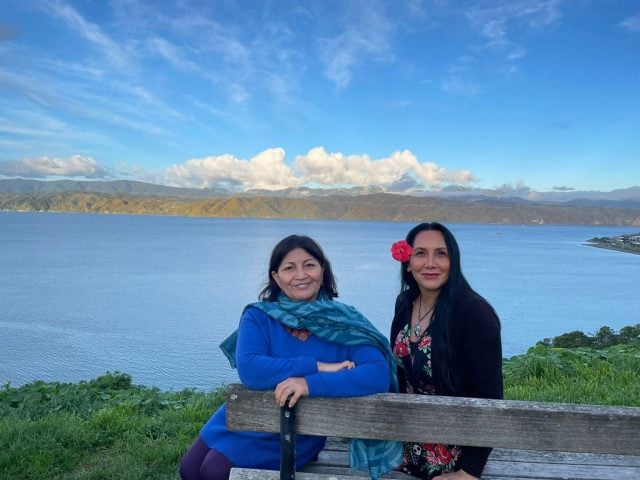
On Wednesday, December 31, El Mercurio published a photograph that I hold in special affection. In it, I am pictured alongside the Chilean ambassador with a vast expanse of the Pacific Ocean, the lafken, the sea, behind us.
This immense blue, which does not divide us, profoundly unites us as peoples: Māori, Rapa Nui, and Mapuche.
That meeting was a space for exchanging words, ceremonies, and wisdom; we shared the celebration of Matariki, which for us is Wüñol Txipantü, the return of the sun and the new year.
We reflected on the languages that bind us together, such as the word toki, meaning ‘axe’ or the ultimate authority in our peoples; a concept and shared significance in all three languages and other common struggles: the defense of our territory and the political rights of our peoples.
However, the contrast between that oceanic serenity and the political virulence is disheartening. Today, the reaction of the State and the conservative sectors, including those labeled as left-leaning progressives, toward a publication by Ambassador Pakarati reveals a deep resistance to engaging in dialogue about indigenous rights, exposing a dual violation that we cannot ignore as this year comes to a close.
On one hand, it reaffirms the historical denial of indigenous peoples’ right to self-determination under international law, a principle enshrined in the United Nations Declaration.
On the other hand, we witness violations of the civil and individual rights of the ambassador herself, specifically her freedom of expression. Seeing an indigenous woman in a high diplomatic position being publicly reprimanded and threatened with sanctions for expressing a legitimate idea in democratic debate is a troubling signal.
The State not only fails to protect the collective rights of the Rapa Nui people but also does not guarantee the fundamental rights of a public official based on her origins and beliefs. As the press has pointed out, this episode uncovers the tense relationship between the Chilean State and indigenous peoples, the insufficient representation of indigenous and female voices in our diplomacy, and the persistence of institutional racism.
The media overreaction, absurdly portraying this gesture as a threat to national security, is disproportionate and reinforces a historic pattern of symbolic criminalization: when an indigenous person speaks of rights, the elite hears threats.
The criticisms aimed at the ambassador highlight not only the ignorance of many sectors of the political class regarding advances in international law but also the bad faith of a right wing that insists on transforming dialogue into suspicion and justice into aggression.
As long as the plurinational and democratic character of these rights is not seriously acknowledged, the State will continue to reproduce the exclusion and silencing that has caused us so much harm.
By Elisa Loncon Antileo.-
Relacionados
Un Cerro a la Izquierda: A Valparaíso Band's Journey to the La Tigra Festival in Colombia
Hace 2 meses