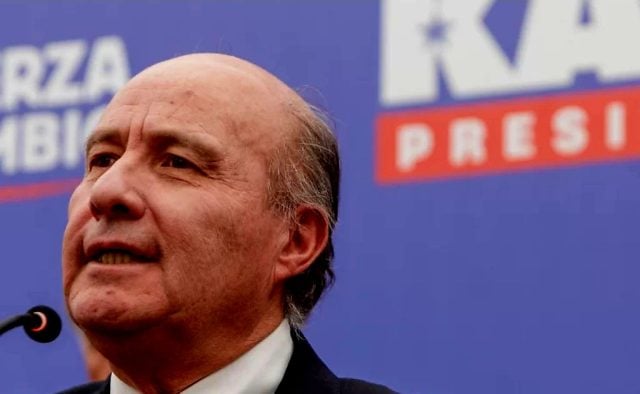
Original article: “Experto” de empresas condenadas por colusión: 15 documentos vinculan a Quiroz con defensas ante el TDLC
Future Finance Minister Jorge Quiroz prepared reports, presented economic models, and testified in defense of companies sanctioned by courts for price coordination in the chicken, pharmacy, asphalt, and maritime transport markets. An investigation by CIPER into four cases before the Tribunal of Defense of Free Competition reveals 15 records confirming his involvement. In three out of four cases, his conclusions were dismissed by the judiciary.
Jorge Quiroz’s name emerged in public discussions shortly after he joined the economic team of then-presidential candidate José Antonio Kast from the Republican Party, sparking controversy due to his two-decade career as a private consultant, which includes involvement in some of the most severe collusion cases in Chile.
Now officially confirmed as the next Finance Minister, CIPER took a deep dive into the documents in the four cases penalized by the Tribunal of Defense of Free Competition (TDLC) between 2008 and 2019: collusion in the chicken market, pharmacies, asphalt, and shipping.
This thorough review culminated in 15 specific records—economic reports, judicial statements, testimonies from executives of the accused companies, emails, notebooks, and testimonies—which elucidate the role that Quiroz played in defending firms later convicted of undermining free competition.
The collected evidence indicates that Quiroz prepared reports before and after the judicial processes began, developed projection models used for market share distribution, and testified before the TDLC presenting hypotheses that the courts eventually dismissed. In three out of the four analyzed cases—chickens, pharmacies, and asphalt—his conclusions were starkly opposed to the findings established later by the TDLC and the Supreme Court.
CIPER posed questions to the economist regarding this background. His written response was general: «As I have stated before, I have never been involved in nor facilitated or designed any collusion or cartel schemes. I have never played any role in the allocation of any market. For this reason, I have never been investigated by the National Economic Prosecutor’s Office or the Tribunal of Free Competition.»
In his statement, he insisted that his participation in these processes corresponds to the «legitimate exercise of my profession,» where he has created «technical reports in economic litigations, just as many other professionals in the private sector do.»
«My opinion as an independent expert is what is reflected in my reports and models, which have been submitted in the relevant instances,» he emphasized.
Chicken Collusion
The chicken collusion case sees Jorge Quiroz’s participation deeply documented and his connection most direct with the mechanisms underlying the collusive agreement. In 2014, the TDLC ruled—through judgment 139/2014—that Agrosuper, Ariztía, and Don Pollo colluded for sixteen years, from 1994 to 2010, to divide the chicken meat market via predetermined production quotas. Central to this coordination was a sales projection model commissioned by the Chilean Poultry Producers Association (APA) from the economist and future Finance Minister.
The report titled «Demand Projection for Chicken Meat in Chile,» dated September 2008, was prepared by Quiroz and submitted to the APA. The document, accessed by CIPER, contained sales projections that the courts established were used by the three companies to allocate market shares. Quiroz has never denied authorship of the model. The TDLC’s judgment established, backed by numerous documents and testimonial evidence, that this model—known in the industry as «the Quiroz model»—was not an academic exercise nor merely a referential projection but an operational tool for market allocation.
An email sent by Marieta Vander Schot, an APA executive, to the managers of the three poultry producers included Quiroz’s report, confirming its reception in the industry. However, it is the statements made to the TDLC by the executives of the companies that highlight Quiroz’s role.
Jorge Ariztía, general manager of Ariztía, testified that they not only utilized Quiroz’s projections but he also adjusted them as needed.
Additionally, Guillermo Díaz, general manager of Agrosuper, stated that a sales projection model was commissioned from «Mr. Jorge Quiroz» and even requested a second version of the model.
María Soledad Valenzuela, head of the APA’s studies area, indicated that this study led to specific sales projections for each of the three companies.
However, the most striking finding came from Valenzuela’s notebooks, seized by the National Economic Prosecutor’s Office (FNE), containing handwritten notes from meetings held with Quiroz to discuss the details of his model. These notes, included in the file, demonstrate a level of involvement that surpasses mere occasional technical advice.
The APA itself produced internal documents titled «Projection 2010: Estimation Model Quiroz» and «Projection 2010: Estimation Closure Based on Model Quiroz,» which reveal how the economist’s projections translated into production quota allocations.
The TDLC ruled that «the methodology for calculating APA sales presented anticompetitive characteristics and indeed allowed for the allocation of production quotas between the poultry companies involved.»
Nevertheless, Quiroz’s involvement in the chicken case did not culminate with the 2008 projection model. In June 2013, while the judicial process was already underway, Quiroz and his associate Felipe Givovich prepared a new report for the APA titled «The Relevant Market for Chicken Meat in Chile.» In the introduction, the authors explicitly state that the APA requested «their independent economic opinion regarding the formation of the relevant market and its characteristics.»
The conclusion of the report favored the accused companies: «The domestic price is determined based on what occurs in international markets. It is important to note that in such markets, supply restrictions do not affect domestic prices,» they argued, as reported by CIPER.
«The TDLC dismissed this and other arguments made by the poultry companies, fined the three companies, and ordered the dissolution of the APA, the association that paid for Quiroz’s reports. The Supreme Court upheld the TDLC’s decision in 2015, imposing fines of $23.3 million on Agrosuper and Ariztía, and $9.3 million on Don Pollo,» the digital medium reported.
Pharmacy Collusion
The pharmacy collusion case holds a notable place in public memory. Between December 2007 and April 2008, the three chains that accounted for 92% of the market—Cruz Verde, Farmacias Ahumada, and Salcobrand—colluded to raise the prices of 206 medications, including contraceptives, antibiotics, and drugs for chronic diseases such as diabetes and Parkinson’s. The coordination mechanism, which involved laboratories as intermediaries, was classified by the TDLC as «direct evidence of collusion.»
Jorge Quiroz entered this process hired by Salcobrand. On July 30, 2009—after Farmacias Ahumada had already confessed key aspects of the collusion through a settlement agreement with the FNE, approved in April of that year—Quiroz presented a report titled «Possible Price Collusion in the Pharmacy Market: SalcoBrand’s Participation.»
His conclusions were definitive: «Based on the information available to these authors, we cannot conclude the existence of a price agreement.»
In his report, Quiroz stated that «specifically, in none of the 19,768 Salcobrand emails covering the period of possible price collusion reviewed by these authors for this report, is there any communication encouraging laboratories to coordinate with competitors or requesting information regarding competitive pricing behavior.»
On December 14, 2009, the economist testified as a witness for Salcobrand before the TDLC, further elaborating on the methodology used by his consultancy.
«At Quiroz and Associates, we reviewed 45,000 Salcobrand emails and analyzed 10,000 price increases and 5,000 price reductions.» His conclusion presented to the tribunal was emphatic: «We concluded that there are no indicators of collusion in this market,» he stated on that occasion.
However, among the emails that Quiroz claimed to have reviewed was one dated December 19, 2007, sent by Ramón Ávila, then commercial manager of Salcobrand, to Matías Verdugo, head of management control at the same company. The email reads:
«Insist on the laboratories the need for coordination for the increase in their prices. For this, we offered to be the chain that first raised prices (on Mondays or Tuesdays) so that the other two chains would have 3 or 4 days to ‘detect’ these increases and then adopt them. So far, we have managed to raise the prices of 5 of their main products with 4 laboratories. Given these good results, we hope to repeat the ‘procedure’ with more products and more laboratories.»
The TDLC concluded that this email constituted «clear evidence of an explicit coordination between the pharmacy chains to raise the prices of their medications, which was done through laboratories.»
CIPER specifically asked Jorge Quiroz if that email was seen during his analysis for Salcobrand. In his reply, the economist did not specify.
The tribunal conducted its own analysis of price movements and found 286 simultaneous price increases among the chains. Of these, 249 corresponded to the pattern termed «1-2-3,» described by the TDLC as «a case where a company raises the price one day, followed by a second company on a different day, and then a third pharmacy chain follows.»
In August 2011, Quiroz produced a second report for Salcobrand titled «The Accusation of Collusion in Pharmacy Chains: The Case Revisited.» In this document, the economist presented an alternative explanation: what occurred was not collusion but a strategy known in economic theory as «Tit for Tat» (eye for eye).
According to this hypothesis, Salcobrand would have unilaterally raised its prices, expecting that the competition would, independently, «cooperate» and raise theirs as well.
«We estimate that the evidence is overwhelmingly consistent with a ‘Tit for Tat’ strategy followed by Salcobrand; in contrast, there is no evidence, not even circumstantial, to support the hypothesis of collusion. Salcobrand, after the change in control and management [in 2007 the Yarur Group acquired the company], decided to end a period of extremely low prices and negative margins on a wide range of products by unilaterally raising prices. Where others followed, it persisted; where they did not, increases had to be reversed,» he argued in the document, as cited by CIPER.
The TDLC dismissed this and other alternative hypotheses presented by the pharmacy economists. In its judgment, the tribunal explicitly stated that «the alternative hypotheses to collusion presented have not been substantiated in any way, that evidently mere theoretical analysis cannot disprove direct evidence of collusion, and that such analysis is inconsistent with the overall evidence presented in the case.»
In January 2012, Cruz Verde and Salcobrand were ordered to pay fines of approximately $20 million each. The Supreme Court upheld the decision in December of that same year, with a ruling that determined that «economic interest overrode human dignity, life, and health of individuals.»
Asphalt Collusion
The asphalt collusion case did not attract the same public attention as the chicken and pharmacy cases, but its characteristics were no less severe. Between 2011 and 2012, four asphalt supplier companies—Química Latinoamericana, Dynal, Asfaltos Chilenos, and Enex—colluded to allocate bids and sell the product to three construction companies at coordinated prices. The case came to light in November 2012 after Enex opted for leniency and provided key information to the FNE.
Once the prosecution had formalized charges against the companies, Asfaltos Chilenos commissioned a report from Quiroz and Associates. The document, titled «Structure, Characteristics, and Functioning of the Asphalt Market in Chile,» was prepared by Jorge Quiroz and Felipe Givovich, who dismissed the FNE’s accusations and stated that «essentially, in this case, there would be no additional factors supporting the existence of a collusive agreement.»
On November 27, 2014, Quiroz testified as a witness for Asfaltos Chilenos before the TDLC. At that time, he maintained that there was «rivalry» among participants in the asphalt market, directly contradicting the prosecution’s thesis. His statement, part of the record, claimed that there was insufficient evidence to assert the existence of coordination among the accused.
However, the investigations by the FNE and subsequent judgments by the TDLC and the Supreme Court demonstrated the opposite. It was established that the executives of the companies met in hotels and cafes in Santiago to coordinate prices and allocate bids. In 2016, the Supreme Court upheld the FNE’s request and declared that the four asphalt supplier companies «colluded (…) through the assignment of the Duplijsa, Chañaral, and Radomiro Tomic works for [the construction company] Besalco Construcciones S.A.»
The ruling from the highest court imposed fines totaling nearly $3 million and mandated the companies—Enex, Asfaltos Chilenos, Dynal, and Química Latinoamericana—to adopt compliance programs regarding free competition. The ruling again contradicted what Quiroz upheld in his report and testimonial declaration.
Shipping Collusion
The fourth case involving Jorge Quiroz’s signature is the maritime transport cartel. In 2019, the TDLC sanctioned six companies for colluding in the transportation of vehicles to Chile: Compañía Sudamericana de Vapores—which entered a collaboration agreement—Compañía Marítima de Chile, the South Korean Eukor Car Carriers Inc. (Eukor), and the Japanese Kawasaki Kisen Kaisha Ltd. (K-Line), Mitsui O.S.K. Lines Ltd. (MOL), and Nippon Yusen Kabushiki Kaisha (NYK). The fines imposed by the tribunal totaled $9 million.
In September 2016, MOL hired Quiroz and Associates to prepare a report titled «Relevant Market for Car Carriers to Chile and MOL’s Participation.» The document, signed by Jorge Quiroz and Paula Hurtado, an economist from his consultancy, explicitly stated on its first page that the task was to conduct «an independent economic analysis of the structure of the relevant market related to the alleged behaviors and MOL’s participation in it.»
In contrast to the previous cases, Quiroz did not argue MOL’s innocence nor denied the existence of collusion. His argument focused on questioning the amount of the fine requested by the FNE, which exceeded $12 million.
«The usual criterion is to consider a percentage of the sales made by the infringer in the market where the collusive wrongdoing occurred as a benchmark for the fine,» Quiroz indicated, asserting that the prosecution’s calculation exceeded this principle.
According to CIPER, the TDLC ruling aligned with the economist’s arguments, as it opted to impose a fine of $2.5 million on MOL, significantly less than the $12 million requested by the FNE.
The prosecutor appealed to the Supreme Court, which raised the total fines in the case to $30.5 million but kept the financial sanction imposed on the Japanese company unchanged.
The future Finance Minister has stated he has never been investigated by the FNE or the TDLC. However, the 15 records reviewed by CIPER clearly indicate a consistent trajectory: in the four major collusion cases adjudicated in Chile over the past fifteen years, Jorge Quiroz has been on the side opposing the law in three of them.
Relacionados
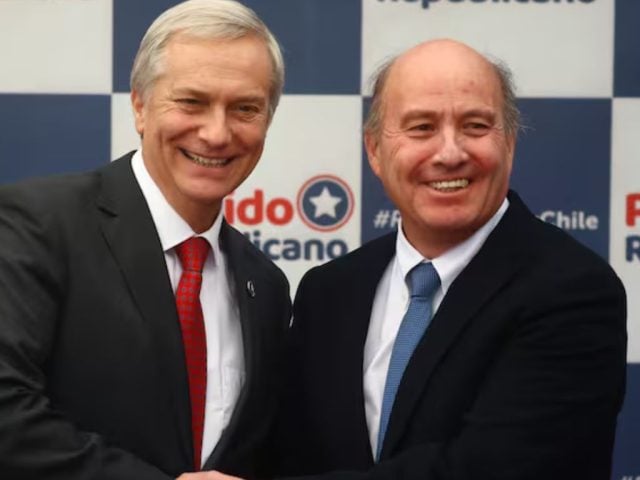
Investigation Commission Announced Over Economic Advisor's Role in Pharmacy and Chicken Collusion
Hace 2 meses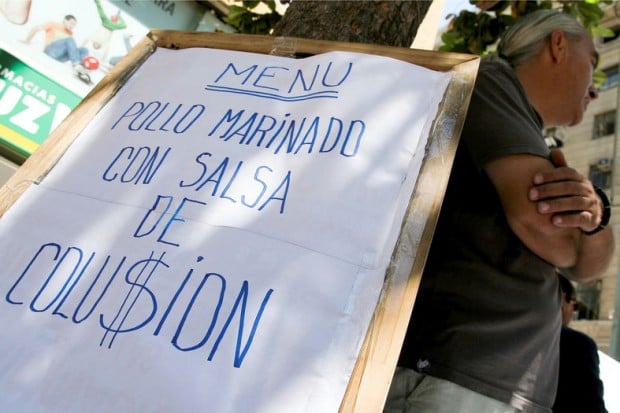
Jeannette Jara Questions Why Kast Isn't Asked About Advisor's Role in Chicken Collusion Scandal
Hace 3 meses
"Kast's Economic Advisor Linked to Collusion Scandals": Manouchehri Challenges Kast Over Controversial Advisor Role
Hace 3 meses
Jeannette Jara's Critique of Jorge Quiroz: Economic Advisor Implicated in Multiple Collusion Cases
Hace 3 meses
