Original article: «Doctrina Donroe» y su expansión enciende alertas en países de América Latina
«Donroe Doctrine» Expansion Raises Concerns Across Latin America
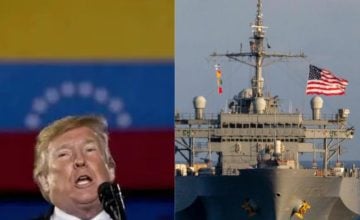
Following a U.S. military incursion in Venezuela that forcibly captured Venezuelan President Nicolás Maduro and his wife, U.S. President Donald Trump announced that the United States will «manage» the South American nation.
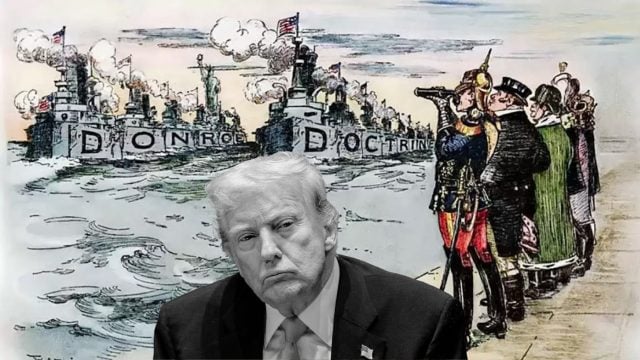
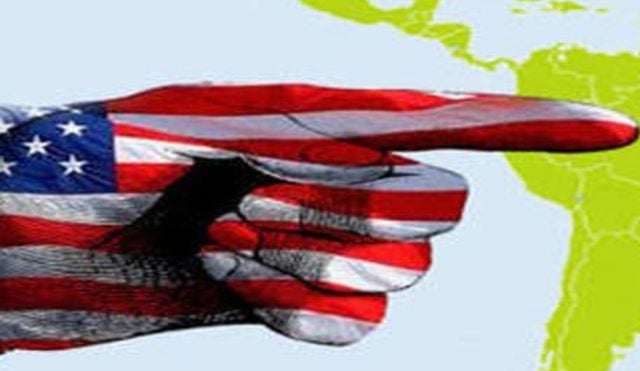
This aggressive move against Venezuela is viewed by analysts as an effort to expand the so-called «Donroe Doctrine,» a Trump-modified version of the Monroe Doctrine aimed at controlling the Western Hemisphere and plundering its resources.
Managing or Plundering Venezuela
During a press conference on Saturday, Trump stated that the U.S. will establish a task force composed of diplomatic and military personnel to «manage» Venezuela until a «safe, adequate, and prudent transition» can occur.
He also warned that the U.S. «is not afraid» to deploy military forces and would launch a second wave of larger attacks against Venezuela if necessary.
Although specifics of the plan remain unclear, experts indicate that the U.S. «administration» is essentially an attempt at a substantial intervention in Venezuela through political manipulation and resource control.
Allan Fajardo, a sociologist at the National Autonomous University of Honduras, told Xinhua that there are two possible scenarios for the U.S. so-called «transitory management» of Venezuela.
One scenario involves nominally maintaining the current government and institutional framework of Venezuela while continuing to interfere in its internal affairs through political and economic pressures.
The other possibility would be to directly promote the establishment of a pro-U.S. regime, potentially involving a larger military intervention and eventual occupation of Venezuelan territory.
Trump also mentioned during the press conference that major U.S. oil companies would enter Venezuela to repair severely degraded oil infrastructure and begin generating revenue.
Cao Ting, director of the Latin American Studies Center at Fudan University, noted that judging by the consistent style of the Trump Administration, the strategic objective might be to control Venezuela’s oil supply by fostering the presence of U.S. representatives in the country without committing to a long-term occupation.
This so-called model of «management» is not aimed at improving the well-being of the population or rebuilding the country, but rather at appropriating resources, according to Jaime Tamayo, an international relations specialist and political scientist at the University of Guadalajara, Mexico.
Such actions could lead to a weakening of Venezuela’s governance capacity, a separation between administration and security, a deterioration of public order, and an increase in violence, academics warned.
Venezuela After Maduro
According to Venezuelan constitutional law, if the president is in «absolute absence,» power transfers to the vice president, and general elections must be held within 30 days.
However, the Venezuelan Supreme Court has not announced that Maduro is in «absolute absence,» although it has ordered Vice President Delcy Rodríguez to assume the presidency immediately following Maduro’s capture, which media analyses suggest indicates that a general election might not be called within the 30-day timeframe.
Experts believe that Rodríguez and her brother currently represent significant leftist forces, holding relatively moderate positions.
In a televised address on Saturday, Rodríguez took a firm stance against the United States, condemning its actions as unprecedented military aggression and asserting that Venezuela will never become a colony of any country or a slave to any empire, despite Trump’s prior claim that she had promised to do what the U.S. wanted.
In this context, Tamayo believes that the current leftist political forces in Venezuela and their social base remain relatively stable, making it difficult for the U.S. to disrupt the existing political pattern in the country in the short term. He noted that the U.S. might seek to provoke divisions to attract high-ranking political or military figures.
Latin America on High Alert
«Today it is Venezuela, tomorrow it could be anyone,» stated Chilean President Gabriel Boric, raising alarms throughout Latin America about U.S. hegemonic interference.
Experts and media in the region believe that the U.S. action against Venezuela aims to create a «deterrent effect» to intimidate countries in the region and represents an updated version of the Monroe Doctrine.
José Ignacio Martínez, an international relations specialist at the National Autonomous University of Mexico, remarked that Washington is displaying an authoritarian logic by arbitrarily defining who can be president and what constitutes a «legitimate country,» while indiscriminately labeling countries and leaders as «terrorists,» «narcotraffickers,» or «dictators.»
Relacionados
Progressive Parties Reject U.S. National Security Strategy, Claim It Threatens Sovereignty Over Strategic Resources
Hace 2 meses