Original article: Ecuador: Conaie alerta por ley minera de Noboa y advierte riesgo para “territorios y agua”
The mining law proposal put forth by President Noboa has triggered a strong response from indigenous movements, which warn of significant weakening of environmental protections and collective rights.
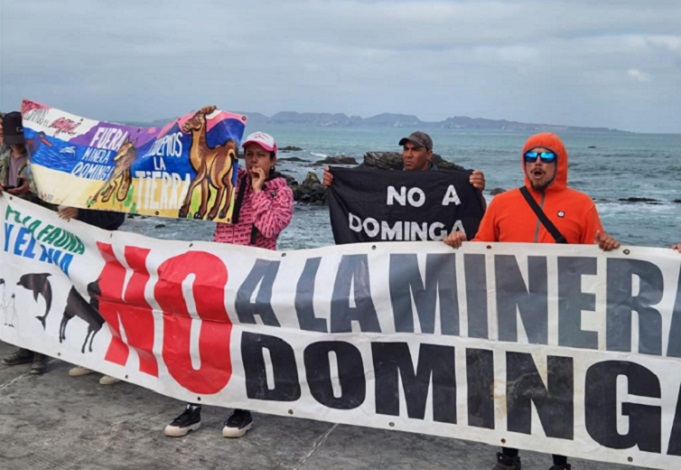
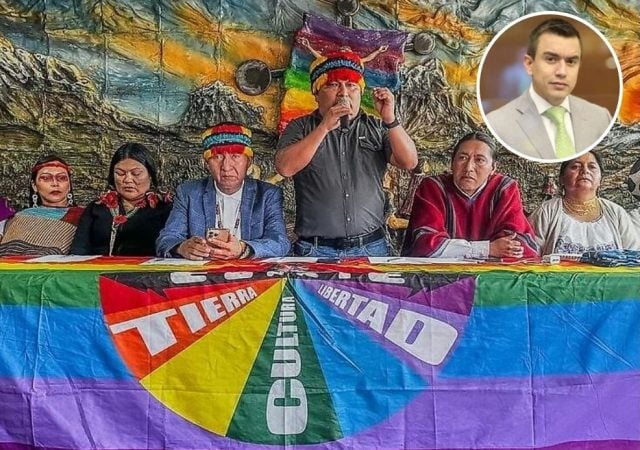
The Confederation of Indigenous Nationalities of Ecuador (CONAIE) voiced its opposition to the urgent mining law presented last week by the government of Daniel Noboa to the National Assembly, highlighting that the initiative promotes an extractivist model and threatens collective rights, ancestral territories, and vital water sources.
On Tuesday, the Economic Development Commission of the legislature began discussions on the proposal, reflecting the urgency with which it was submitted due to economic considerations.
In a statement shared across their social media platforms, CONAIE members expressed that the government’s proposal prioritizes fast-tracking extractive investments without ensuring a prior, free, and informed consent process, as mandated by Ecuador’s constitution and international human rights treaties.
Furthermore, they warned that replacing environmental licenses with simplified authorizations reduces consultations to mere formalities, failing to secure genuine collective decision-making or prior consent.
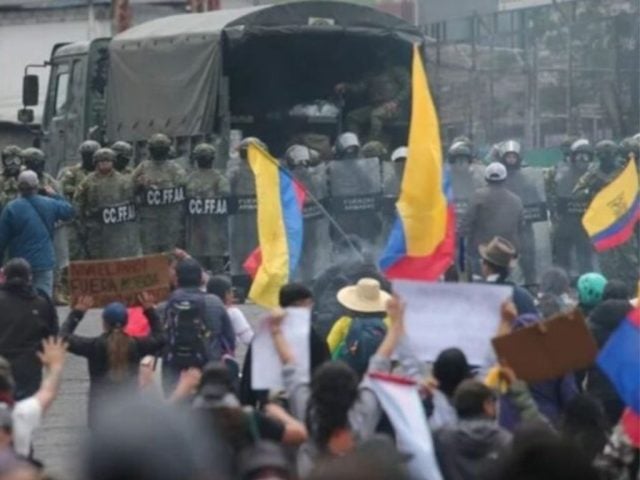
“Regulations of this nature undermine the constitutional framework and exacerbate social conflicts in these areas,” they criticized in the statement.
Environmental Impact: Irreversible Damage to Forests, Páramos, and Rivers
The indigenous organization criticized the relaxation of environmental controls, particularly regarding water usage, stating that such measures weaken the state’s ability to prevent irreversible damage to critical ecosystems such as páramos, forests, and rivers. These ecosystems are essential for the country’s water and food sovereignty.
“In a climate crisis context, water must be safeguarded as a vital resource for life and smallholder agriculture, not subordinated to extractivist logic,” they argued.
According to CONAIE, the law promoted by Noboa reinforces an economic model reliant on resource extraction that has deepened inequality and the criminalization of territorial defense. This could lead to increased social unrest in areas affected by mining activities.
“Ecuador’s historical experience shows that this path has exacerbated inequality, the criminalization of territorial defense, and social and environmental impacts, without addressing the structural challenges of development,” they noted.
New Law Eases Environmental Controls, Poses Risks to Territories and Water
In this context, the Confederation called for unity among indigenous peoples and nationalities and urged the Pachakutik bloc members to reject this project and foster a broad, transparent, and participatory debate that prioritizes life, territories, and true social and environmental justice.
“We alert the nation regarding the government’s mining and energy empowerment project, which weakens prior consultation, relaxes environmental controls, and threatens territories and water. We call for unity in defense of life,” stated CONAIE on their official X account.
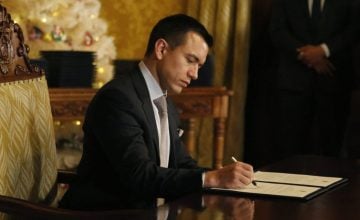
The proposal was submitted by Noboa’s administration to the National Assembly on January 28, 2026, under the premise of strengthening the strategic sectors of mining and energy to attract investments, generate jobs, support the economy, and combat illegal mining.
The regulation proposal was classified as urgent concerning economic matters, thus the Parliament is required to process it in less than a month, as mandated by the Organic Law of the Legislative Function.
In fact, on Tuesday, the Economic Development Commission, which holds a government majority, convened to initiate the discussion on the bill.
Relacionados
Ecuador: Conaie alerta por ley minera de Noboa y advierte riesgo para “territorios y agua”
Hace 55 segundos
Right-Wing Leaders Unite in Quito: Jerí and Noboa to Lead Binational Cabinet Focused on Security and Border Issues
Hace 2 meses
Venezuela Responds to U.S. Cocaine Empire Allegations, Accuses Ecuador and Noboa Family of Covering Drug Exports
Hace 2 meses