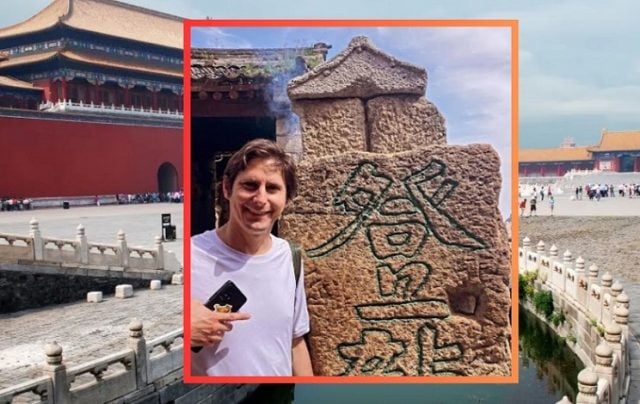
Original article: Filosofía china clásica, una posibilidad para pensar la crisis civilizatoria desde América Latina: Entrevista a Manuel Rivera
Interview on Contemporary Taoism Conference with Manuel Rivera by María Sanhueza
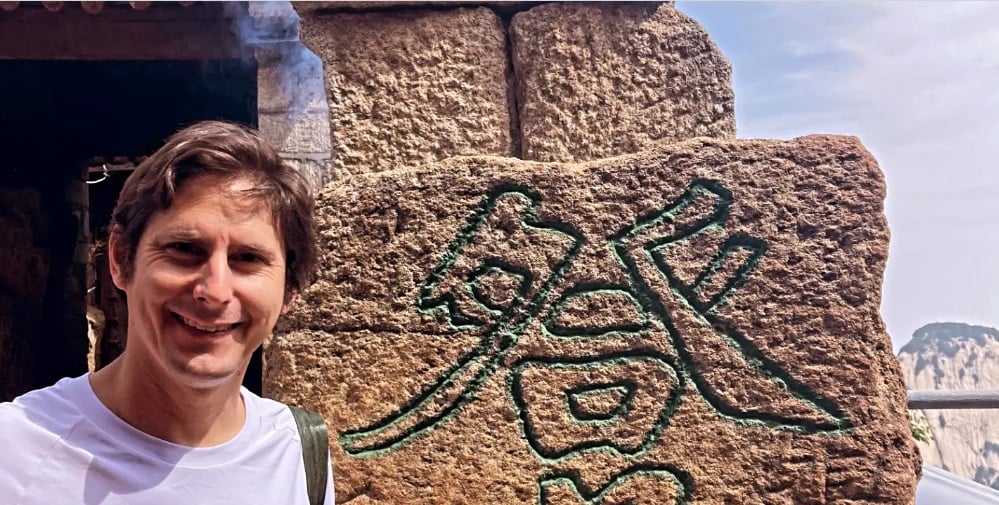
Manuel Rivera Espinoza is a FONDECYT Postdoctoral Researcher at the Institute of Aesthetics within the Faculty of Philosophy at the Pontifical Catholic University of Chile. Previously, he served as a Postdoctoral Researcher on the Koselleck project «Histories of Philosophy in a Global Perspective» at the Institute of Philosophy at the University of Hildesheim. With a PhD in Philosophy from the University of Macau (China), he specializes in intercultural and comparative philosophy, intellectual history, and decolonial theory, focusing particularly on classical Chinese thought. Rivera has published articles and book reviews in various journals and presented his research at numerous international conferences and workshops. He is fluent in Spanish and English and has knowledge of classical Chinese. Rivera is an active member of several academic associations related to Asian studies.
By María Sanhueza
What prompts the need to discuss Yin-Yang and Dao in today’s context? What contemporary urgency exists for such ancient thought to remain relevant?
Discussing classical Chinese philosophy provides a unique perspective to tackle contemporary issues. It represents one of humanity’s great philosophical traditions, with its longevity and conceptual richness placing it on equal footing with Western philosophy.
As with any tradition of thought, its relevance depends on how we engage with it. No tradition endures automatically; it remains alive through reinterpretation, discussion, and challenge by active communities that make it pertinent to new issues. Our role, as specialists in Chinese and intercultural philosophy, is to elucidate how it can illuminate our contemporary challenges.
The urgency to revitalize and update Chinese thought is, in my view, quite clear. The exhaustion of Western philosophical traditions indicates a sense of fatigue or paralysis in their conceptual resources, a prevalent theme in European and Anglo-American philosophical production since at least Heidegger and Dewey. Not to mention the contributions of thinkers in postcolonial and decolonial theories! This concern resonates across not just philosophy but the entire humanities and social sciences.
A significant part of the revitalization effort occurs within metaphysics. Scholars such as François Jullien, Roger Ames, and Robin Wang have compellingly illustrated how, unlike much of Western metaphysics—characterized by a focus on substances and essences—the categories of classical Chinese thought function more as vocabularies to describe relationships, transformations, and modes of coordination. Instead of favoring an ontology of discrete entities, they tend to conceptualize the world in a processual, correlative, and immanent lens, shifting the focus from being to becoming and the articulation of patterns. Therefore, engaging with philosophical concepts like dao 道, yinyang 陰陽, de 德, and others allows us to revisit the metaphysical assumptions from which we address pressing issues such as the climate crisis, socio-economic inequality, and necropolitics.
This conference gathers international figures like Robin Wang and Livia Kohn. What does it mean for our country to host such high-level discussions with prominent scholars?
The presence of these scholars brings comparative philosophy and the study of Chinese religions to Chile. This indicates we have an unprecedented opportunity to catch up on Chinese classical philosophy and religion academic production in English. Unlike our region, Anglo-Saxon countries have a solid background in exploring these themes. The fields of comparative philosophy and religious studies focused on China have been institutionally established in those regions for decades. Thus, the visit of Robin Wang and Livia Kohn allows us to enter, albeit introductory, into that conversation, laying the groundwork for potentially developing these areas of knowledge in our country.
While it’s true that François Jullien visited Chile at least once over the past decade, it’s important to highlight that Professors Wang and Kohn operate within a different disciplinary framework, having trained in academic traditions distinct from Jullien’s. Wang prefers to firmly align herself with the discipline of philosophy, while expressing a reluctance to succumb to Western canons, demonstrating that the Chinese tradition provides powerful heuristic tools to address various philosophical problems. Even more, her approach to comparative philosophy and Chinese philosophy does not solely adhere to the contours of the Anglo-Saxon academic world. Even though Professor Wang has lived and worked in the United States for decades, she was born and initially educated in China and maintains close ties with specialists from mainland China, Hong Kong, Macau, and Singapore.
As someone working at the intersection of aesthetics, translation, and philosophy, how does a Latin American approach the Dao while navigating their own cultural context, yet observing commonalities with our cosmologies? What are the main challenges involved?
According to Quijano and Dussel, much of the knowledge production in Latin America has been conditioned by a Eurocentrism that assumes the universality of all theoretical efforts, compelling the region to be thought of through categories designed for different historical trajectories. This creates a disconnect: many Latin American intellectuals think and write as though their points of view are identical to those of Europe or the USA, thus losing touch with their own social, cultural, and economic contexts. From this perspective, thinking using indigenous categories requires the ability to dismantle the epistemic hierarchies inherited from the Western canon and recognize the historical and material conditions characteristic of our region, thus generating a context for thought rooted in our reality rather than dissociated from it.
The best way to foster distinctly Latin American approaches to Chinese philosophy involves addressing urgent regional issues such as inequality, relationships with indigenous and sexual minorities, and ecosystem devastation. Inequality is measured by the Gini coefficient (0 = perfect equality; 1 = total inequality) (WID – World Inequality Database) and/or by the Palma ratio (the share of the richest 10% / 40% poorest) (Our World in Data), which reveals stark patterns of concentration: CEPAL highlights that in Latin America, the top 10% holds over half of the wealth (54.2%), while the bottom 50% possesses a mere 0.6%. (CEPAL) This is compounded by the climate and socio-environmental crisis that often manifests in our countries as «sacrifice zones»: areas chronically exposed to industrial pollution and extractive burdens, epitomized by the case of Quintero–Puchuncaví in Chile. (CEPAL) Regarding indigenous and sexual minorities, the issue is far from abstract: CEPAL estimates that approximately 58 million indigenous people live in the region (2018), significantly overrepresented in poverty and experiencing severe wellbeing gaps (for instance, child mortality rates are about double) (CEPAL).
Thus, a Latin American specialist wishing to approach the Chinese tradition can utilize these and other urgent regional issues. Such an approach could outline a distinct reading of that tradition: one shaped by our realities and interests, which often differ significantly from those of the United States and Europe, but also from Asia itself. In this process, the development of comparisons between Chinese tradition and indigenous traditions may be one of the most promising ways to generate knowledge about Chinese thought from Latin America. It involves a much-explored South-South dialogue, despite numerous existing similarities between these traditions. For example, mountain worship plays a central role in the religious life of both China and the Andes. However, there is virtually no research dedicated to exploring these parallels. Similarly, various other resonances between these areas remain understudied.
As I’ve suggested, a major challenge in developing these interpretations is that Latin American thinkers often renounce their Latin American identity, preferring to see themselves as “Western.” In fact, for many academics in our region, even suggesting that we may not be Western seems implausible, and even irritating. Given this, how can we establish a Latin American perspective on anything, including Chinese thought, if we do not recognize ourselves as Latin Americans? This is a topic that Enrique Dussel and Aníbal Quijano have incisively explored, and rightly so. The reality is that, at best, if it’s true we are Western, we would be somewhat mere “second-hand Westerners,” as Jorge González aptly states. Reflecting on my experiences in Europe or the USA, I struggle to recall an instance where an academic or informed person referred to Chile as a Western country. That idea seems to persist more in our minds than in theirs.
This event will cover broad topics, ranging from technology and spirituality to resonances and emotional ecology. Why does Taoism provide fertile ground for addressing these contemporary concerns?
Taoism is often presented, formulaically, as a philosophy of correlation, relationality, or “thinking in processes”; however, reducing it to this misses the philosophically incisive elements. In Taoist texts and thinkers, these notions don’t function as general theses applicable mechanically, but as invitations to mistrust fixed frameworks, definitive taxonomies, and universal solutions: dao is not a principle to be conceptually possessed but a path to be traveled; and when words become hardened into doctrine, they obstruct rather than guide.
Moreover, Taoist texts and thinkers urge us to approach any subject using notions that escape ordinary frameworks. For instance, the idea that there are no final recipes or absolute doctrines for dealing with the challenges we face, and therefore we must focus our attention on the specific contexts we inhabit. Thus, when addressing the climate crisis, a Taoist would likely avoid establishing global policies (like COP20) and instead invite us to cultivate a sensitivity to the nature surrounding us: to listen, explore, feel, live, smell, touch, etc. Only from that experience and perspective can a more harmonious and respectful relationship with our natural environment be established. Without it, any discourse, policy, or regulation would be nothing more than an empty shell.
What role does translation play in enabling Chinese philosophies to be received in Latin America?
Translation plays a fundamental role. As previously mentioned, philosophy and religious studies focused on China are already established in the United States and Europe as consolidated disciplines. This has largely been possible due to the continuous translation of Chinese texts into English, a corpus that continues to grow daily. Unfortunately, this has not been the case in our region. To this day, many classical Chinese works remain untranslated or have been poorly translated due to a lack of the necessary sensitivity and expertise. Moreover, many are retraductions, meaning translations into Spanish of works originally published in English, French, German, Italian, and other European languages. This type of translation is particularly problematic for two reasons: 1) they are disconnected from the original Chinese text at two levels, first from the original European language and then from Spanish. If, as is often said, every translation is an interpretation, then a retraduction is the interpretation in Spanish of an interpretation in another European language of the classical Chinese text. 2) This engenders a dependency on conceptual frameworks alien to our language and culture, as the interpretation/translation of the text is subordinated to the rendering conducted by a European or Anglo-Saxon academic in their own language. Thus, such translations perpetuate Eurocentrism and simultaneously hinder our own interpretations of classical Chinese text, which would likely differ from the English, German, etc., readings of that text.
Therefore, it is imperative that we begin producing our translations of classical Chinese texts. Naturally, some groundwork has already been laid in this regard, but almost exclusively by Spanish-speaking sinologists. For instance, to the best of my knowledge, there is yet to be a Spanish translation of the Daodejing or Tao Te Ching 道德經 created directly from the classical Chinese text and authored by a Latin American specialist. Some might be tempted to cite Gastón Soublette’s translation as an exception, but it was based on French translations, not the original Chinese text.
Why should the general public, without any background in Chinese philosophy, attend this event? What more does it offer beyond academic debate?
The event provides the unique opportunity—rare in the Chilean context—to engage with Chinese culture from a primary source, rather than through stereotypes, exoticism, or second-hand interpretations. It offers direct contact with conceptual frameworks, sensitivities, and argumentation that have developed in their own historical soil. This «first-hand» access is significant as it reverberates across all imaginable areas, impacting how we perceive alterity, formulate questions about community, nature, and daily life, and reorganize our most basic intuitions about education, ethics, politics, art, and coexistence. In this regard, Robin Wang’s participation is particularly meaningful; her background allows her to present—situated knowledge and lived experience—some fundamentals of Taoist thought from both a Chinese and humanist perspective, capable of engaging critically with Western traditions without succumbing to its precepts. Having such a voice that speaks from within and translates without simplification is exceptional in Chile and opens a meeting space whose impact far exceeds the academic realm.
Framed this way, the event is primarily designed for attendees to gain familiarity with classical Chinese thought in general, and Taoist thought in particular, through direct interaction with classic Chinese sources. In this sense, it operates as an introductory instance to these topics. Additionally, the themes explored are diverse enough to allow for the transference of ideas and practices into areas such as art, literature, climate sciences, biology, and intercultural studies. Finally, it is essentially a transdisciplinary event, as it gathers scholars approaching Taoist thought not only from philosophy but also from religious studies and other related disciplines.
Lastly, the event contributes to strengthening and enriching South-South and South-North academic and cultural networks. By fostering sustained exchanges among specialists with diverse training and connections to various regions of Asia and Latin America, it promotes a broader, less hierarchical flow of knowledge that isn’t solely centered on Anglo-Saxon and European canons. This could translate into the incorporation of non-hegemonic perspectives in various fields, such as research, university teaching, translation, cultural dissemination, and eventually policy-making, thus helping to reshape how we think about and practice the humanities in our region.
