Original article: Expulsión de 37 ONGs en Palestina: Cómo Israel acelera el colapso del orden internacional
By Sheryn Barham – Accredited Palestinian Diplomat in Chile
For over two years, experts, political leaders, and civil society organizations have warned that fundamental principles of contemporary international order are at stake in Palestine—particularly in the Gaza Strip.
To some, these warnings seemed exaggerated; to others, mere rhetorical constructs or partisan discourse. Nothing could be further from the truth.
It is essential to revisit the darkest chapters of human history to understand the origin of the current international system.
The establishment of the United Nations—as the successor to the failed League of Nations—alongside the development of international criminal law derived from the Nuremberg Principles and ad hoc tribunals like those for the former Yugoslavia and Rwanda, was precisely in response to the need to prevent the recurrence of egregious crimes.
Furthermore, foundational legal instruments emerged from devastating historical experiences, such as the Convention for the Prevention of Genocide, the Convention against Apartheid, the Convention against Torture, and the International Convention on the Elimination of All Forms of Racial Discrimination, among many others.
This is not merely an exercise in history. The intent is to highlight what is currently at risk in a small territory significant in geopolitical and legal terms: Palestine.
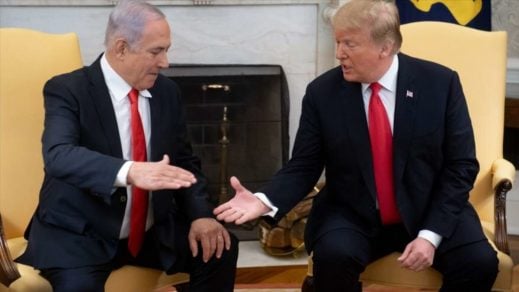
As if 77 years of impunity regarding the systematic commission of war crimes and crimes against humanity were not enough, on Tuesday, December 30, 2025, the Israeli government led by Prime Minister Benjamin Netanyahu, who faces an arrest warrant from the International Criminal Court, announced that starting January 2026, it will prevent the operation of 37 NGOs throughout the Occupied Palestinian Territory.
This unprecedented decision in its scope and seriousness affects some of the most recognized humanitarian NGOs worldwide, which today form a vital lifeline for over two million Palestinians in the Gaza Strip, providing essential assistance in health, education, and social protection in the occupied West Bank, including East Jerusalem.
The expulsion of international humanitarian organizations not only immediately exacerbates the humanitarian crisis but also serves as a clear signal of the deliberate dismantling of international protection and monitoring mechanisms.
In contexts like that of Palestine, NGOs are often the last bastions of international presence, independent monitoring, and support for a civilian population subjected to a prolonged regime of occupation and systematic deprivation. Silencing them equates to normalizing opacity and facilitating the perpetuation of impunity.
Organizations such as Doctors Without Borders, Oxfam, ActionAid, and Caritas would be forced to cease operations and evacuate their staff by March 1 after refusing to comply with demands imposed by Israeli authorities, including the requirement for the organizations and their personnel to acknowledge Israel as a «Jewish and democratic state.» This demand blatantly ignores that over 21% of the country’s population does not belong to this community, which is an overtly discriminatory practice.
Of course, international condemnations of this new illegitimate and unacceptable policy were swift. However, as long as these condemnations do not translate into concrete and effective measures that compel Israel, the occupying power, to adhere to its obligations under International Law and its status as a UN member state, the situation will not change.
The continuation of impunity only deepens a pattern of illegality that has been tolerated for over seven decades, largely due to a lack of political will and the complicity of key international actors.
Thus, the fundamental question is inevitable: Is the world willing to continue shielding Israel at the expense of dismantling the system of principles and norms that took so long, so much suffering, and so many human lives to construct?
The Citizen
Relacionados
Xi Jinping Criticizes Unilateral Actions After Maduro's Abduction: "Such Acts Severely Undermine International Order"
Hace 2 meses