Original article: Política industrial verde y popular: Los ejes para transformar la matriz productiva de Chile
Last Wednesday marked the release of a new episode of Podcastpitalismo, where Javier Pineda engaged in discussions with Bárbara Navarrete, an economist from the University of Chile with a Master’s in Public Policy, and Ignacio Silva, an economist and doctoral candidate in Economic Integration at the University of the Basque Country. Both guests are researchers at the Economic Policy Observatory (OPES) and have recently published a document titled “Green and Popular Industrial Policy: For a Prosperous and Sovereign Chile in the Global Energy Transition”.
During the session, Pineda remarked that Chile’s neoliberal model has led to a deliberate deindustrialization, replacing productive capacity with a fragile and dependent extractivism. Consequently, he advocates for looking towards an ecosocialist and democratic reindustrialization that avoids repeating past mistakes while addressing the climate crisis through collaborative planning with local communities.
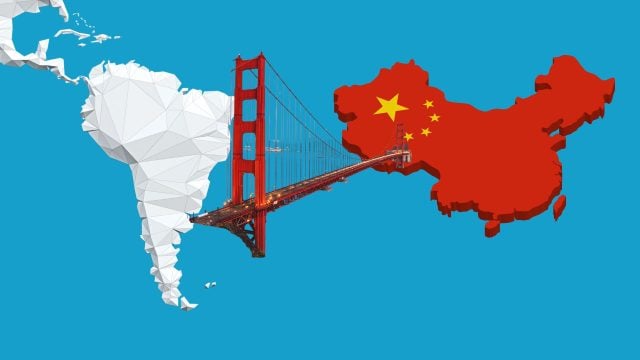
The state strategy from China and García Linera’s selective industrialization vision are seen as theoretical frameworks that could enable Chile to utilize lithium and green energy to develop strategic sectors (such as electromobility and the shipbuilding industry) and encourage sovereign integration in Latin America, turning energy transition into an opportunity to «industrialize hope».
Following this perspective, Ignacio Silva highlighted that one of the main consequences of neoliberalism is the productive stagnation that Chile faces today, a direct fallout of deindustrialization. He added that neoliberal policies introduced elements such as macro-financial deregulation and international capital liberalization that have drastically reconfigured the economic policy landscape.
“Economies open completely, financially, to the international market, resulting in heterogeneous outcomes across countries. When discussing southern countries, we see that their integration into the global economy is also heterogeneous, as these nations become increasingly specialized in their comparative advantages, primarily their natural resource endowments,” he indicated.
Silva, who serves as the executive director of OPES, explained how the global regulatory order established in the 1990s, led by the creation of the WTO, restricted the maneuvering space of southern countries through stringent rules such as intellectual property protection. This forced countries like Chile to specialize solely in their natural resources, prompting deindustrialization and productive lag.
In this context, the researcher noted that nations achieving economic success were those that effectively challenged these regulations through active industrial policies, resulting in higher productivity, better wages, and higher per capita growth than the region overall.
On the other hand, Silva contrasted the vision of deregulation and tax reductions promoted by the elected president José Kast with the necessity for active industrial policy. While one faction advocates deepening the free market to overcome stagnation, Silva reminded that the market is not neutral and that liberalization merely reinforces dependence on natural resources.
Bárbara Navarrete explained that green and popular industrialization is not contradictory, but rather a strategic synthesis to overcome the extractivist model. She argued that decarbonization and reindustrialization must progress hand in hand, using sustainability as a source of technological innovation and productive learning.
Furthermore, she emphasized that the «popular» component aims to democratize the economy, linking development to daily life, food sovereignty, and the role of local communities in their territories. She stressed the necessity for a model that not only alters what we produce to safeguard the environment but also how and for whom we decide to produce, involving citizens in the design of the future economy.
“The green and popular approaches facilitate the consolidation of a long-term strategy centered on decision-making sovereignty and sustainability. We recognize that these concepts present challenges, especially considering our economy is highly primary. Some decisions may not perfectly align with a simplified view of what is green, yet they aim towards a strategic horizon that unites research, development, and productive linkages within the framework of sovereignty,” she added.
Regarding the pillars of the green and popular industrial policy, Navarrete stated that their document proposes various initiatives. The first is to create a green industrial policy that implements a macro-financial regime conducive to productive transition. Additionally, it suggests fostering an international non-alignment policy, green jobs for a popular and democratic economy, electromobility, and the industrialization of popular agriculture and other strategic sectors.
For the researcher, a key aspect lies in constructing a narrative and aesthetics for productive transformation that emotionally and culturally connects with society. Another significant factor involves financing, where she proposes a development bank or a financing and investment agency for development.
“Currently, financing in Chile is highly concentrated, with large conglomerates controlling both the productive and financial sectors. This creates perverse incentives that necessitate an active state role to direct resources toward strategic sectors that generate jobs, ensure fair wages, and reduce economic concentration,” she noted.
Finally, Silva explained that non-alignment is a tradition with decades of history: “Today, amidst a technological dispute between China and the United States, southern countries must contemplate their role. Technological dominance shapes global value chains, and the challenge lies in how to advance within them.”
The researcher noted that this requires active state policies and international cooperation, both regionally and with leading countries, aimed at transferring, adapting, and developing technology.
Next, you can review the full program, produced by El Ciudadano and the Rosa Luxemburg Foundation:
Relacionados


Chile's Pavilion at COP30 Faces Backlash Over Corporate Funding and Climate Policy 'Capture' by Companies
Hace 3 meses