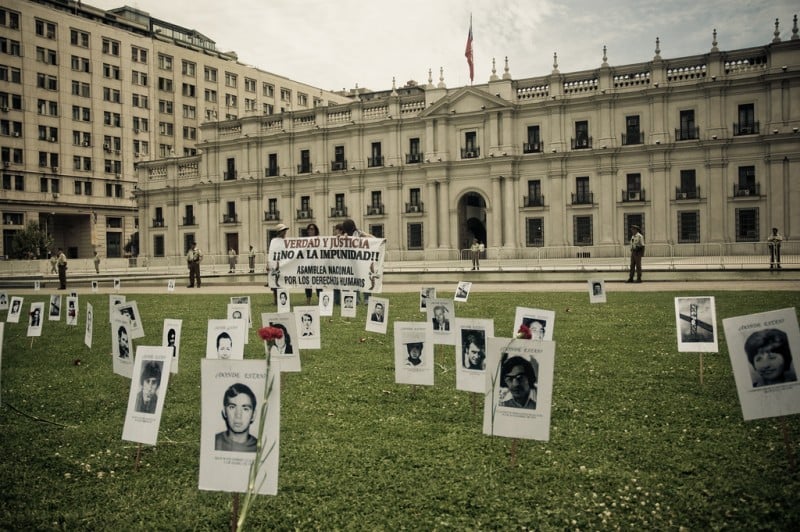
Original article: “Regresión grosera en la memoria histórica”: carta de figuras de DD.HH. cuestiona propuesta de Kast sobre presos por lesa humanidad
A coalition of prominent human rights advocates has released an open letter opposing the proposal from presidential candidate José Antonio Kast of the Republican Party, which suggests a possible pardon or release for those convicted of crimes against humanity imprisoned in Chile. The letter describes this idea as a «painful setback» and a «gross regression» for the nation.
Among the signatories are former senator Carmen Frei Ruiz-Tagle, attorneys Nelson Caucoto Pereira and Francisco Ugas Tapia, Alicia Lira Matus, president of the Group of Families of Political Executions, Luciano Fouillioux Fernández, María Paz Ortega Frei, and Alonso Ignacio Salinas García, the latter being the president of the Chilean Human Rights Commission.
In the document shared less than two weeks before the upcoming second round of elections on December 14, the signatories expressed their opposition to recent statements from the far-right regarding the potential release of those convicted of human rights violations and crimes against humanity. They argued seven points appealing to international law, collective memory, and principles of transitional justice.
The signatories began by reminding that Chile, as a part of the international community, has progressed in «establishing the unwavering respect for human dignity and the recognition and protection of human rights as fundamental values,» reflected in multiple regulatory instruments of the international system and the Inter-American system for the protection of human rights, which provide binding norms and fundamental standards for our state.
«These international human rights treaties have been signed and ratified by the Chilean state and are currently in force; in fulfilling these international obligations, it has guaranteed and protected these rights which emanate from human nature and has aligned national legislation with international law,» they indicated, highlighting that through these regulations, any political government is obliged to recognize, respect, protect, and promote human rights «without discrimination.»
«Human Rights Can Never Be Used as Political Bargaining Chips»
Within this binding regulatory framework, the advocates believe Kast’s proposal «to pardon, release, or attempt any other form of impunity that removes justice from those who committed the most serious violations of human rights during the civil-military dictatorship that affected us in recent history, the effects of which still linger today, represents a painful setback and a gross regression in our country’s historical memory and in respect for international human rights law.»
They further stated that such initiatives are «a direct affront to the victims and their families.”
Amid a time when the far-right seeks to impose partial and denialist readings of the dictatorship, the signers of the letter emphasized that «human rights are universal and inalienable, and can never be used or instrumentalized as political bargaining chips.»
«We cannot allow nor accept a whimsical and partial interpretation of history that seeks to relativize the horrors and sufferings experienced during the dictatorship by thousands of Chileans,» they stressed.
Moreover, they argued that in Chile, justice must be equal for all, and that given the «multiple horrific crimes committed, action was taken,» warning that «to strain our society with the possibility of releasing criminals guilty of murders, rapes, torture, forced disappearances, and thereby failing to uphold the sentences established, will never bring peace and will keep this wound open in the soul of Chile.»
«Those convicted, regardless of their origin or rank, must serve their sentences under equal conditions,» they stated.
Call Against Impunity
In the text, they referred to truth, justice, reparations, and guarantees of non-repetition, stating that these are the duties of the state.
«The time for these pillars that underpin any transitional justice process will always come, and any attempt to reverse judicial rulings or to seek impunity will only deepen the wounds of Chile, with unforeseen consequences,» they warned.
In conclusion, they issued a call «to all of our compatriots to be consistent in the unwavering defense of democracy and human rights, rejecting any attempt to grant impunity to those whom justice has determined guilty of atrocious crimes, be they civilian or military.»
They noted that in the context of the pre-election campaign, «the respect for human rights and its essential foundation, human dignity, can never be subject to debate or electoral calculations.»
Relacionados

Parliamentarians Call on UNICEF After Kast's Spokesperson Suggests Sentence Commutation for Child Rapists
Hace 3 meses
"Path to Barbarism?" Outcry Erupts Over Republican Deputy Meza's Proposal to Free Criminals and Rapists
Hace 3 meses
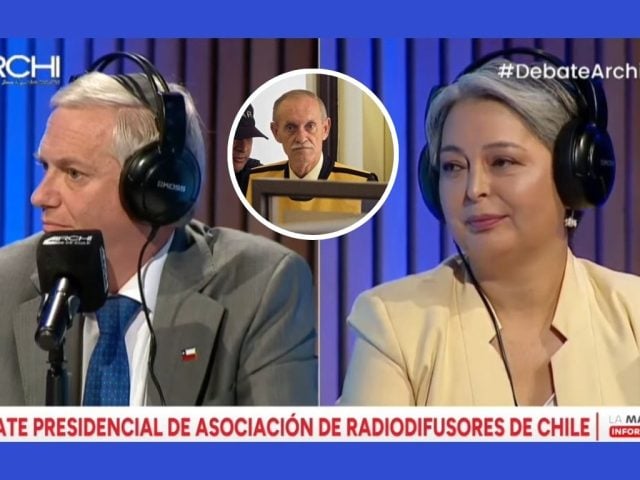
"Human Rights Criminals Like Krassnoff Don't Deserve Mercy": Jara Rejects Pardons in Archi Debate
Hace 3 meses