Original article: Estudio independiente eleva a más de 75.000 los asesinados por ataques de Israel en Gaza; la mayoría son mujeres y niños
Study in The Lancet Finds Violent Deaths in Gaza Exceed Official Figures by 35%
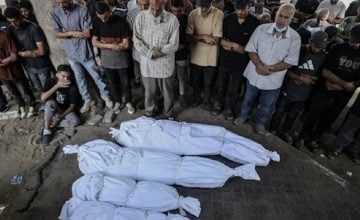
3.4% of the population in the Gaza Strip has died due to violence between October 2023 and January 2025, according to the first independent household survey conducted during the conflict.
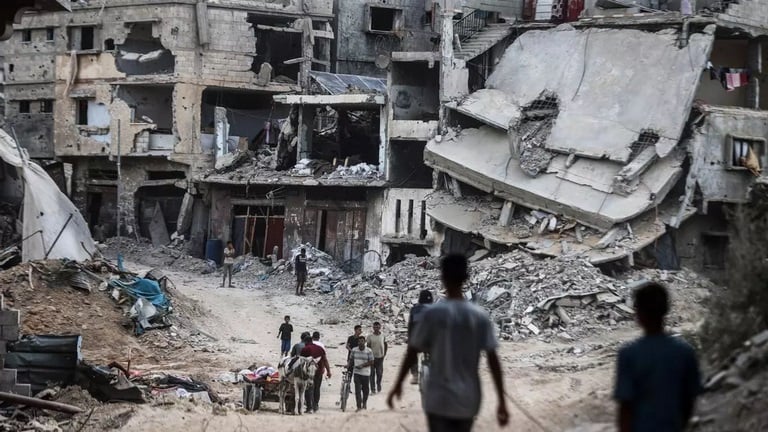
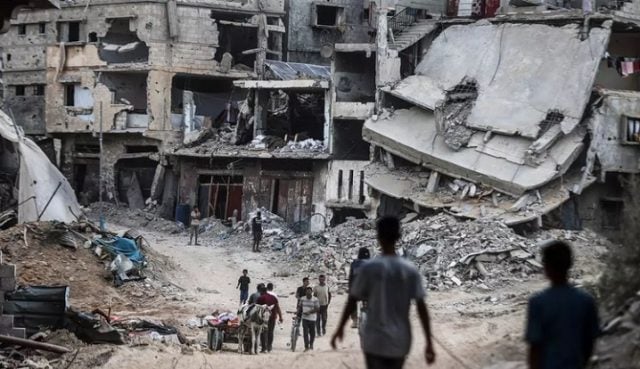
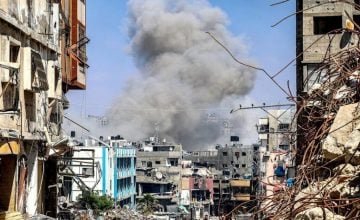
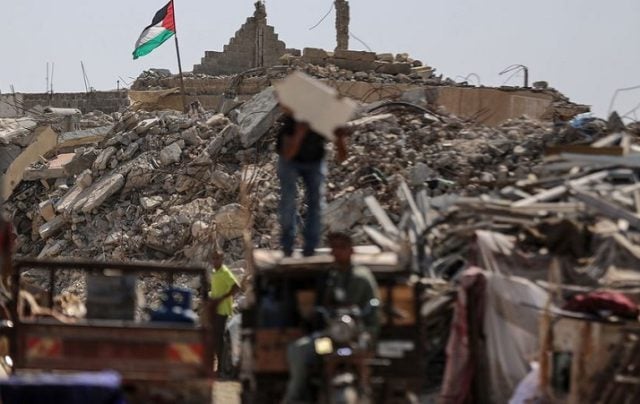
An innovative study published today in the journal The Lancet reveals that the number of violent deaths in the Gaza Strip due to Israeli attacks significantly exceeds the reports from the local Ministry of Health. Led by Professor Michael Spagat from Royal Holloway, University of London, along with an international team of scholars, the research estimates that 75,200 individuals (95% CI: 63,600 – 86,800) lost their lives violently between October 7, 2023, and January 5, 2025. This figure represents approximately 3.4% of the pre-conflict Gazan population estimated at 2.2 million.
The Gaza Mortality Survey (GMS), the first such effort using a population-representative methodology during the ongoing war, directly contrasts with data from the Ministry of Health, which reported 49,090 violent deaths during the same period. The study’s estimate surpasses the official figure by 34.7%, exceeding even the upper bounds of confidence intervals from previous capture-recapture studies. The authors emphasize that this discrepancy does not indicate a lack of reliability on the part of the Ministry; rather, its records are «conservative and reliable» given the «extraordinary limitations» under which they operate, and the demographic composition of the victims reported by the Ministry aligns with the study’s findings.
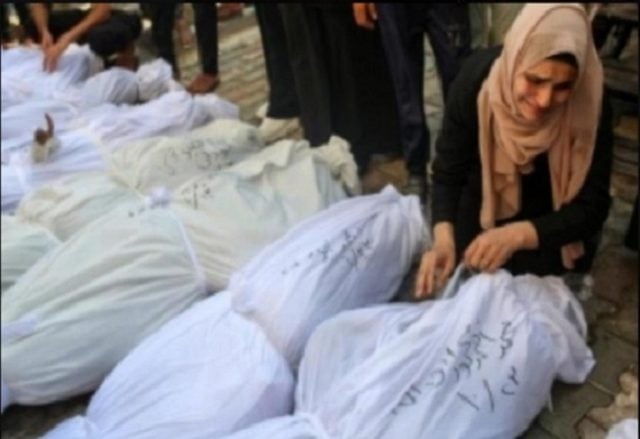
The demographic profile of the victims is among the most harrowing aspects of the report. According to the study, women, children (under 18 years), and the elderly (over 64 years) make up 56.2% (95% CI: 50.4–61.9) of violent deaths, accounting for 42,200 fatalities (95% CI: 33,100–51,300). The analysis breaks this down to 22,800 children, 16,600 women aged 18 to 64, and 2,870 elderly individuals. These data, gathered through interviews with 2,000 households representing 9,729 people, provide an unprecedented insight into the human cost of the conflict, validating the Ministry of Health’s demographic information through independent methodology.
Beyond violent deaths, the research also empirically addresses non-violent excess mortality for the first time, a frequently overlooked aspect relegated to projections. The study estimates a total of 16,300 non-violent deaths, of which 8,540 (95% CI: 4,540–12,500) exceed the expected baseline mortality for the period. This finding contradicts previous alarming projections suggesting that indirect deaths could quadruple those caused by violence. «Our data show that, at least until January 2025, violent deaths outnumbered non-violent ones,» the study states, contextualizing the impact of the humanitarian crisis amid widespread violence.
The methodological rigor of the survey, which achieved a response rate of 97.2% and employed GPS tracking of interviewers, demonstrates the feasibility of conducting thorough mortality surveillance even in active conflict zones. Researchers collected data in accessible areas of central and southern Gaza, where most of the population from the north and Gaza city had relocated. Although the authors acknowledge limitations, such as the inability to access some northern areas, sensitivity analyses suggest that under plausible high-mortality scenarios in those regions, overall estimates could be even higher. The study was funded by the European Research Council and other institutions.
Access the full study at the following link:
Relacionados
Cambridge University Study Reveals Systematic Assault on Palestinian Education and Learning Rights
Hace 2 semanas
Israeli Military Offensive in Gaza Results in Over 72,000 Palestinian Deaths: 576 Casualties Reported Since Ceasefire
Hace 2 semanas
Who is Catherine Connolly, Ireland's New President? Independent Leftist with a Pro-Palestinian Stance
Hace 4 meses