Original article: Cadáveres sin retirar y brote de tuberculosis: Comisión Interamericana presiona a Ecuador por crisis carcelaria
A desperate plea has uncovered the severity of the humanitarian crisis within Ecuador’s largest prison. «Urgent assistance is needed from the Forensic Medicine vehicle to remove a deceased individual,» officials at the Litoral Penitentiary in Guayaquil requested on December 3, 2025. The body of Luis Fernando B. I., found lifeless in cell 205 of wing 6, had been left for an entire day in his cell, a practice that has ceased to be rare and symbolizes the collapse of the system.
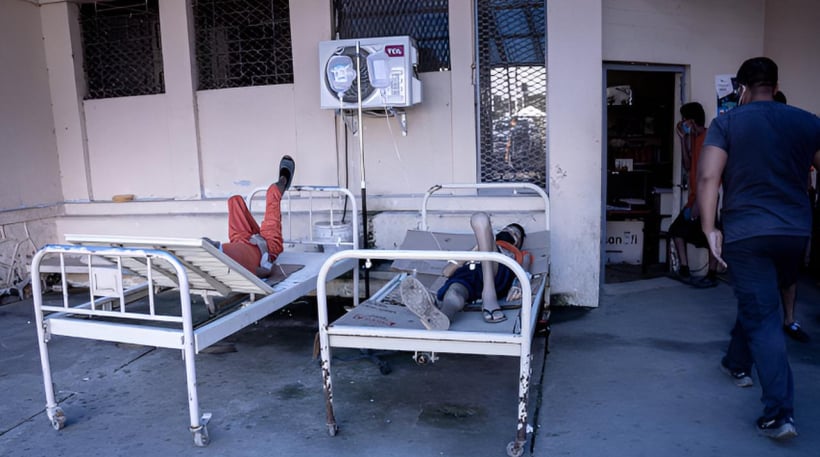
This seemingly isolated incident is merely the tip of the iceberg in a health and human rights emergency that has prompted the Inter-American Commission on Human Rights (IACHR) to issue precautionary measures against the Ecuadorian government, aiming to halt what civil organizations term a «latent prison massacre.» In 2025, approximately 600 inmates died, primarily due to chronic malnutrition, tuberculosis, and lack of medical attention.
Bodies Left Waiting, Diseases Spreading
The Permanent Committee for the Defense of Human Rights (CDH) in Guayaquil has reported that the corpses of inmates who die from «natural causes» or whose deaths are «pending determination»—labels they argue obscure the devastation of tuberculosis and starvation—can remain in their cells for an entire day. If death occurs on a weekend, removal may take several days.
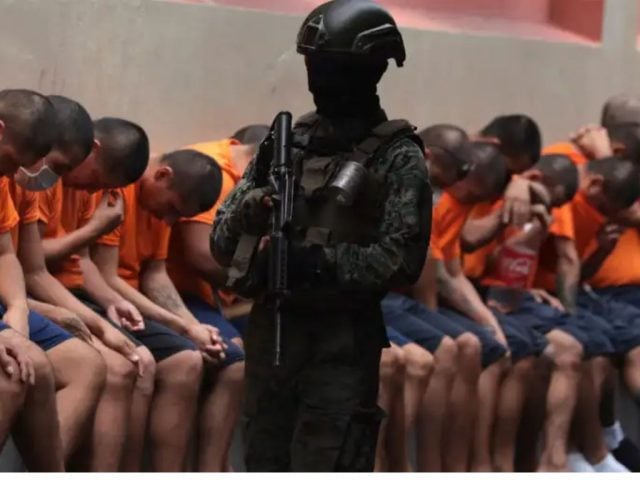
“Authorities are unaware until the pavilion is opened for food delivery. The corpses can stay in the cells for days. This creates new disease hotspots,» warned Fernando Bastías, a CDH member. This situation not only disrespects the dignity of the deceased and their families but also significantly worsens sanitary conditions in a facility marked by extreme overcrowding—housing nearly 7,500 inmates in a space meant for 4,000—and an active tuberculosis outbreak.
“What is happening at the Litoral Penitentiary is a latent prison massacre, perpetrated by the state,” stated Bastías. The toll of about 600 deaths in 2025 exceeds the number of victims in the 15 prison massacres that occurred between 2021 and 2024, which left at least 567 people murdered nationwide.
“We are facing systematic deaths under state custody. If the state deliberately creates conditions of torture or neglect leading to death, we’re not just talking about human rights violations, but potential crimes against humanity,” the activist asserted.
Judicial and International Protection
In light of this situation, the Litoral Penitentiary has been granted dual «judicial protection» since Monday, January 5, 2026. On one hand, the IACHR, an OAS entity, issued precautionary measures, considering that inmates face a «situation of gravity and urgency» that violates their rights to life, personal integrity, and health. These measures are in addition to a prior protection action partially accepted by a judge in Guayaquil on December 11.
In its resolution, the IACHR underscored that «the high number of deaths, their sustained increase, and the lack of clear state information on the causes are relevant elements for assessing the seriousness of the situation.» The organization ordered the Ecuadorian state to urgently guarantee access to specialized medical care, treatments, quality food, and clean water while taking immediate actions to alleviate overcrowding.
Military Obstacle and Failed Technical Meetings
Billy Navarrete, president of the CDH, explained that in prior judicial hearings, staff from the National Comprehensive Attention Service for Adults Deprived of Liberty (SNAI) admitted the failure of a series of previously convened inter-ministerial technical tables to address the crisis.
The main hurdle, according to the testimonies gathered, was that technical decisions suggested in those forums “always depended on the ‘consultation with superiors,’ who ultimately did not authorize the measures,” the website Primicias reported.
Moreover, civilian officials reported that the military’s involvement, following Executive Decree 218 of 2024, which declared prisons as security zones, is hindering their operational duties.
“The military has the keys and determines medical care,” asserted Navarrete, explaining that military personnel have taken over civil functions, controlling everything from transfers to food delivery and medical attention, despite lacking expertise in penitentiary and health management.
A Last Chance: The Emergency Table
Amid this scenario, there is hope for crisis intervention with the establishment of an Emergency Penitentiary Table, ordered by the Guayaquil judge and reinforced by the IACHR mandate, which also called for the creation of an urgent interinstitutional table. Its first meeting took place on December 31, 2025, with another session scheduled for mid-January.
This table, composed of the Ministry of Health, SNAI, Armed Forces, Ombudsman’s Office, Public Defender’s Office, CDH, and family committees, operates under a different premise. According to activists, this time, “consultation” with superiors is no longer allowed, and officials cannot refuse to implement recommendations from the technical table, under penalty of breaching judicial and international mandates.
Deadline for the Ecuadorian Government
The government of President Daniel Noboa has 15 days from the notification on January 5 to inform the IACHR about the actions taken and whether it authorizes an on-site visit from the international organization to verify the situation.
There is a significant risk that, should the state fail to contain the crisis, the case could escalate to the imposition of provisional measures by the Inter-American Court of Human Rights, a more coercive mechanism.
Meanwhile, organizations like the CDH question the accuracy of official data, alleging a «minimization and distortion» of figures, particularly in denying tuberculosis as a direct cause of deaths, when the skeletal remains of the deceased clearly point to issues stemming from this infectious disease and chronic malnutrition.
The international community now watches to see if the combined pressure from national justice and the inter-American system can redirect a tragedy where deaths due to state negligence seem to have become institutionalized, and where the timely removal of a corpse has turned into an exceptional circumstance.
Relacionados


Major Corruption Crackdown: 42 Santiago 1 Guards Investigated for Bribery, Drug Trafficking, and Money Laundering
Hace 2 meses
Senator Campillai Calls Sunday Release of Former Officer Maturana "Unacceptable" Amid Ongoing Concerns
Hace 3 semanas
IACHR Holds Brazil Accountable for Inhumane Prison Conditions Faced by Mauricio Hernández Norambuena
Hace 4 semanas