Original article: Irán: 47 años de Resistencia y Dignidad
By Pablo Jofré Leal, Journalist and International Analyst
Discussing dignity means acknowledging an intrinsic, supreme, and inalienable value that we possess as human beings within society.
In this context, Iran represents the defense of such value against what has been one of the most persistent and illegal attacks against any nation, carried out by hegemonic and arrogant Western powers led by the United States, served by the Israeli Zionist regime as their proxy. Coupled with other minor yet perilous allies, history shows us that cipayos often become deeply involved, even at the cost of their own decency.
On this date, I assert that for decades, the Islamic Revolution of Iran has been the target of numerous aggressions, destabilization processes, attacks, blackmail, sanctions, blockades, confiscation of assets, and the assassination of civilians, military personnel, and scientists. Attacks against its Parliament, religious sanctuaries, and nuclear facilities have been rampant.
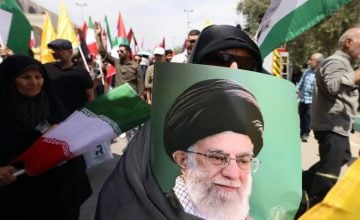
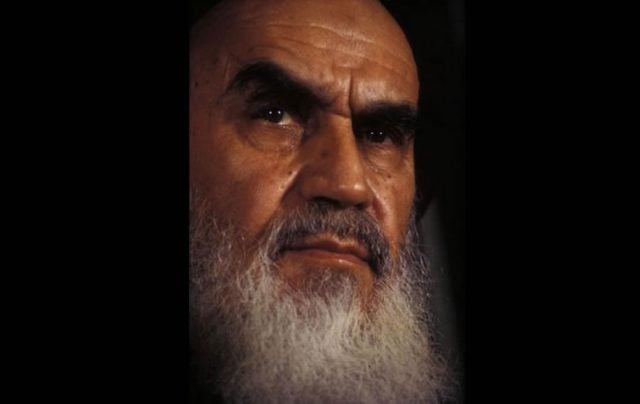
This hybrid war has highlighted the depravity and danger posed by the United States and its cadre of criminals, but it also showcases the resilience of the Iranian people, not only in facing difficulties but in consolidating their process and advancing in multiple areas, forging a path laid out from the beginning by Imam Khomeini.
It has now been 47 years during which U.S. administrations, whether Democratic or Republican, liberal or far-right, have pursued and enacted a policy of maximum pressure against Iranian governments and society since the revolutionary triumph in February 1979. This behavior can be explained by various reasons.
Firstly, the imperial Zionist alliance feels the reality of the Persian nation’s liberation from a totalitarian monarchy, and the servitude it held towards the United States and its interests, serving as a terrestrial aircraft carrier of the West in the Central and Western Asia region, lodged in their backs like a thorn. Remember that the Pahlavi dynasty was the enforcer of Washington’s terrorist policies in the area.
Secondly, for the United States, as I assert whenever asked to explain this harmful behavior toward the Islamic Republic of Iran, it essentially seeks from the political, military elite, and lobby groups—Zionist interests, the military-industrial complex, and energy interests—to prevent a country seeking its own path of development, based on the concepts of sovereignty and dignity, from serving as a reference point for that part of the world which has yet to find its determined course.
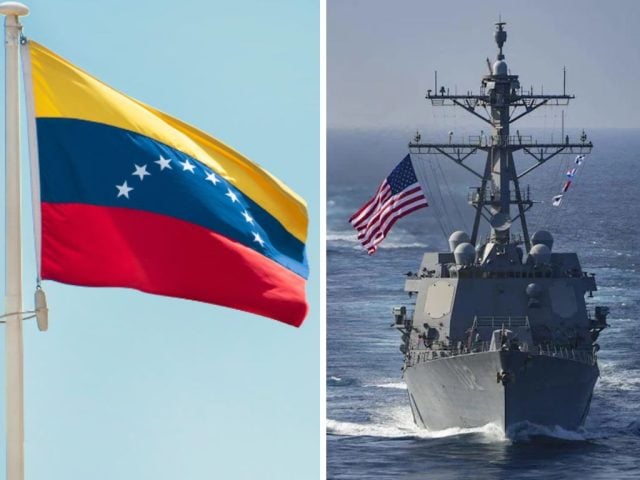
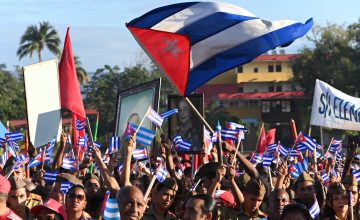
Thirdly, a country like Iran, with its commitment to not become dependent and to confidently advance in its capacities, immediately becomes an irreconcilable enemy for Washington and its allies, similar to Cuba, revolutionary Nicaragua of 1979, and Chavista Venezuela, as well as that Chile which took a so-called Chilean path to socialism.
Other movements, seemingly less transformative but equally yearning to break free from the nefarious influence of the West that tends to consume the resources and the very air we breathe, find their enemies in countries like Iran, making them irreconcilable foes to that arrogant and brutal West.
In Africa, this reality is observed with rising tensions against Mali, Niger, and Burkina Faso that have chosen an emancipatory path away from the nefarious influences of France and the West, which have long usurped and exploited the resources of those nations, once treating them as colonies subject to the whims of metropolises and now, in this neocolonial stage, are starting to shake free from.
In this framework, a vivid memory comes to mind. I refer to the Second Declaration of Havana made known on February 4, 1962 by the late Cuban leader Fidel Castro Ruz who proclaimed, «because this great humanity has said enough! and has set forth. And its march of giants will not cease until true independence is conquered, for which many have already died in vain.»
The United States, amidst the advance of multilateralism and the consolidation of a Global South where subservience to the West dangles ever more precariously, seeks to maintain a dwindling, dying hegemony capable still of striking out. And like a wounded beast, it becomes even more dangerous and venomous, catalyzed these days by Donald Trump’s second administration.
This government replicates a doctrine of premeditated chaos, destabilization processes, coups, economic coercion, sanctions policies, pushing for color revolutions, and «soft wars« as outlined in Gene Sharp’s manual of the «Soft Coup,» which erupted in late December 2025 and early January 2026 as the violence against Iranian society was incited under the pretext of legitimate economic protests, often exploited as an opportunity to unleash the full criminal arsenal Washington and its partners possess.
The blond billionaire, a child of immigrants who despises those seeking in the United States the same opportunities his German and Scottish family pursued, is embroiled in sex crimes linked to his friend, former Israeli Mossad agent Jeffrey Epstein, a member of the American Jewish Zionist community.
This Trump, enacting an utterly unhinged policy, does not absolve him of accountability but instead highlights the dangerous nature of allowing such a figure to govern a nuclear superpower, with over 800 military bases worldwide, bent on making U.S. national security strategy the guiding principle followed by much of the world.
I speak of a regime led not only by a disturbed mind, a malignant narcissist but also by an arrogant, perverse, and brutal character trying to solidify the fundamental premise that drives U.S. policy, be it from the executive, congress, opinion leaders, or military leadership, regarding the belief in manifest destiny, which holds that countries and peoples of the world exist to serve them, enabling the so-called «American way of life» to persist despite the damages inflicted upon human rights, instability across five continents, environmental degradation, and a political, economic, and military imbalance among nations.
Yet, the Persian nation is unwilling to allow its millennia-old history, its dignity, that resilient character of a nation that stands tall against adversities and coercions, to be tarnished by the policies of those who look down on peoples. An Iran that has provided abundant evidence of sacrifice for its values.
The Islamic Republic of Iran today stands as an example of independence and value, aware that its resistance embodies the tenacity of peoples, where each missile launched in response to imperial alliances is inscribed with the names of every martyr fighting for independence, self-determination, and the defense of their societies.
An Islamic Republic with a victorious revolution serving as a profound reference point for many peoples globally, marking February 11th as the 47th anniversary since that historic epic that shifted the balance of power that once existed in Central and Western Asia, with significant influence on the Ummah – the Islamic community – generating what has become the Islamic awakening.
I remember a revolutionary process known as the Daheye Fajr or Decade of Dawn, that began on February 1, 1979, with the return to Tehran from Paris of exiled religious leader Imam Khomeini, urging the Persian nation to intensify its revolutionary struggle, ultimately achieving the fall of the Pahlavi monarchy on February 11.
The consolidation and momentum of the Islamic Revolution of Iran have not been without challenges. In a complex regional landscape, Iran has shattered the myth of the invisibility of the West and its regional puppets, highlighting the significant and pivotal role the Persian nation plays in achieving the sovereignty and self-determination of the peoples in the region.
This revolution has had its own contradictions, and how could it not, as it is a living political process, continuously evolving, with ups and downs, amidst a mobilized population capable of distinguishing those who, seizing on legitimate economic grievances, attempt to destabilize the country under the mandates of Washington and the Zionist enemy, exploiting every fissure and opportunity to disrupt revolutionary unity in Iran.
Forty-seven years post-revolution, I reiterate my remarks regarding Iran’s critical role in the region, a role that shines brighter than ever, given its firm demeanor facing the United States, its threats and attacks, while still being willing to show the world that it is also prepared to engage in dialogue, but without subjugation or yielding under pressure, steadfast on non-negotiable issues: its missile defense system, its peaceful nuclear program, and its support for resisting peoples, for which it has shed the noble blood of its martyrs.
Our writings should serve to remind the world that only the Islamic Republic of Iran, alongside the axis of resistance, has managed to halt the ambitions and actions of global takfiri terrorism—offspring created, organized, funded, and armed by Washington and its allies. Only Iran, with the Axis of Resistance, fought and successfully defeated DAESH and other terrorist groups thanks to the continuous efforts of the Islamic Revolution Guards Corps and their elite force, through the strategic coordination led by Lieutenant General Qasem Soleimani, martyred in defense of his homeland and its peoples.
Iran has become a symbol of the fight against terrorism, in stark contrast to a defunct and disingenuous international coalition led by the United States, which has been more focused on fragmenting Syria and Iraq than combating terrorism, and which continues to support the Al Golani regime in Syria post the overthrow of Bashar al-Assad, an Al Golani for whom the U.S. government placed a $10 million bounty, yet who now wanders the halls of the White House and European palaces to serve his masters.
The political and religious authorities of Iran have persistently warned that there is a concerted effort to destroy the Persian nation, one tool being employed by imperialism and its Zionist partners is fueling ignorance, unfounded accusations, and destabilizing actions through sanctions and blockades to instigate discomfort in the populace and create conditions for a war against Iran, as seen in June 2025 and after its crushing defeat, advancing the strategy visualized in the attacks of late December 2025 and early January 2026—a strategy also overwhelmed but ongoing. Iran is well aware of the need to remain vigilant.
All of this unfolds against what the French author Jean Michel Vernochet asserts in his invaluable book titled “Iran: The Necessary Destruction,” regarding Washington and its allies’ predatory role: “Iran must be destroyed, of course! Not only to prevent its potential access to atomic weaponry (something unlikely) but also because Iran’s independence may challenge Israel’s regional preeminence, the western outpost in Western Asia. Maintaining Israel’s dominant position in the region, which depends on its regional nuclear weapon monopoly, is paramount to keep at all costs.”
It is evident that this statement is a testament to the hypocrisy and double standards of Washington, which often feigns outrage over the Iranian nuclear program while having supported the Zionist entity and its militaristic nuclear agenda for decades—a Zionist regime that possesses between 200 to 300 nuclear devices, subjugates the Palestinian population, occupies their territory militarily, and is currently executing a brutal genocide that escalated in October 2023. It aggresses Lebanon through destabilizing actions via its intelligence services and continued attacks despite a ceasefire that this victim society has never honored.
A Nazi-Zionist regime that assassinates Iranian nuclear scientists and supports political operations such as efforts to connect with Kurdish-Iraqi groups and Azerbaijan, actions warned against by the Iranian government as unacceptable, for it cannot abide having their enemy lurking on their borders. Additionally, recognizing a phantom entity like Somaliland in conduct of absolute impunity without any international bodies sanctioning the colonial genocidal government led by corrupt Benjamin Netanyahu—a war criminal who roams the globe with total impunity granted by his daddy Warbucks.
Iran, amid a complex scenario, with ongoing economic hardships and daily aggressions ordered by Washington and its lackeys, is delivering a resounding message of loyalty to its principles and ideals. An unusual stance in a world where powers often serve indignantly to hegemonies foreign to cultures, beliefs, history, and neighboring relations. Iran teaches us that to resist is part of the language of victory, kept in mind the various plots faced by the Persian nation.
After 47 years of Revolution, Iran remains steadfast in defending its sovereignty and dignity, now with the necessary economy of resistance—a core concept to understand the Iranian process amidst constant pressure.
On one of the anniversaries marking the triumph of the Islamic Revolution, I noted, and I find it necessary to repeat what General Seyed Abdolrahim Musavi, Chief of Staff of the Armed Forces of the Islamic Republic of Iran, said about the revolution’s triumph in February 1979: “The Islamic Revolution […] challenged the bipolar system of communism-liberalism that ruled the world and echoed the promise of freedom and independence in the ears of the great nation of Iran, the Muslim nations, and the oppressed of the world.”
In the same spirit, I consistently assert, as I expressed in February 2021, a month after the assassination of Lieutenant General Qasem Soleimani, that there exists an absolute consensus, among both friends and foes of the Islamic Revolution, that it has become one of the most significant historical events of the 20th century that, after more than four decades, continues to shape international politics.
A massive, popular Islamic revolution, more binding than any other revolution in our planet’s history. A victorious uprising under a powerful, recognized, and respected leadership like that of Imam Khomeini.
In Iran, despite logical differences in a complex society, there exists agreement on essential elements, where the unrestricted defense of the Islamic Revolution, its sovereignty, and self-determination prevail. Despite decades of pressure, the Iranian Revolution is making great strides in the region and the world through strategic alliances within the framework of multilateralism and the Global South.
The path forward is based on integration and mutual respect, which remains the guiding principle of a country that has become an indisputable example and worthy of admiration.
By Pablo Jofré Leal. Article for HispanTV
Notes
- https://articulo.islamoriente.com/article/iran-soberania-y-dignidad-39-anos-del-triunfo-revolucionario
- http://www.cuba.cu/gobierno/discursos/1962/esp/f040262e.html
- Gene Sharp is an American philosopher and political scientist, founder of the NGO Albert Einstein, whose goal is purportedly to promote «the defense of freedom and democracy and the reduction of political violence through non-violent actions.» His work outlines five steps for provoking soft coups: softening, delegitimizing, warming up the streets, combining forms of struggle, and institutional fracture. https://rebelion.org/el-manual sharp-y-los-golpes-suaves-en-america-latina
- https://www.voltairenet.org/article177946.html
- https://espanol.almayadeen.net/noticias/politica/2103218/-israel–reconoce-a-somalilandia-como-estado-independiente
- https://www.hispantv.com/noticias/defensa/537195/iran-ejercito-revolucion-islamica
Relacionados
Iran and Venezuela Strengthen Alliance Against US Actions: Cooperation to Combat Caribbean Piracy
Hace 2 meses