Original article: Israel traslada a Líbano la receta de Gaza: destrucción, desplazamiento y ocupación
The southern region of Lebanon, stretching from the border to the Litani River, has become the latest battleground for a strategy of destruction, displacement, and occupation previously employed by Israel in Gaza.
What analysts and international bodies speculated for months became a reality on March 24, when Israeli Prime Minister Benjamin Netanyahu’s government confirmed the military occupation of this area, which constitutes about 10% of Lebanese territory. This is not a temporary incursion but a systematic strategy aimed at redrawing borders through violence.
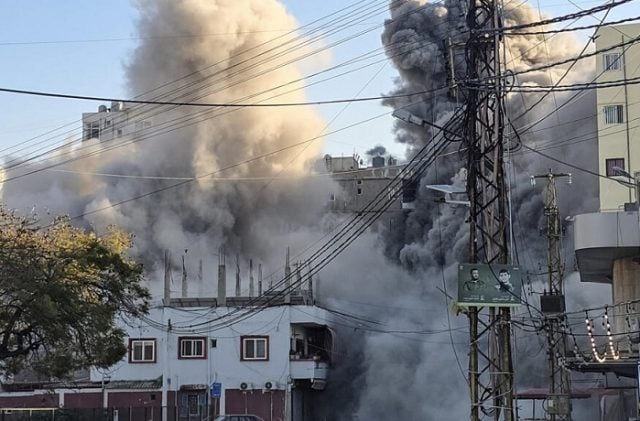
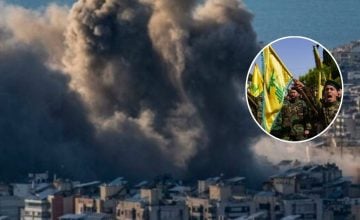
According to the digital outlet Spanish Revolution, this operation mirrors the military tactics seen in Gaza, combining three fundamental aspects: massive bombings, forced population displacement, and the systematic destruction of infrastructure.
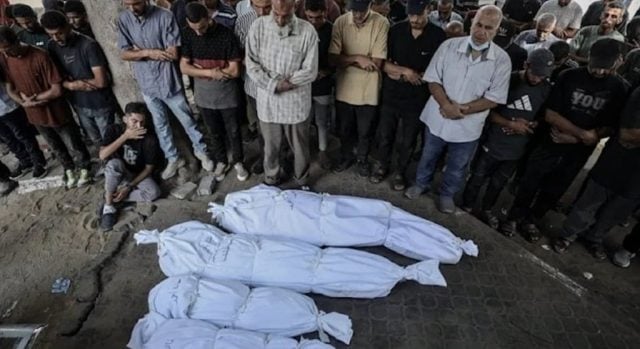
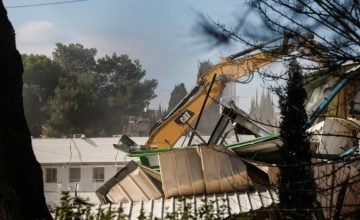
Border towns like Kafr Kila, which have experienced a constant demographic decline for years, are now at the forefront of a rapid territorial vacuuming. Recent attacks have targeted not only military positions but also roads, hospitals, water systems, and residential areas. Far from being collateral damage, this is an operational pattern that replicates the model used in Gaza: first, the essentials for survival are destroyed, then the population is forced to flee, paving the way for occupation.
A Historical Pattern That Undermines Exceptionality
To grasp the magnitude of what is unfolding in southern Lebanon, it must be contextualized historically, debunking any arguments of exceptionality. The Zionist regime’s stance towards Lebanon is neither new nor situational. Since Israel’s establishment in 1948, southern Lebanese territory has witnessed invasions in 1979, 1982, and 2006, alongside a prolonged occupation from 1985 until 2000.
During this time, the alliance with local militias led to not only territorial control but also episodes of extreme violence against civilians.
In this context, Spanish Revolution’s article recalled the atrocities of Sabra and Shatila, where 3,500 civilians were killed, emphasizing that «this is not an isolated episode; it is a continuity.”
These references serve as reminders that current devastation is not an anomaly within the conflict but the latest manifestation of a historical continuity of expansion and control.
Zionist Expansion Under the Umbrella of “Security”
In its official narrative, the Zionist regime attempts to frame its operations as exercising legitimate defense. However, military actions on the ground indicate that neutralizing Hezbollah is merely a facet of a broader plan seeking to unilaterally redraw borders.
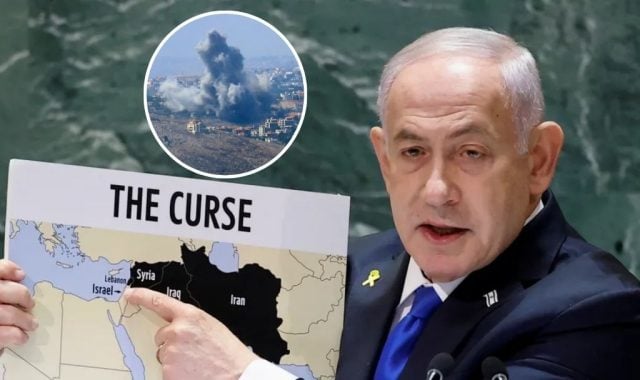
This concept, known as “Greater Israel,” has both religious and political roots, advocating territorial expansion over neighboring countries.
While it may seem a marginal notion in international discussions, various declarations from Israeli leaders have placed it at the political forefront.
Artículos Relacionados

Priest Killed While Aiding Parishioner in Lebanon: Outrage Over Cleric's Murder in Israeli Attack
Hace 2 semanas