Original article: Las recientes decisiones unilaterales israelíes para ampliar la anexión de facto en Cisjordania
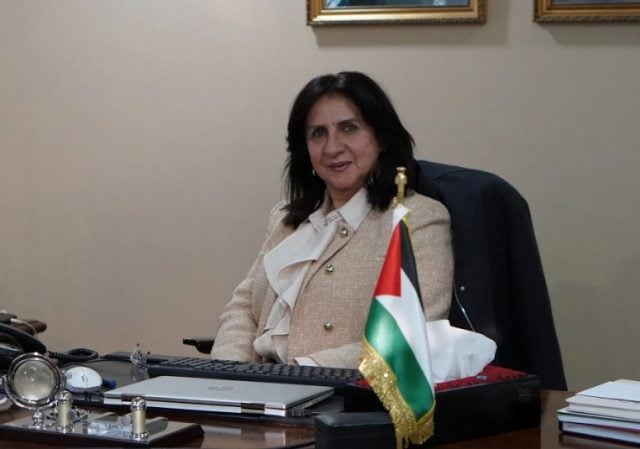
By Vera Baboun, Ambassador of the State of Palestine in Chile
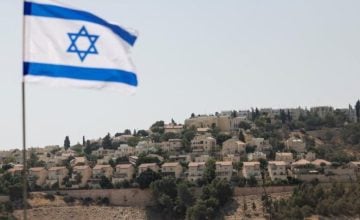
On Sunday, February 8, 2026, the so-called «Israeli security cabinet» approved a series of measures accelerating the illegal expansion of settlements in the occupied West Bank and promoting policies to reinforce the de facto annexation of Palestinian lands through changes to land registration systems, planning, and enforcement, in violation of occupation law.
Israeli Finance Minister Bezalel Smotrich has publicly stated that the goal is to «deepen our roots in all regions of the Land of Israel and bury the idea of a Palestinian state.»
The recently adopted measures introduce significant legal, administrative, and territorial changes, with wide-ranging implications for Palestinian property rights, municipal authority, and existing agreements.
These measures remove historical restrictions on land transactions, lift prohibitions preventing private Israeli settlers from acquiring land, and suppress certain approval requirements for real estate sales, allowing for increased acquisition of Palestinian land by settlers.
These powers permit Israeli authorities to intensify the demolition of Palestinian homes and infrastructure, facilitating the expansion of settlements «exclusive to Jews» on confiscated lands.
Under the same annexation rationale, authority over building permits in Hebron—including the Ibrahimi Mosque—has been transferred from its municipality to the «Israeli Civil Administration.» This move not only facilitates the expansion of settlements but also dismantles the 1997 Hebron Agreement.
A similar pattern threatens Bethlehem with the segregation of the Bilal bin Rabah Mosque and its transfer to a «Local Authority Directorate,» consolidating what is, in practice, a de facto annexation and sovereignty imposed by the occupying power.
Israeli authorities seek to extend enforcement measures and administrative control over Areas A and B, designated under Palestinian civil jurisdiction in accordance with the Oslo II Agreement, under vague pretexts such as heritage protection, archaeology, environmental concerns, and water regulation.
These developments raise serious concerns from the perspective of international law regarding the status of the Occupied Palestinian Territory and the obligations of the occupying power.
Under international law, the West Bank, including East Jerusalem, remains occupied territory, and any unilateral attempt to alter its legal status is without legal effect.
Actions of the occupying power constitute a potential violation of the Vienna Convention on the Law of Treaties by extending the enforcement powers of the so-called Israeli Civil Administration into Areas A and B, thereby undermining the agreed distribution of competencies.
These measures are considered a direct infringement on the Palestinian people’s right to self-determination—a peremptory norm of international law—by fragmenting the territory, weakening governance structures, and eroding the territorial integrity necessary for the viability of a Palestinian state.
The State of Palestine asserts that Israel has no sovereignty over any part of the occupied territory and lacks authority to modify or replace the laws that constitute the Palestinian legal system.
The prohibition of acquiring territory by force remains a fundamental pillar of international law, enshrined in Article 2, paragraph 4 of the United Nations Charter and reaffirmed by Security Council resolutions 242 (1967), 338 (1973), and 2334 (2016), which establish that Israeli settlements lack legal validity.
In its 2024 Advisory Opinion, the International Court of Justice concluded that Israel’s ongoing presence in the occupied Palestinian territory is illegal and must end as soon as possible.
This rejection has begun to resonate strongly in international arenas. The United Nations, through its Secretary-General, has expressed deep concern, reminding that these settlements lack legal validity, a position shared by the European Union, which describes these measures as steps that distance any possibility of regional peace.
Countries like Spain have been categorical in stating that these actions seriously threaten the viability of the two-state solution, while the United Kingdom has deemed any attempt to alter the demographics and geography of the territory as unacceptable. Even the U.S. administration has reiterated its opposition to annexation, describing these measures as a political provocation.
In the region, the Arab-Islamic Bloc and the Organization of Islamic Cooperation have issued strong condemnations against what they consider an imposition of illegal sovereignty that systematically violates UN resolutions.
After 77 years of the Palestinian Nakba, decades of occupation since 1967, and two years of unprecedented destruction that has devastated lives and entire cities in Gaza, today, the unilateral decisions of the occupying power continue its annexationist and illegal military practices without real restraint, supported by the international community’s inability to move from statements to concrete actions.
The reality has shown that verbal condemnations are no longer sufficient and that the lack of accountability only reinforces the consolidation of illegal facts on the ground. The lives and rights of the Palestinian people are non-negotiable and cannot be postponed; any further silence or hesitation effectively amounts to allowing the continuation of violations and undermining fundamental principles of international law and a just peace.
Vera Baboun, Ambassador of the State of Palestine in Chile
Artículos Relacionados
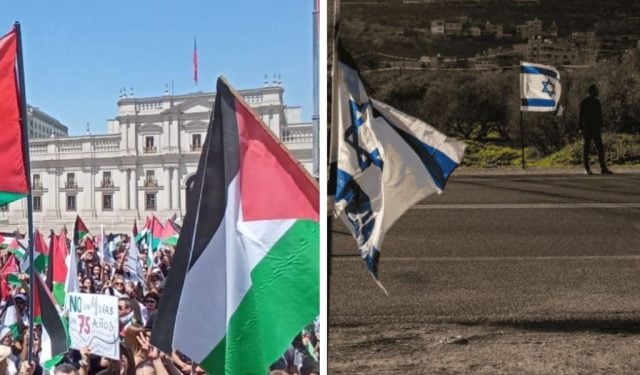
Palestinian Community in Chile Condemns Israel's Accelerated De Facto Annexation of West Bank
Hace 1 mes