Original article: Los “depende” de un Kast evasivo que incomodó a la prensa en el debate Archi
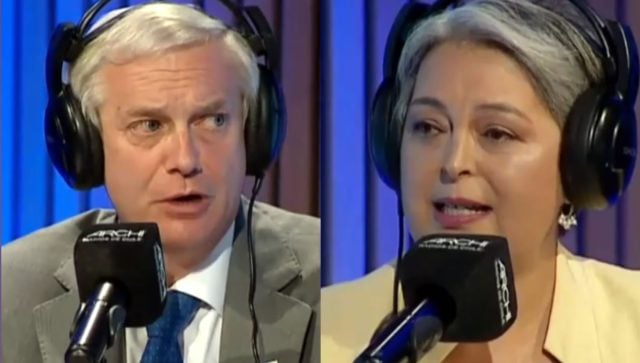
During the Archi 2025 debate held this Wednesday morning at the UC Campus Oriente, the event was designed to achieve just the opposite of what characterized José Antonio Kast’s performance: providing clarity, contrast, and direct answers in front of a panel of national and regional radio journalists.
The format, developed by Archi in collaboration with the UC School of Government, aimed to elicit clear definitions on sensitive topics such as migration, social rights, and integrity, as highlighted by coverage from El Mostrador.
However, at several points, the Republican candidate chose to dodge closed questions. In the segment on euthanasia, for instance, journalist Iván Valenzuela repeatedly asked him to respond with a «yes» or «no» regarding whether he would enact or veto a potential law approved by Congress. Kast avoided taking a clear stance, spoke about sending the project back to Parliament, and ultimately summarized his position with a vague «depends,» despite insistence for a definitive answer, according to CNN Chile’s report.
A similar scenario unfolded regarding pension issues. When asked if he would seek to raise the retirement age, the panel again demanded a «yes or no» response. Kast replied that the issue «is not yes or no» and ended up providing an explanation where he again relied on the word «depends,» qualifying by age groups instead of delivering a general and direct definition, leaving an impression of an evasive answer to a specifically framed question.
In this context, José Antonio Kast’s performance was marked by the repeated use of the same formula: «depends.» In response to direct and closed questions, the candidate avoided categorical definitions and repeatedly shifted toward conditioned, general, or future answers, leaving the journalists’ inquiries unanswered explicitly at that moment.
The most intense moment occurred when the discussion turned to the universal childcare initiative. Jeannette Jara emphasized the project promoted in Congress, highlighting that it addressed a historical demand from working women and families. Kast then interjected to assert that, if he were to reach La Moneda, his government would present a bill on that matter and that he would «improve it,» as if it were an outstanding regulatory vacuum.
It was at this moment that Jara corrected him live, reminding that the initiative had already been worked on and agreed upon in Congress, with support from a broad majority of political forces, both right and left, and that the improvements to the childcare system were already being processed and adjusted within the very same institutional setting.
The contrast not only revealed Kast’s ignorance about the status of the legislative process but also heightened the discomfort within the panel, which expected a concrete response regarding a current public policy, not the promise of «something to be done» that was already underway.
For journalists, the issue was not only the tone but the substance: direct questions that yielded no direct answers. Whenever the panel sought a «yes» or a «no,» or a precise definition of what he would maintain or change, the conversation would veer into a vague «we will do it better» without explaining how, or into «depends,» which evaded a clear commitment to a position.
The result was an uncomfortable scenario for the media covering the debate and for audiences following it: a format designed for clarity confronted with a candidate who, at several points, did not respond clearly to the questions posed, and even proposed as a novelty a project—the universal childcare initiative—that had already been approved or advanced with wide consensus across the Congress of which he was a part.
The Citizen
