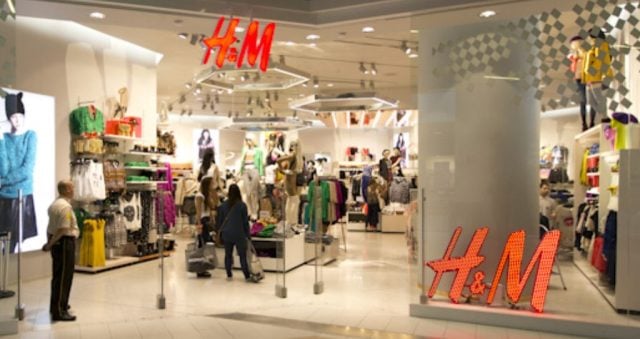
Original article: Justicia laboral frena a H&M en La Florida: tribunal confirma multas por cambiar jornada sin aviso y reglamento incompleto
The Second Labor Court of Santiago has denied an appeal from the retail chain H&M Hennes & Mauritz SpA regarding two fines imposed by the Local Labor Inspection of La Florida, confirming penalties of 60 UTM (approximately 4 million Chilean pesos each at current value) for violations of labor laws.
The ruling, issued by Judge Catalina Casanova Silva (case role 247-2025), fully supports the findings of the inspection, which identified two violations: the unilateral modification of work hours without legally required notification and the omission of such hours in the company’s internal regulations.
The Case of the Worker and the Schedule Changes
The events date back to the employment situation of A.G.V., who has been employed since August 1, 2014. Initially scheduled for 30 hours a week, her hours were subsequently changed to 35 and then to 45, ultimately reducing to 18 hours starting November 1, 2021. Following this, the worker presented the company with a disability certificate for her son (67.50% severe mental disability) and a caregiver’s license, requesting special hours.
In response, H&M agreed on two special shifts: 07:30-14:00 and 10:00-16:00, which she fulfilled without issue. However, in November 2024, as part of an effort to improve operational efficiencies, the company modified the store’s opening hours to 08:00 on certain days. This change adjusted her entry shift from 07:30 to 08:00, affecting her work schedule significantly.
This alteration led to the Labor Inspection imposing the first fine, claiming that the retail chain failed to notify the worker of the agreed schedule change and that the internal regulations did not include any provisions regarding the work hours noted in the attendance records.
Judge Casanova was unequivocal in her analysis, stating that “there is no evidence that the employer communicated the change in schedule to the worker 30 days in advance; although a witness mentions this, their statements are not supported by any documents presented in this case.”
The court granted full validity to the findings of the inspector, based on the presumption of truth established by the organic law of the Labor Directorate.
“In conclusion, regarding the facts verified during the inspection that prompted the first fine, this judge will give weight to the findings of the Labor Inspectorate, which are sufficiently credible as the inspector is an impartial third party, enjoying presumptive truth in their assertions,” the ruling stated.
Therefore, it resolved: “Since no factual error by the inspection body has been identified in imposing the fine, the claim will be rejected, and Resolution of Fine No. 4189/25/06 No. 1 dated February 28, 2025, will be maintained.”
The Second Fine: The Incomplete Internal Regulation
The second penalty arose because H&M’s Internal Manual on Order, Hygiene, and Safety did not contain any provision relating to A.G.V.’s specific work hours, despite them being clearly established and recorded.
“The fine was issued for failing to include in the Internal Manual […] a provision concerning the work hours of employee A.G.V., defined as 18 hours a week distributed on Thursdays, Saturdays, and Sundays, from 10:00 to 16:30 hours and 07:30 to 14:00 hours as recorded in the attendance log,” the ruling noted.
“As stated, it has been established that there was a tacit work schedule for the employee Angelica Galleguillos Vargas of 18 hours weekly, distributed on Thursdays, Saturdays, and Sundays, from 10:00 to 16:30 hours and 07:30 to 14:00 hours, which aligns with the attendance records,” it emphasized.
The court verified that while the regulations presented by the company in the trial included hours of 18 per week, “none of the hours listed match those of the worker.” In essence, the document did not accurately reflect the employee’s reality, thus failing to comply with the legal obligation to record actual working hours.
Concerning a formal error in the fine (the phrase ‘RECORD NUMBER(S) THAT CORRESPOND IN THE CLASSIFIER’), the magistrate determined that it did not violate the company’s right to defense, as the act that prompted the sanction was clear.
After reviewing the records, Judge Catalina Casanova issued the final ruling:
“The fine appeal filed by Diego Ignacio Nodleman Pérez, lawyer, on behalf of H&M HENNES & MAURITZ SPA, against the LOCAL LABOR INSPECTION OF LA FLORIDA […] is rejected, thus maintaining Resolution of Fine No. 4189/25/06 No. 1 and 2 dated February 28, 2025,” it stated.
This ruling serves as a reminder for companies regarding the strictness required in handling contract modifications and the preparation of internal regulations, especially when it concerns workers in vulnerable situations, such as a caregiver mother.
Relacionados

SQM Salar Union Dismisses "Communication Show" Claims Amid Labor Inspections by the Labor Directorate
Hace 3 semanas
Collipulli Mayor Faces Administrative Investigation for Workplace Harassment Amid Financial Accountability
Hace 6 días


Quilleco Case: Trial Postponed Again Due to Lack of Judges, Raising Concerns Over Legal Irregularities
Hace 3 meses
Historic Ruling: Environmental Court Orders Auction of Properties from Company Convicted for Environmental Damage
Hace 3 meses