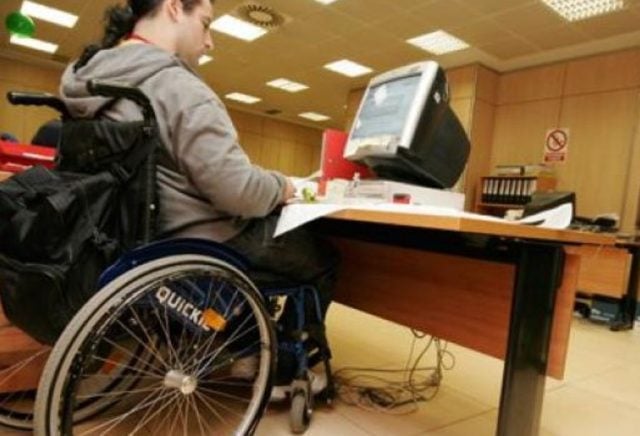
Original article: Advierten que exclusión laboral es la principal causa de que más 500 mil personas con discapacidad vivan en pobreza multidimensional en Chile
Multidimensional poverty in Chile has decreased by 2.3 percentage points over the past two years, as revealed by the Encuesta Casen 2024.
The study introduces a new, more stringent methodology for measuring poverty, developed under President Gabriel Boric’s administration, aimed at accurately reflecting the current reality of Chile in line with the social and economic changes the country has undergone in the last decade.
This updated methodology allows for a consistent retrospective estimation, showing a reduction in both income poverty and multidimensional poverty, with a continuing downward trend across all indicators.
According to the survey, multidimensional poverty is reported at 17.7% of the population for 2024, a decline from 20% in 2022.
However, Orlando Balboa, an academic from the Department of Economics at the University of Santiago, noted that the percentage of people with disabilities has increased from 13.6%—equating to 531,962 individuals—to 16.5%, or 572,923 individuals in 2024.
This means an additional 40,961 people living with disabilities are now in poverty, a statistically insignificant figure, but indicative of the persistent issue.
“Multidimensional poverty is not solely measured by income. It considers simultaneous deprivations in critical areas for a dignified life, such as education, employment, health, housing, social security, and support networks. For people with disabilities, these deficits accumulate more severely: lower average education levels, greater difficulties accessing formal employment, higher unemployment rates, and less stable employment trajectories,” he explained.
Exclusion and Multidimensional Poverty
Systemic exclusion from the labor market is identified as the core issue impacting people with disabilities in Chile.
Andrea Zondek, president of Fundación Tacal, an organization with 40 years of experience in labor training and inclusion for individuals with disabilities, stated that it is unacceptable for over 500,000 people to still live in multidimensional poverty.
“These results are inexcusable: there is no reason why people with disabilities should continue to be as poor as they were two years ago while the rest of the country is making progress,” she asserted.
“The inclusion law was created in 2017 specifically for this purpose, but less than 40% of organizations comply, and the state fails to enforce or oversee it,” she added.
Zondek directly linked poverty to the lack of job opportunities.
“Multidimensional poverty rises when work opportunities are scarce, and in Chile, individuals with disabilities remain outside the labor market. Until there is real access to formal employment, poverty will not diminish; instead, it will deepen,” she stated in a press note.
According to the Encuesta Casen results, individuals in multidimensional poverty also exhibit higher educational lag and lower labor participation. Specifically for people with disabilities, employment exclusion continues to be one of the most determining factors of their vulnerability.
“Without jobs, there is no autonomy, no economic independence, and no way out of poverty. Employment is not just a monthly paycheck; it represents dignity and social participation,” Zondek emphasized.
Law 21.015, enacted in 2017, mandates that companies and institutions with 100 or more employees hire at least 1% of individuals with disabilities. Those who fail to comply can opt for alternative measures, such as donating the equivalent of 24 minimum wages for each missing position to authorized organizations by January 31 each year. However, critics have termed this provision a “loophole” that discourages genuine inclusion.
Academic Orlando Balboa stated that hiring people with disabilities is not solely an economic issue but also a cultural one.
“There is a lack of enforcement, yes, but also a need for training for executives and state division heads, along with incentives. For many companies, it is more cost-effective to pay the fine for noncompliance or donate to an organization to fulfill the law than to invest in the necessary adaptations to hire individuals in this condition, such as building ramps for wheelchairs, providing adaptive computer equipment, or creating Braille systems for the visually impaired,” he explained.
A Paradigm Shift: From Charity to Relevant Training
From Fundación Tacal, which currently has 3,000 graduates employed with indefinite contracts, there is a call for a fundamental change in the training and inclusion model. They highlight that historically, individuals with disabilities have been trained in skills for which there is no real demand, perpetuating their exclusion.
“For years, people with disabilities were trained in skills that had no demand. Selling paper mache crafts or similar jobs without real employment prospects will not lift anyone out of poverty, regardless of the good intentions,” Andrea Zondek warned.
“That too is exclusion,” she stressed.
The challenge, she suggests, is to align training with market needs: “We need to prepare individuals for the skills that companies genuinely require, ranging from operational roles like bagging, logistics, or food preparation, to technical and professional training, including engineering, digital skills, and proper use of artificial intelligence,” she stated.
Call for Shared Responsibility
The president of Tacal proposed that the solution requires a tripartite commitment.
“Organizations need to provide relevant workforce training. Companies must create real job opportunities. And the state must enforce the law, oversee compliance, and, above all, lead by example. Currently, the public sector is one of the least compliant entities,” she declared.
What Does the Government Say About Multidimensional Poverty?
In a recent interview, Social Development and Family Minister Javiera Toro commented on the results of the Encuesta Casen 2024, highlighting that the most significant takeaway from the study is that nearly 600,000 people escaped poverty between 2022 and 2024.
Regarding multidimensional poverty, she stated that although this indicator “declines across all demographic groups, it remains a concern.”
“I want to clarify that we are, of course, concerned about the poverty of elderly people, individuals from indigenous communities, and people with disabilities, but it is not true that their numbers are increasing,” she indicated, referencing incorrect data published by some media outlets.
Concerning the Encuesta Casen 2024, the Minister of State emphasized that “elderly individuals dropped from 16.3% in 2022 to 14.9% in 2024, indigenous people decreased from 26.3% to 23.8%, and for people with disabilities, multidimensional poverty remains unchanged at a notably high 27.4%, which is certainly concerning.”
Regarding future social policies, she stated, “The first thing I would highlight is the challenge of reducing poverty; this must be a state policy, and the instrument’s legitimacy facilitates that. We must maintain and strengthen social policy.”
Relacionados
Boric Commends Significant Decrease in Poverty Across All Dimensions, Highlights Casen 2024 Results
Hace 2 meses

Lula's Government Achieves Historic Poverty Reduction in Brazil: Index Declines to Lowest Level in 14 Years
Hace 3 meses


Chilean Rural School Teacher Receives Global Recognition as Finalist in Global Teacher Prize 2026
Hace 2 meses