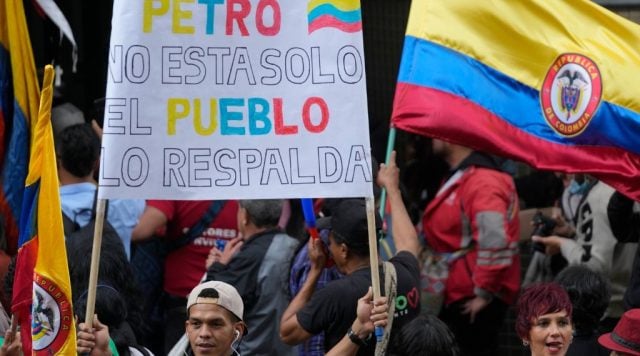
Original article: Centrales obreras y confederaciones de pensionados convocan a movilizaciones para “defender el salario mínimo vital” decretado por Petro
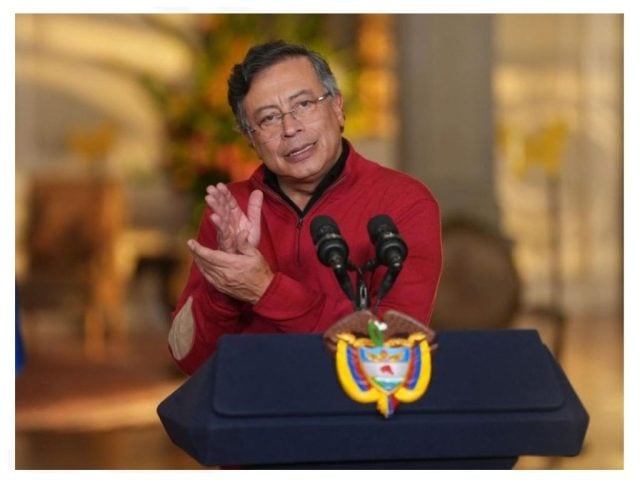
In late December, the Colombian president decreed the new minimum wage for 2026, which includes a remarkable increase of 22.7%, the highest since the Constitution of 1991.
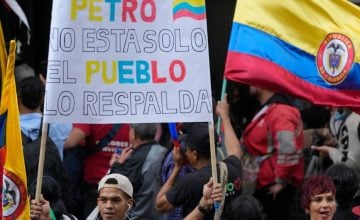
Labor unions and pension confederations have called for demonstrations across Colombia on Wednesday, January 28, aiming to «defend the vital minimum salary» declared by President Gustavo Petro.
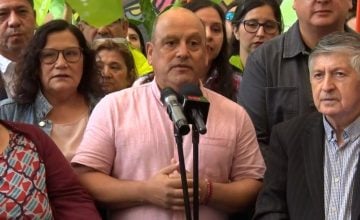
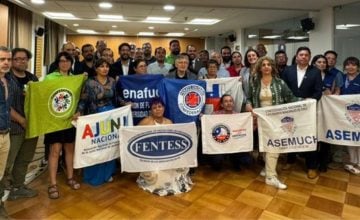
The call to action was made by the National Unified Command, composed of the Central Unitaria de Trabajadores (CUT), the Confederación de Trabajadores de Colombia (CTC), the Confederación General del Trabajo (CGT), the Confederación de Pensionados de Colombia (CPC), and the Confederación Democrática de Pensionados (CDP), urging simultaneous mobilizations in various cities to support the minimum wage increase set by presidential decree.
It is important to remember that on December 29, Petro established the new minimum wage for 2026, which includes a 22.7% increase, the highest rate since the Constitution of 1991.
At that time, the president noted that the increase establishes a minimum wage of $2,000,000, including transportation subsidies.
This measure directly impacts between 2 and 3 million people, who will see an increase in their income starting January 1. The decree incorporates the concept of a vital minimum salary for the first time, backed by the International Labor Organization (ILO).
The progressive leader explained that with this increase, the vital salary is set at 1,750,905 pesos (Colombian). This amount is supplemented by a transportation subsidy of 249,095 pesos. In total, workers earning minimum wage will receive 2 million pesos monthly, representing a growth of 22.7% compared to this year, which is yet to end.
In a message published on X, he emphasized that this decision is based on official figures from the National Administrative Department of Statistics (DANE) and pointed out that the calculation is derived from the cost of the basic family basket and the average number of workers per household.
According to the organizing bodies, the gatherings will take place on Wednesday, January 28, starting at 10:00 a.m., in front of the Justice Palaces and other significant locations in major Colombian cities.
Through a statement, they categorically rejected the «offensive from greedy business owners and economic groups, the most regressive oligarchy, and Uribismo, which aim to overturn the minimum wage decreed for 2026.»
Regarding the legality or constitutionality of the increase announced by Petro’s administration, labor unions indicated that «the law and the National Concertation Commission establish that, in the absence of an agreement between employers and workers, the National Government is authorized to set the minimum wage.»
Moreover, the march organizers stated that this decree «develops Article 53 of the Constitution, which enshrines the vital and mobile minimum salary, a principle systematically denied by governments serving the elite, along with repeated ILO studies on dignified incomes and vital wages.»
Minimum Wage Increase Does Not Influence Inflation
According to labor unions and pension federations, it is untrue that the increase in the minimum wage is the trigger for inflation, as in Colombia, price increases have primarily been driven by business decisions and producer inflation.
They pointed out a clear example being the announcements of hikes in tariffs such as public transportation, which «aim to automatically transfer the wage increase to users, as if all costs were labor-related, when in reality, factors like fuel, financial intermediaries, and monopolistic rents weigh more heavily.»
This announcement comes after President Gustavo Petro reiterated his public invitation to citizens and workers to mobilize in defense of the vital and family wage, arguing that it is a measure aimed at protecting household purchasing power.
The head of state warned that certain sectors of political and economic power would turn to judicial avenues to attempt to overturn measures adopted by his government to improve the quality of life for Colombian workers and families.
«Workers, get ready to hit the streets in great numbers, to not give a vote to political mafias, nor a sold vote to the captains of the assassins of the people and thieves of the State,» the president wrote on his X account.
Relacionados
Colombian President Petro Asserts Minimum Wage Will Remain Untouched Amid Massive Protests
Hace 1 semana
Colombian President Petro Calls for Mobilization to Uphold Minimum Wage Decree as Constitutional Mandate
Hace 2 meses
Colombian President Petro Declares Minimum Wage Increase: 22.7% Hike Announced for 2026
Hace 2 meses