Original article: Encuesta revela que 70 % de los votantes estadounidenses se oponen a un ataque militar contra Irán
A vast majority of independents (80%-11%), Democrats (79%-7%), and Republicans (53%-35%) believe that the U.S. should not intervene militarily in Iran.
According to a survey conducted by Quinnipiac University and released on Wednesday, 70% of registered voters in the United States oppose military intervention in Iran. The poll also indicates that a significant majority feels President Donald Trump is overstepping boundaries in his foreign policy approach.
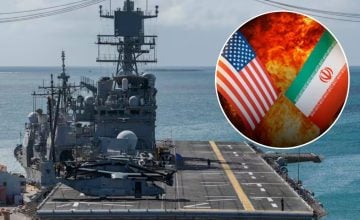
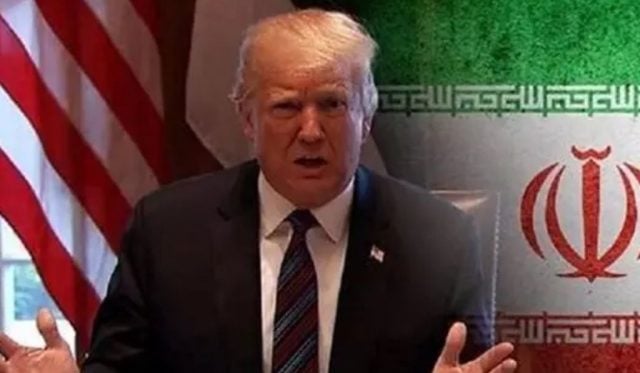
This opinion survey comes at a time of heightened tension between Washington and Tehran, characterized by aggressive threats from President Trump.
«The survey shows that 70% of Americans oppose U.S. military intervention in Iran, even in the event of protesters being killed during government protests,» the poll states, highlighting that only 18% support deploying U.S. armed forces.
Bipartisan Opposition and Constitutional Concerns
Opposition to military action against Iran transcends political affiliations. The survey reveals that 79% of Democrats and 80% of independent voters are against U.S. intervention in Iran. Among Republicans, while there is relatively more support for Trump’s aggressive international stance, even within this group, 53% oppose military involvement.
Beyond concerns specific to Iran, the poll highlights a significant constitutional worry, as 70% of voters believe President Trump should seek Congressional approval before any military action. This viewpoint gains prominence following recent U.S. military actions in Venezuela that resulted in the deaths of 100 people, including civilians and soldiers, culminating in the alleged kidnapping of President Nicolás Maduro and his wife, Cilia Flores, by Trump’s orders without legislative authorization, drawing bipartisan criticism.
Notably, five Republican senators—Rand Paul from Kentucky, Lisa Murkowski from Alaska, Susan Collins from Maine, Todd Young from Indiana, and Josh Hawley from Missouri—joined Democrats to push for legislation requiring the president to obtain Congressional approval before taking any further military action in Venezuela, a precedent that analysts connect to Trump’s threats against the Islamic nation.
Allegations of Foreign Interference
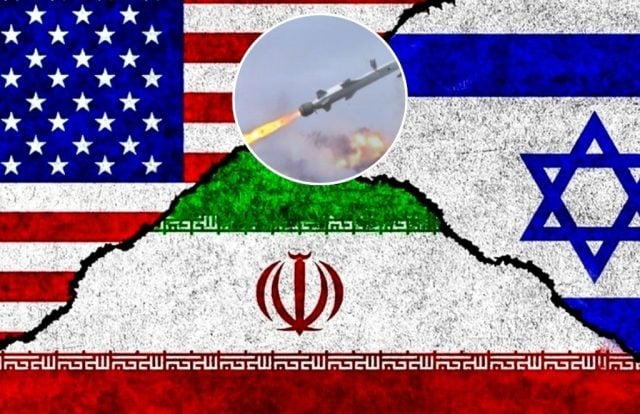
The release of this poll coincides with Iranian authorities’ allegations that the initially peaceful protests, which stemmed from legitimate economic grievances, were manipulated by actors serving foreign interests such as those of the U.S. and the Israeli regime, leading to violent riots against the government.
In an interview with Fox News, Iranian Foreign Minister Seyed Abbas Araghchi stated that «elements directed from abroad» infiltrated the protests and opened fire on police and security agents.
«There were terrorist cells. They came, employed operations in the style of Daesh, captured police officers, burned them alive, decapitated them, and began firing upon police officers and civilians. So, for three days, we were actually fighting against terrorists, not against the protesters,» the Iranian minister said.
When questioned about the motivations behind these actions, the Persian diplomat suggested that Trump’s remarks—indicating he would intervene if there were killings—were intended to draw him into conflict, asserting it was part of an Israeli plot.
«They wanted to drag the U.S. president into this conflict by increasing the death toll by killing ordinary people and police officers, instigating combat within various cities,» the Iranian foreign minister charged.
Indeed, Trump indicated to Iranian protesters that «help is on the way,» encouraging them to «continue protesting and take control of their institutions.» Concurrently, he announced that any country doing business with the Islamic Republic of Iran would face a 25% tariff on all transactions with the United States.
In a letter to U.N. Secretary-General António Guterres, the Iranian foreign minister detailed that «facts such as beheadings and the burning of people alive, brutal attacks on law enforcement and civilians, extensive use of firearms, and the destruction of a significant number of ambulances, fire trucks, health centers, homes, and religious sites demonstrate a pattern of behavior indicating that peaceful protests were hijacked by terrorists who had evidently been trained in advance to carry out such violent acts.»
Araqi directly accused «agents linked to the regimes of Israel and the United States» of diverting the protests into violence and condemned U.S. officials’ remarks as incitement to terrorism and violations of international law.
Regarding the government’s response, he pointed out that «the high number of injuries among security forces not only reflects the ‘moderation of authorities in their response’ but also reveals the ‘level of violence exerted by the terrorists.'»
It is important to note that last Monday, millions of Iranians took to the streets in various cities to condemn the acts of violence and show support for both the government and security forces, rejecting the terrorist acts.
Iran’s Warning Against Trump’s Threats
From Tehran, the response to U.S. threats has been firm. Ali Lariyani, Secretary of the Supreme National Security Council, warned during a call with his Swiss counterpart, Gabriel Luchinger, that while he appreciates the constructive approach of the European nation, «we will not remain passive in the face of the verbal threats from the United States,» according to HispanTV.
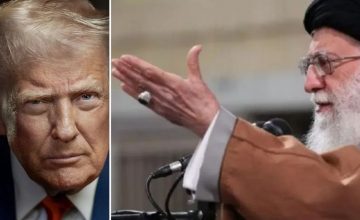
These threats have been issued on multiple occasions by President Trump, whom Iran’s Supreme Leader, Ayatollah Seyed Ali Khamenei, accuses of having hands «stained with the blood of over a thousand Iranians.»
Relacionados
Majority of Americans Oppose U.S. Military Action in Venezuela; Calls for Congressional Approval
Hace 3 meses
Unusual Survey Reveals 50% of Voters in La Araucanía Are Undecided Ahead of Presidential Elections
Hace 4 meses
Trump Threatens to 'Erase Iran from the Face of the Earth' as Tehran Vows Full Military Response
Hace 1 mes