Original article: Autoridades ancestrales mapuche piden al Presidente activar artículo 29 del Tratado de Tapihue, «donde se pactó una hermandad perpetua»
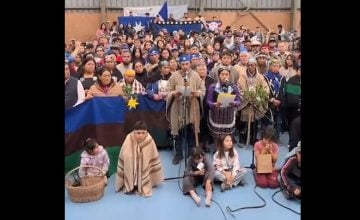
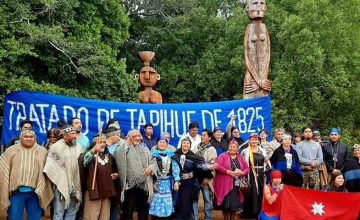
In October 2025, during a gathering in Temuco, the Mapuche Ancestral Authorities Parliament ‘Pu Kuifike Lonko gülmen ñi Nutram’ called on the President of the Republic and the powers of the State of Chile to activate Article 29 of the Tapihue Treaty and convene a new Chilean-Mapuche Parliament.
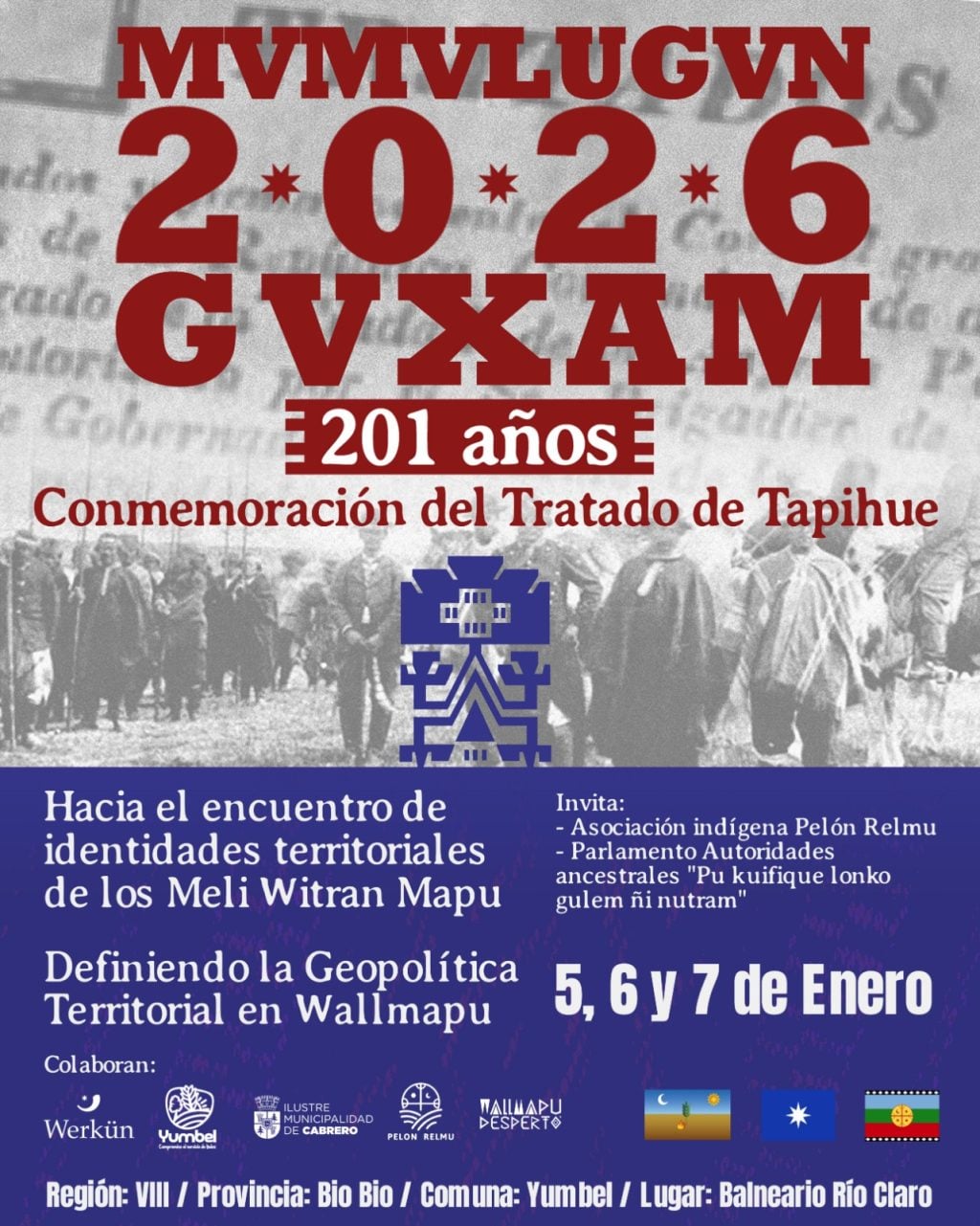
«The Tapihue Treaty is a tool of mutual recognition between Chile and the Mapuche Nation, where an eternal brotherhood was established,» the Parliament emphasized. Together with the Indigenous Association Pelón Relmu, they organized a Koyagtün (solemn parliament) on January 5, 6, and 7 in Yumbel, aiming to «define the territorial geopolitics in Wallmapu» and commemorate the 201 years of this historic agreement.
In their October 2025 statement, the Parliament of Ancestral Authorities highlighted that, «while the Treaty reaffirms the previously established border in the Quilin and Negrete Treaties, this border does not separate us from our brothers in Pikun mapu today, as the real division was caused by the military coercive act known as the ‘Pacification of Araucanía,’ which led to the dispossession of land for the settlement of colonists brought by the Chilean State to Wallmapu, resulting in forced displacement and subsequent mass migration of the Mapuche and their families from rural areas to cities.»
They noted that ongoing tensions were «originated by laws created by the State of Chile, such as the establishment of the provinces of Malleco and Cautín. In light of this, we urge the President and the powers of the State to activate Article 29 of the Treaty, which calls for the convening of a new Parliament.»
The Parliament stressed that this should be done «under international law standards, with the presence of international observers of indigenous law, to safeguard our achieved rights, and to address and create a pathway for relationship building, reparations, and acknowledgment consistent with our history and the Parliaments.»
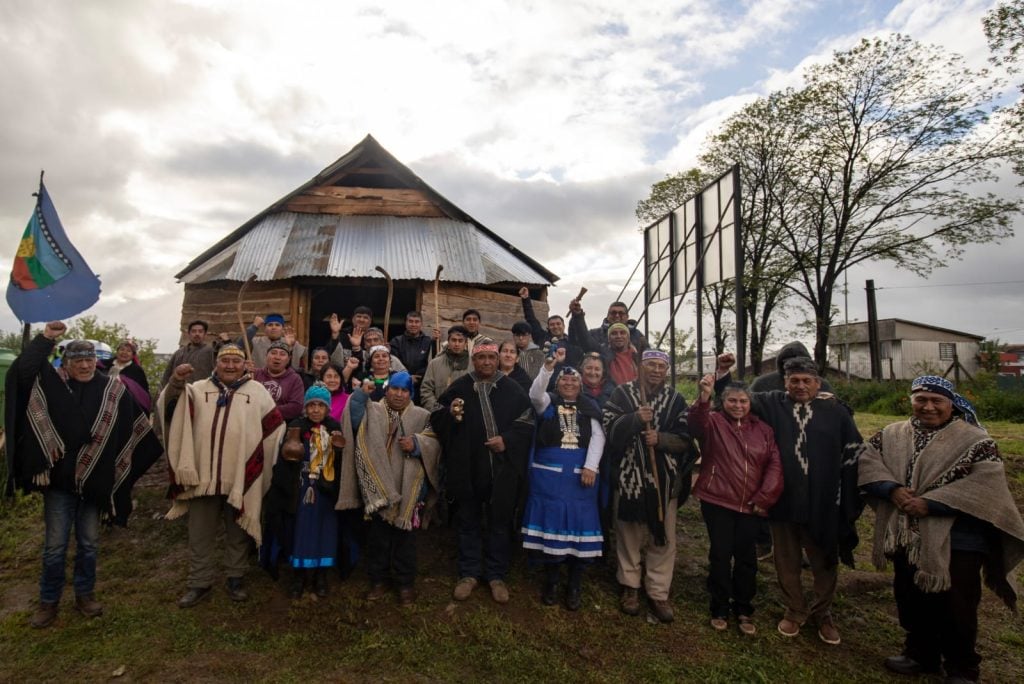
«We see with hope the efforts of our pu peñi ka pu lamgen, who fight to preserve and disseminate our way of life in cities, rural areas, and various spheres of national and international politics. We must continue working towards greater unity and refine our collective strategy, which is crucial for moving forward and facing the challenges imposed by this system,» stated the Parliament.
In conclusion, they reiterated, «we have the human capacity to advance in reclaiming and expanding our own Mapuche institutions, supported by professionals and technicians from various fields while preserving our traditional, cultural, and spiritual practices. New Pu machi, Pu Ñempin, Pu kona, Pu werken, Pu lonko continue to arise; the newen still accompanies us on our journey, let’s not lose hope for that,» they concluded.
Read more about the Tapihue Treaty:


The Citizen
Relacionados
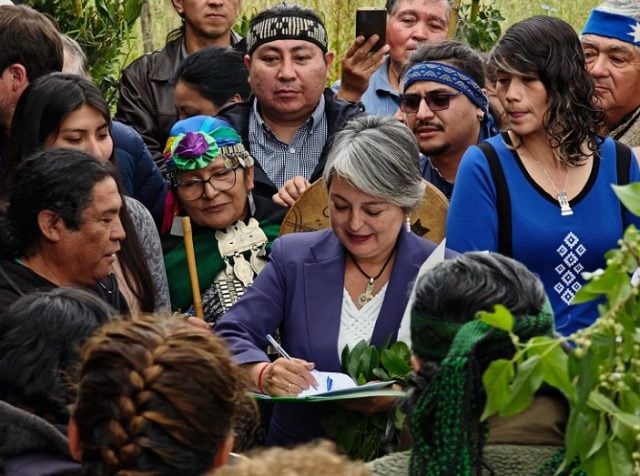
Historic Meeting Between Jeannette Jara and Mapuche Communities: 35 Years Since the Nueva Imperial Agreement
Hace 3 meses
Wallmapu Voices Amplified in Congress: Nuyado and Ñanco Re-elected, Nahuelquín Joins as New Mapuche Representative
Hace 3 meses