Original article: La OTAN, el brazo militar de los tecnoligarcas y el problema de que el destino de Europa no esté en manos de civiles informados
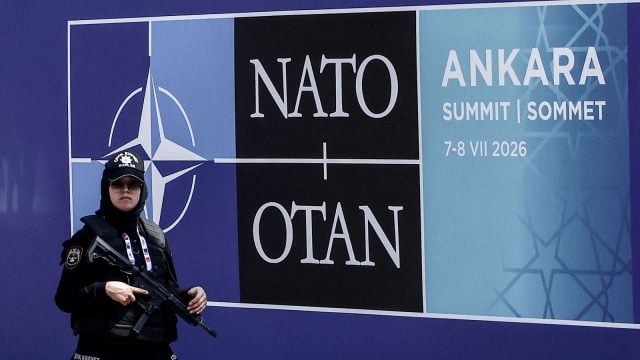
Ankara, July 8, 2026. While Heads of State and Government posed for a family photo, outside the fortified perimeter of the summit, an unprecedented power transfer was taking place: the Atlantic Alliance has become the institutional vehicle for a new class of technoligarchs who, under the guise of security, are reshaping the continent without consulting its citizens.
The Declaration from the Ankara Summit is not merely a list of military figures and programs. It is the foundational document of a military-industrial complex that blurs the line between legitimate defense and private profit, national sovereignty and algorithmic governance. Analyzing its commitments reveals that Europe’s future has been hijacked by a coalition of corporate interests, high-ranking military officials, and a bureaucratic alliance that evades the control of parliaments and public opinion.
The Bounty of $139 Billion: The Perfect Excuse
The official document celebrates that Europe and Canada added $139 billion to their defense budgets in 2025. However, it does not specify who will receive this money. The roadmap to 5% of GDP by 2035 is, in reality, a massive channel of public funds directed towards private contractors. With 3.5% allocated for «basic defense requirements» and an additional 1.5% for «extended security,» NATO has created a budgetary pool from which primarily technology and arms giants will benefit. When Mark Rutte confirms that average spending is already reaching 3.93% in 2026, it normalizes a wartime economy that bolsters corporate balances while public services are suffocated.
“Drone Edge” and the Combat Cloud: A Feast for Technoligarchs
The flagship program of Ankara bears a name that seems lifted from venture capital: “Drone Edge.” $40 billion over five years for unmanned systems and anti-drone technology. It represents the largest injection of public money into the drone industry, a sector dominated by a handful of companies that were already operating on the fringes of civil regulation. The promise to quintuple military drone operators by the end of 2027 not only militarizes European airspace but also normalizes remote control of violence as a lucrative market niche.
Additionally, there is the “Transatlantic Combat Cloud,” a digital infrastructure that will integrate artificial intelligence to reduce tactical response times. The declaration mentions “missile threat management,” but the subtext is the delegation of life-and-death decisions to algorithmic black boxes developed by corporations that are not even accountable to the European Parliament. The HALO satellite megaconstellation, with its €27 billion for orbital surveillance, completes the picture: space is now under an opaque orbit of private interests operating under contracts protected by military secrecy.
The Ukraine Fund: The Testing Ground for the New Order
The €70 billion allocated for Ukraine in 2026 serves as a laboratory where this model is perfected. The co-funding structure (with €30 billion in EU loans and €40 billion in bilateral agreements) turns solidarity into a financial mechanism benefiting the defense industries of donor countries. While Kyiv receives arms, Western factories secure long-term guaranteed orders. The “multi-year guarantee” for 2027 effectively serves as an unlimited credit line to sustain a conflict that becomes economically profitable for a select few. Where do democratic transparency conditions in Ukraine stand? They remain unmentioned. The war is managed as a financial asset, not as a human tragedy demanding civilian oversight.
The SYNC Strategy: When NATO Becomes the CEO of Defense
The NATO-Industry Cooperation Strategy (SYNC) is the centerpiece of this transformation. With $50 billion in joint procurements, the Alliance operates as a massive procurement department dictating standards, selecting winners, and marginalizing small domestic firms. SYNC buries the notion that defense is a sovereign competition: it is now a vertically integrated market where technoligarchies impose their solutions on states. Interoperability turns into technological dependency; security morphs into an oligopoly.
Informed Civilians: The Great Absentees
None of this has been put to a referendum. It has not even taken center stage in electoral campaigns of member countries. As national budgets are reoriented towards 5% of GDP for defense, European citizens are debating healthcare, education, or climate crisis without realizing these allocations will inevitably be consumed by the new military-technological Leviathan. The Ankara declaration identifies Russia as the “most significant and direct long-term threat,” a diagnosis presented as irrefutable evidence, which shuts down debate and renders any questioning as unpatriotic.
The reference to Iran and the Strait of Hormuz reveals that NATO has assumed the role of a global energy gendarme without consulting the societies it supposedly protects. The security of pipelines takes precedence over human security. In this framework, the citizen becomes merely a spectator, an unwitting payer for a structure designed by and for technoligarchs.
The Ankara summit is not an inevitable response to threats. It is a deliberate political choice that has shifted decision-making power from democratic institutions to a triangle formed by high-ranking military officials, technobureaucrats, and arms corporations. Under the headline “NATO: The Military Arm of Technoligarchs” lies an uncomfortable truth: Europe is heading towards a security model managed by algorithms and safeguarded contracts, while informed civilians are reduced to passive consumers of a security narrative. Reclaiming democratic control over Europe’s destiny requires, as a first step, dismantling this narrative and exposing who really wins—and who loses—with every summit like the one in Ankara.
The Citizen
Obtén tu Pasaporte y apoya a El Ciudadano
Elimina la publicidad, accede a contenido exclusivo y sé parte de la comunidad.
Cancela en cualquier momento · Sin permanencia