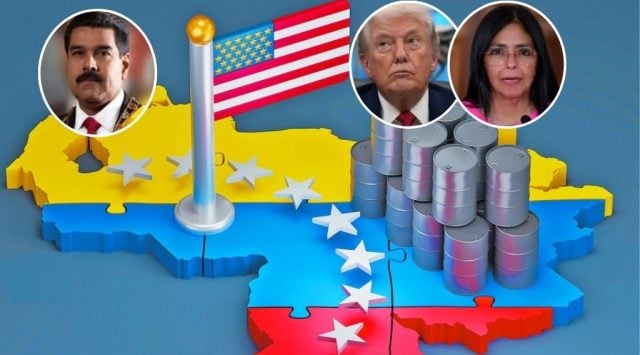
Original article: Un mes sin Maduro: ¿quién se está quedando con el petróleo venezolano?
U.S. Military Aggression, the Kidnapping of President Nicolás Maduro, and Forced Control of the Oil Industry Mark a Turning Point in Venezuela’s History
On Tuesday, Venezuela marked a month of profound turmoil. In the early hours of January 3, 2026, a U.S. military operation resulted in the kidnapping and forced transportation of the constitutional president Nicolás Maduro Moros and his wife, Cilia Flores. This unprecedented event plunged the nation into an institutional crisis and violently opened a new chapter in the struggle for control over the world’s largest proven oil reserves.
U.S. President Donald Trump escalated diplomatic, political, and military tensions against Venezuela starting in August 2025 when he doubled the reward for Maduro’s capture, accusing him of leading a narcotics trafficking network without presenting evidence. This network, known as the Cartel of the Suns, is claimed by the Republican businessman to threaten the U.S.
In response, Trump’s administration announced a military deployment in international Caribbean waters near the South American country, which led to the bombing of approximately 35 vessels between September and December, as well as the seizure of several sanctioned oil tankers. The White House justified these actions as drug enforcement, while Caracas condemned them as a threat to seize the country’s oil reserves and effect a regime change.
This context escalated with attacks targeting the capital and states such as La Guaira, Aragua, and Miranda, which included strategic military infrastructures in Venezuela, resulting in over 100 deaths among civilians and military personnel, along with an equal number of injuries and the capture of President Maduro and the First Lady as part of a unilateral U.S. action that violated international law.
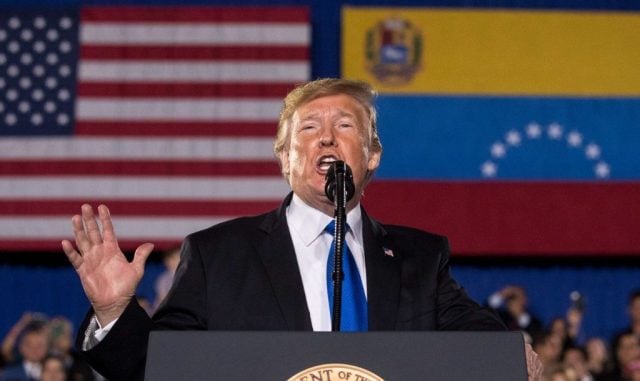
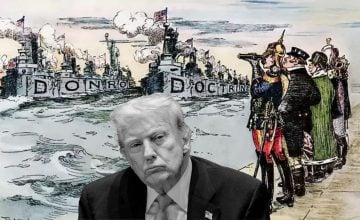
Following the bombings, Trump, in a national address, connected the military action directly to Washington’s strategic interests in Venezuela’s natural resources.
The Republican president claimed that major U.S. oil companies would invest billions to «repair Venezuela’s oil infrastructure» and begin «making money for the country.» He further stated that despite violating all international statutes, the U.S. intended to remain in Venezuela and direct the nation until a proper transition occurred, even threatening a second, «much larger attack if necessary.»
Political Scenario in Venezuela After Maduro’s Kidnapping
In the power vacuum created by Maduro’s forced absence, the Supreme Tribunal of Justice (TSJ) appointed Executive Vice President Delcy Rodríguez as acting president, receiving backing from government members and the Bolivarian National Armed Force (FANB), who pledged loyalty to the constitutional order.
Rodríguez was subsequently sworn in by the National Assembly and announced the establishment of a “high-level commission to manage, politically and legally, the release of Maduro and Flores, who were taken to the U.S. and are currently held in the Metropolitan Detention Center in Brooklyn, New York, awaiting trial for alleged «narcoterrorism conspiracy, conspiracy to import cocaine, possession of machine guns and destructive devices, and conspiracy to possess machine guns and destructive devices against the United States.»
They appeared before federal judge Alvin K. Hellerstein in Manhattan on January 5, where they pleaded not guilty to the federal charges.
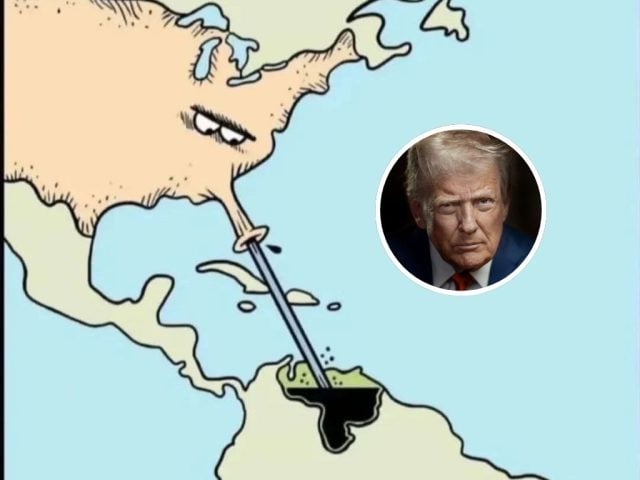
Venezuela possesses the world’s largest proven oil reserves, estimated at 300 billion barrels, placing it at the center of global energy geopolitics. Its heavy oil, particularly from the Hugo Chávez Orinoco Oil Belt (FPO), has supplied refineries optimized for this crude, including those along the U.S. Gulf Coast, which makes Venezuela a strategic interest for Washington.
The new scenario has heightened interest in the future of Venezuelan oil and the role of American companies in its exploitation.
Oil Agreement: Up to 50 Million Barrels
Trump announced that the interim government of Venezuela, led by Delcy Rodríguez following Maduro’s kidnapping, agreed to deliver up to 50 million barrels of “high-quality” oil to the United States, which would be sold in the North American market.
In a post on his social media platform Truth Social, he indicated that “at least $100 billion would be invested by major oil companies” of his country.
According to the businessman, the profits from these sales, potentially valued in billions, would be managed under his supervision to “ensure” that they benefit both the Venezuelan and American populations.
Just five days after ordering the attack against Venezuela, the Republican called a meeting with top executives from at least 17 oil and energy sector companies at the White House, which included executives from Exxon Mobil, Chevron, Halliburton, Repsol, Shell, and ConocoPhillips.
During this meeting, Trump warned that they must coordinate strictly with U.S. authorities to exploit oil in Venezuela and not with the country’s government.
“You have complete safety,” Trump assured the executives. “You are dealing directly with us and not with Venezuela at all. We do not want you to deal with Venezuela,” he stated.
“Our gigantic oil companies will spend at least $100 billion of their money, not the government’s (U.S.). They do not need money from the government, but they need government protection,” he added.
The occupant of the White House referred to the attendees of the meeting as the “most important people in the world” in the oil sector. He also assured them that if they do not want to enter the Venezuelan oil business, other companies have requested to participate in their place.
Moreover, after threatening with a second attack on Venezuela, the U.S. president expressed a good relationship with the interim government of Delcy Rodríguez following Nicolás Maduro’s kidnapping.
He indicated that security guarantees would come from working with Venezuelan leaders and their people rather than deploying American forces, stating that companies would “bring some security.”
“We are getting along so well with the people who represent Venezuela that I don’t think it will be necessary to carry out the second phase (of military intervention). We were planning a second phase… but we have a huge number of the world’s most powerful ships right there. And frankly, the people in the country did the right thing; they were very smart,” said Trump, who has often recognized that right-wing opposition leader María Corina Machado lacks leadership and respect within her own country.
Oil and the economic resources generated from its commercialization clearly drive Trump’s interest in Venezuela, but broader political issues also play a role. In recent years, the Caribbean nation has developed deep economic ties with China, which has become one of its main oil buyers.
Despite the economic and geopolitical rivalry with the Asian giant, the occupant of the White House indicated that he is preparing an agreement for oil concessions from Venezuela.
While on Air Force One heading to his Mar-a-Lago residence, the Republican told the press: “China is welcome and will reach a very important agreement on oil. India is coming in and will buy Venezuelan oil instead of buying it from Iran. We have already closed the deal, the concept of that deal.”
Simultaneously, he announced an agreement with India for that country to purchase oil from Venezuela instead of acquiring it from Iran.
“India is entering the market and will buy Venezuelan oil instead of buying it from Iran. So we have already closed that agreement and welcome India to come and buy oil,” said the president.
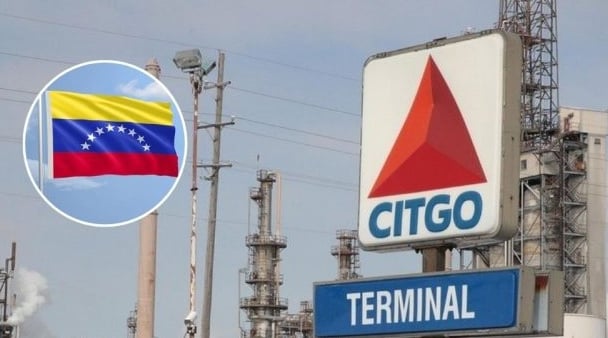
The Seizure of Citgo
The United States decided to extend until March 20 a license protecting Citgo Petroleum, a subsidiary and main asset of the Venezuelan state oil company Pdvsa in the country, from its creditors, according to a notice published on the Treasury Department’s website on Monday.
According to media outlets like CNN, the Houston-based refinery is expected to be acquired by a subsidiary of Elliott Investment Management, following a court-order sale issued by a judge at the end of 2025 as part of the auction ordered by the court of its parent company PDV Holding to pay billions to creditors linked to Venezuela.
However, the winning company from the auction requires approval from the Treasury’s Office of Foreign Assets Control and the lifting of the protective license for the sale order to be executed completely.
So far, the agency has not made a statement on the case, just as Trump attempts to control Venezuela’s energy industry.
The Citgo refining network, which has a processing capacity of 830,000 barrels per day, is still overseen by a board appointed by radical opposition figures in Venezuela after Washington imposed sanctions in 2019, severing Citgo from its parent company, Pdvsa.
In early December 2025, the Venezuelan government labeled a federal court’s decision in the U.S. that upheld Citgo’s forced sale as a “vulgar and barbaric plunder.”
On that occasion, as acting executive vice president, Delcy Rodríguez read an official statement denouncing that this act constitutes a «new episode of the multifaceted aggression being executed from the United States against Venezuela.”
Rodríguez asserted that Pdvsa and the Venezuelan state were “intentionally and illegally excluded from the process,” being denied the right to defense under the “gross excuse” of not recognizing the legitimate government of President Nicolás Maduro, who won the elections held in July 2024.
Through the statement, the government indicated that the seizure was executed “in complicity” with figures from the radical opposition, such as María Corina Machado, Edmundo González Urrutia, Juan Guaidó, Julio Borges, Carlos Vecchio, and José Ignacio Hernández, identifying them as part of a “group of organized crime” that, since the self-proclaimed 2015 National Assembly, aimed to usurp the country’s representation to leave it defenseless against the “blatant theft” perpetrated by Washington.
“Venezuela reiterates that it does not recognize and will not recognize the forced sale of CITGO,” Rodríguez asserted, adding that the government will take “all measures at its disposal” to bring to justice, including international accountability, all promoters and executors of this plunder.
The ruling, issued by Judge Leonard P. Stark in Delaware, allows for the sale of CITGO for $5.9 billion to Amber Energy, a figure analysts consider well below its actual value, estimated between $11 billion and $13 billion. Venezuelan experts describe the process as a «juridical-political farce.»
Professor and analyst Werther Sandoval explained the mechanism: following Trump’s 2019 recognition of a parallel government led by self-proclaimed Juan Guaidó, “the facade [Guaidó’s government] shot [the debt] up to $23.6 billion to make it unpayable and exacerbate the financial hunger of the creditors to sue and appropriate Citgo.”
In an interview with TeleSUR, Sandoval pointed out that this strategy violated the alter ego principle or corporate veil, which protects a subsidiary from the debts of its parent company, and recalled that “before Guaidó’s usurpation, Citgo was never over-indebted… Venezuela was fulfilling its payment commitments until 2019, before the self-proclamation.”
In his view, the illegal takeover of the board of directors by figures aligned with the radical right, such as Luisa Palacios and Carlos Jordá, paved the way for vulture creditors to file mass lawsuits in U.S. courts.
The academic also warned that “all relations and agreements between the U.S. and Venezuela will be marked by the precedent of having stolen CITGO, a criminal act that will always linger… generating distrust and raising the costs of any bilateral negotiation.”
Sanctions on Venezuela Work Against Trump
In an opinion column, Sandoval noted that the sanctions imposed by Washington against Venezuela hinder Trump from attracting oil investments for the Caribbean nation.
The analyst argued that the obstacles to investing in Venezuela’s oil sector have never been placed by Caracas but directly by the White House.
Following the January 3 attack, the Republican administration lifted some of the sanctions imposed since 2017 to allow Venezuelan oil to be traded in international markets.
These unilateral coercive oil measures encompass technical, commercial, or financial areas that hinder oil sales in the U.S. and other countries, the use of U.S. financial markets to process oil payments or to trade Pdvsa’s debt bonds, and the prohibition of sending components like diluents to improve heavy and extra-heavy oil.
The measures also prevent other industry giants such as Italy’s Eni, Spain’s Repsol, and U.S. firm Global Oil Terminals from being authorized by the Treasury to operate in Venezuela under a licensing scheme.
In Sandoval’s view, “Trump is choked” and pointed out that his goal is to counter China’s highly competitive economic, technological, and geopolitical advance, “for which he needs to control the vital energy resource that moves the world, of which Venezuela possesses 303.4 billion proven reserves, enough to satisfy the world alone for 8 years.”
In his analysis, he suggested that the political actions taken by the Republican so far not only aim to control oil, considering that Venezuela contributes only 2% of all crude that the large Asian nation imports.
“The message is to tell every country worldwide that the U.S. will exert dominance over who sells and who buys the vital resources that, at their discretion, feature in the menu of their national security interests. In other words, the strategy is not to make America great again by its ability to produce and offer timely and efficiently high-quality products and services at low prices, but by using military power,” he pointed out.
Sovereignty and Oil Reactivation Law
Last Thursday, the National Assembly of Venezuela approved the reform of the Hydrocarbons Law to promote opening the oil sector to private capital. The interim government of Delcy Rodríguez described this measure as a historic step towards reactivating the industry and attracting foreign investments.
The modifications aim to incorporate new mechanisms for the exploration, exploitation, and marketing of oil and natural gas.
According to Rodríguez, the reform reaffirms “the sovereignty over our energy resources” and will allow a “qualitative leap” in building welfare for Venezuelans by utilizing the world’s largest oil reserves.
“Venezuelans are happy to be here, to have signed this law to come into full effect, delivered today by the hands of the deputies of Venezuela, so that those massive oil reserves are, definitively and forever, the happiness of our people,” stated the interim leader.
She also noted that the reform reflects the future vision of President Nicolás Maduro. “This law was studied together with President Maduro. President Maduro, we are fulfilling with you and the first combatant,” she affirmed.
Rodríguez emphasized the importance of this reform as a «first step» to demonstrate that a united Venezuela is possible and extended words of gratitude to opposition sectors that supported the reform, as well as the backing from chavista representatives in the National Assembly.
“It is the first law that has been unanimously voted in the National Assembly. It symbolizes national unity and cohesion,” she said.
The partial reform of the Organic Hydrocarbons Law modifies 18 articles of the legal framework regulating the national oil industry. According to the Venezuelan government, this reform responds to the need to modernize the energy sector, attract technological and capital investments, and reactivate production after years of suffering from the impact of unilateral coercive measures imposed against the Caribbean nation.
Central to the reform is Article 22, which in the previous law established that exploration, extraction, collection, transportation, and storage of hydrocarbons were primary activities that only the Venezuelan state and state-owned companies with over 50% participation could undertake.
This article is amended to allow private companies without state participation but domiciled in Venezuela to carry out these same activities.
The amendment includes a new Article 36, which stipulates that in those mixed companies where state participation exceeds 50%, non-state minority partners may play a predominant role in activities that may include oil marketing.
According to the president of PDVSA, Héctor Obregón, the new law “consolidates a strengthened legal framework that promotes production, attracts investment, and guarantees energy sovereignty.”
Venezuela Receives Oil Revenues and Creates Two Sovereign Funds
On January 21, the interim president of Venezuela, Delcy Rodríguez, announced an income of $300 million into the country “from oil sales,” after Washington announced an oil sales agreement from the South American nation for $500 million.
“From the first $500 million, $300 million have entered,” Rodríguez stated during an event broadcast by the state channel Venezolana de Televisión (VTV).
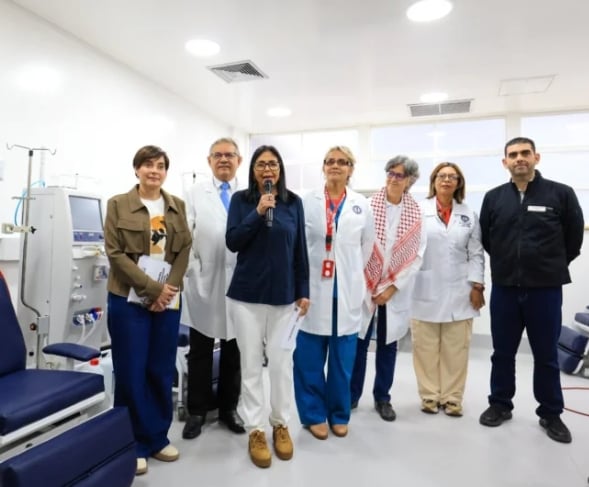
A week earlier, the interim leader had announced the creation of two Sovereign Funds to secure and protect income from oil, aimed primarily at social protection and the development of strategic sectors in Venezuela.
During the presentation of the Annual Address to the Nation, held at the Legislative Palace, she explained that the first fund will be aimed at protecting the incomes of workers, ensuring health, education, food, and housing, while the second will promote the strengthening of vital areas such as electricity, water, and infrastructure.
“Any foreign currency that comes in will go to two funds. I instruct the Vice Presidency of Economy and the Ministry of Economy and Finance to create two Sovereign Funds. The first Sovereign Fund will be for social protection to improve the income of our workers, so that currencies go directly to hospitals, schools, food, and housing, and I instruct the creation of the Sovereign Fund for Infrastructure and Services for economic and social development, so that these currencies go to water, electricity, and infrastructure,” she detailed.
“The unlocked resources will go to the sovereign fund aimed at guaranteeing social protection for the people,” she noted.
Rodríguez also announced the launch of a digital application allowing citizens to monitor ongoing projects and reported revenues: “There will be an application where any citizen can see the projects being executed and the revenues being reported.”
She also confirmed the establishment of diplomatic channels with the United States government, highlighting a work agenda based on dialogue.
“We have proposed that our differences be resolved through diplomatic dialogue,” she expressed, while acknowledging existing communication with President Donald Trump and Secretary of State Marco Rubio under principles of respect and courtesy.
Nonetheless, she reiterated the country’s sovereign stance: “The people of Venezuela do not accept orders from any external factor.”
One month after Maduro’s kidnapping, the landscape in Venezuela remains complex. While the Trump administration attempts to control the oil sector under pressure and threats to align it with Washington’s interests, the Caribbean nation’s government, led by Delcy Rodríguez, seeks to ensure that revenues from oil exports translate into social security and improvements in the quality of life for the Venezuelan people.