Original article: Pablo Jofré: “El cierre total del Estrecho de Ormuz es clave” y podría escalar la guerra en Asia Occidental
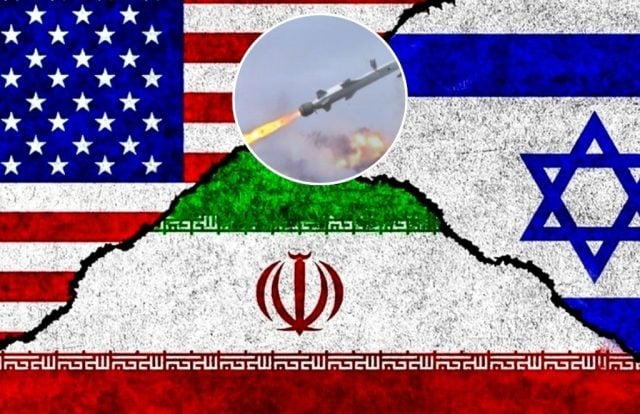
Amid rising tensions in Western Asia following the assassination of Iranian Supreme Leader Ali Khamenei by a joint operation involving the United States and Israel, Iran has responded, reviving one of the most dreaded threats to the global economy: the blockade of the Strait of Hormuz.
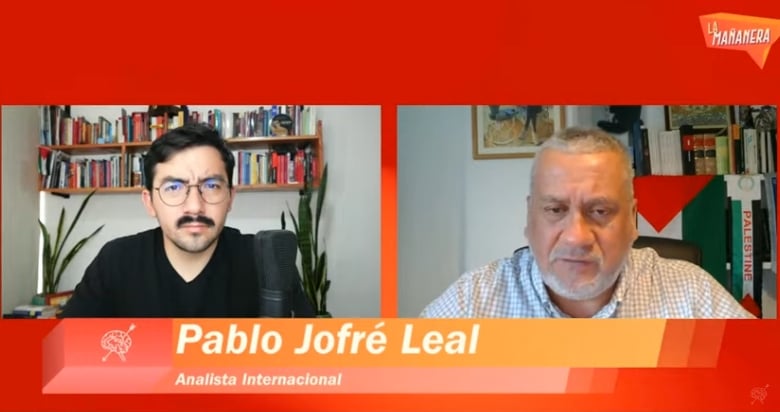
In an interview with El Ciudadano’s La Mañanera program, journalist and international analyst Pablo Jofré Leal provided an analysis of the possible developments in this conflict, focusing not only on the implications of a complete closure of this maritime route but also on the complex dynamics involving Gulf Arab nations, the false-flag strategies employed by the Zionist regime, and the efficacy of Iranian military capabilities.
Strait of Hormuz: A Maritime Route That Could Redefine War
When asked by El Ciudadano Director Javier Pineda Olcay about key events that will shape the course of the conflict, Jofré pointed to the Strait of Hormuz as the epicenter of the next phase of war.
The Master’s degree holder in International Relations from Complutense University of Madrid referenced the recent announcement from Iranian authorities about halting traffic in the area and threatening to attack vessels attempting to cross, a situation that has sent global oil and gas prices soaring.
«The total closure of the Strait of Hormuz is key,» he stated, regarding this maritime route that carries approximately one-fifth of the world’s oil and liquefied natural gas, located between Iran and Oman, and is vital for exports from countries like Saudi Arabia, the United Arab Emirates, Kuwait, and Iraq.
In response to U.S. President Donald Trump’s statements promising to escort vessels wishing to transit through the strait, Jofré suggested there is a gap between the threat and actual effective action.
«Yesterday, before the declaration of total closure, the resident of the White House, Mr. Trump, claimed that they would escort any ship crossing the Strait of Hormuz. It’s one thing to say it, another to actually do it,» he noted.
The strategic importance of the Hormuz Strait is such that its blockage, according to Jofré’s analysis, would result in a seismic fracture in regional security, leading to a global energy crisis, as nearly all of the Middle East’s oil production passes through this maritime route.
«There is a latent threat of a situation that can escalate from tension to direct action, which undoubtedly means generating an even greater fracture in the levels of security in the region; they don’t have it now, but it would be heightened to a maximum level because it involves oil and gas, so I think it deserves heightened attention,» he cautioned.
Israel’s Desperation Concerning Iran’s Military Power
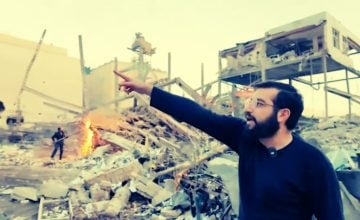
The journalist highlighted the necessity of monitoring Israel’s upcoming decisions, whose offensive has crossed the line from military targets to attacking civilian infrastructures and unarmed populations.
This escalation of violence, far from being a sign of strength, Jofré interpreted as a display of desperation from the Israeli regime in light of Iran’s unexpected resilience and response capacity.
«Let’s not forget the 190 girls killed at a school in Minab in southern Iran, and today hospitals and educational institutions are being targeted in Tehran and other Iranian cities. This must be taken seriously as it indicates a level of desperation from a regime that sees Iran’s military power causing visible and difficult-to-hide damage,» he elaborated.
This Tuesday, Iran’s Red Crescent reported that fatalities from attacks launched on February 28 have risen to 787, while the Iranian human rights organization HRANA, based in Washington, stated that at least 742 civilians have died in the Persian nation, including 176 minors.
In addition, it was noted that 971 individuals have been injured—115 of whom are children—while another 624 deaths are still being verified and classified.
Escalation of the Conflict
For Pablo Jofré, the main element to understand the situation in the Middle East is the «intensification» of the conflict.
«Although it sounds obvious, the concept of intensification involves not only an increase in the number of attacks but also in the number of participants,» he noted, focusing on the expansion of the conflict landscape.
According to his perspective, what began as a bilateral confrontation—an explicit alliance between the United States and the Israeli regime against the Islamic Republic of Iran—has evolved into a multilateral confrontation.
In this sense, the international analyst detailed how extra-regional powers are consolidating their support for Israel, surpassing the realm of diplomacy to engage in more risky actions.
«They have been joining in terms of material support, political backing, and even potential direct presence on the ground by the so-called European troika, France, England, and Germany, which have expressed their full support for the Israeli regime,» he claimed.
He also referenced the «activation» of non-state actors and armed opposition groups, which he labeled as «terrorist groups operating in the area.»
He mentioned the Komala group, composed of Iraqi Kurds, as a key player in a new destabilization strategy against Iran, operating from the border between Iraq and the Persian nation.
«At the same time, when I talk about intensification, there is already information about the use of terrorist groups operating in the area, including the Komala group of Iraqi Kurds, which has already been actively involved in terrorist acts on the Iranian-Iraqi border,» he stated.
The journalist contextualized this threat, providing a long-term historical and strategic perspective. According to his figures, the violence emanating from this border area is not a new phenomenon, but rather a continuation of a decades-long war that has claimed many lives.
«It is estimated that over 10,000 Iranians have been killed from the Iraqi Kurdistan region since the beginning of the Islamic revolution, remembering the war between Iraq and Iran in 1980-88, which has left residues of those terrorist groups supported, endorsed, financed, and armed by the U.S.,» he recalled, establishing a direct link between the dynamics of the war imposed by Saddam Hussein and the current makeup of opposition militias.
In this context, Jofré warned of the imminence of a new escalation: the possibility of a ground incursion from Iraqi Kurdistan into Iranian territory.
«There is credible talk of the possibility of incursions into Iranian territory for terrorism purposes; weapons have already been delivered,» he concluded.
To understand the viability of this threat, Pablo Jofré broke down the complex political situation in Iraqi Kurdistan, describing it as an autonomous region deeply aligned with U.S. and Israeli interests, with aspirations for independence that transcend Iraq’s unity.
«Let’s remember that Iraqi Kurdistan is one of the three clearly delineated zones in the republic of Iraq, the Sunni zone, the Shiite zone, and the Iraqi Kurdistan region, where U.S. support for these groups is concentrated, particularly in Erbil, under the Barzani clan,» he explained.
Jofré depicted this Kurdish leadership as a geopolitical actor with its own agenda, not only contrary to Iraqi unity but also deeply hostile to Iran’s influence in the region. «[The Barzani clan] is a group not only opposed to any type of Iraqi unity but has also created a spearhead in this very important region of Western Asia, with alliances with the U.S. and Israel,» he stated.
The analyst recalled a significant milestone that he believes demonstrates the nature of this alliance: the Kurdish independence referendum. «In the aftermath of Saddam Hussein’s assassination, power groups in Iraqi Kurdistan held a referendum aimed at trying to achieve a state of their own beyond mere autonomy. This was only recognized, as typically happens, by the Israeli regime,» he detailed.
«And as with Somaliland, that separatist province in Somalia which has only been recognized by the Israeli regime; this is an important factor because we are talking about an area that is indeed permeable,» he emphasized in his analysis.
Iran’s Response: «Annihilating Any Attempt»
In light of this complex scenario of intensification, multiplication of actors, and concrete threats from its northwestern border, the Islamic Republic of Iran, according to Jofré’s analysis, has already defined its stance clearly. The response to any infiltration attempt will not be merely defensive but will aim to be a definitive and forceful reaction.
Pablo Jofré concluded his intervention by relaying the explicit warning from Iranian authorities: «This is an important element because we are talking about an area that is indeed permeable, and in the face of which the Islamic Republic of Iran has maintained that preventing, stopping, and attacking any infiltration from Iraqi territory will be carried out with all weapons and with the full intention to annihilate any attempt of that nature.»
The Crossroads for Arab Countries and the False Flag Strategy
One of the central axes of Jofré’s analysis revolved around the delicate position of the Gulf Arab monarchies, which host U.S. military bases.
The analyst was questioned about the behavior of these nations and Israel’s apparent attempt to pull them into the conflict. In Jofré’s opinion, while Washington and Tel Aviv’s strategy aims to involve these Arab partners, their response so far has been to maintain a prudent distance.
«Indeed, part of the military strategy of the alliance between Washington and Tel Aviv seeks to enlist their Arab partners, who have determined and communicated that they will not engage in the war, but let’s see how that evolves,» he explained.
The analyst delved deeper into this idea, highlighting the difference between official rhetoric and what is disseminated in the media. He pointed out that while regional governments remain aloof from direct involvement in the conflict, the media tends to attribute military actions to them that are actually carried out by Western bases on their territory.
«When the media report that forces from Dubai or the Emirates intercepted drones and such, read that U.S., British, and other bases in the region are the ones intercepting these from their military bases,» he clarified.
This attempt at involvement, however, is not innocent and carries an existential risk for these monarchies. Jofré reminded of the clear warnings issued by Iran, both through its diplomatic channels and its top representatives, emphasizing that Tehran has been explicit in indicating that any participation from these nations in the war would automatically make them legitimate military targets.
«Any possibility, and Iran has stated this clearly, even to the foreign ministries of the Gulf monarchic countries, is that the participation of these nations in the war means they will be targeted, and they have also made it clear that their objectives are military bases and strategic sites of intelligence services and others used in aggression against Iran,» he stated, citing a comment made by Foreign Minister Abbas Araghchi on February 28 when aggression began, which he has repeated consistently.
In this context, Pablo Jofré interpreted the caution of Arab countries as a demonstration of their strategic vision, fully aware that lending themselves to Israel and the United States’ game would be a risky bet.
«So far my impression is that indeed Gulf monarchies know very well that any possibility or attempt to attack Iran with their own forces means facing missile assaults,» he affirmed.
This latent tension is exacerbated by what Jofré described as a campaign of «false flag» operations designed by Washington and Tel Aviv to poison relations and justify escalation.
The analyst brought up the attack on Monday against Aramco oil facilities in Saudi Arabia, with some media outlets attempting to point the finger at Tehran as responsible, although it was later revealed that the offensive was orchestrated by Israel.
Indeed, according to a military source speaking to the Tasnim agency, the objective of the Zionist regime was to distract Middle Eastern countries from their bombings targeting civilians in Iran.
In Jofré’s view, attributing these attacks to Iran would be a significant geopolitical analysis error.
«The attacks on Aramco are evidently actions which, for Iran from a military intelligence and political standpoint, would be stepping into a situation of great difficulty. Their war is against the U.S. regime and the Israeli regime, and what Iran has tried to communicate over the years is that the monarchies of Western Asian countries should maintain autonomy from these military powers which seek to drag them into a war with Iran,» he explained.
To illustrate this strategy of misinformation and manipulation, Jofré drew a recent and clarifying historical parallel: the sabotage of the Nord Stream gas pipelines in the Baltic Sea.
«Let’s make a parallel; the attacks against the Nord Stream 1 and 2 pipelines in the Baltic were quickly assigned as a kind of attack by Russia when it was revealed weeks later that Ukrainian commandos supported by the governments of Norway, the U.S., and Sweden had carried out these sabotages. Here, it is precisely the same. Western and Israeli positions are actually trying to enlist as many participants as possible in the aggression against Iran,» he pointed out.
Effectiveness of Operation ‘True Promise 4’ and the Collapse of the Iron Dome
In the interview with La Mañanera, the journalist conducted an analysis of the military capabilities demonstrated by Iran during Operation «True Promise 4,» launched in retaliation for the joint attack by the U.S. and Israel.
According to his views, this Iranian counter-offensive has not only been effective but also exhibits qualitatively superior characteristics to previous actions, marking a turning point in the region’s military strategy.
«What we have seen are Iran’s effective and concrete attacks, and a very interesting element because this is a retaliatory operation, Operation True Promise 4, which is qualitatively differentiated,» he claimed.
The analyst explained that the key to Iran’s initial success lay in its ability to neutralize the surveillance and radar systems of the enemy coalition. By attacking these assets, located in countries like Qatar, Bahrain, or Saudi Arabia, Iran has not only struck military infrastructure but has also blinded the early warning network that protected Israel and U.S. forces in the region.
«First, the initial attacks targeted logistics, security, and surveillance elements of the U.S. and Israel. That is, when you attack a radar such as those in Qatar, Bahrain, or Saudi Arabia, you are not only attacking a radar that can serve as a surveillance element; you are attacking early warning systems that detect launches of Iranian missiles and their potential for interception. Today, that situation is in disarray,» he argued.
This technological blindness has exposed the fragility of Israeli defense systems, which Jofré stripped of any aura of invincibility, labeling them as mere «Hollywood names.» The result is a scenario where Iranian precision has prevailed, effectively penetrating enemy defenses.
«The protection layer, the Iron Dome, the Arrow, and all those Hollywood names they use are, without a doubt, permeable, and the images clearly show this. I would say that this factor of effective Iranian attacks is something to keep in mind now because the attacks are precise, concrete, and no longer dispersed; they reach their intended targets,» he emphasized.
Finally, and aligning with his analysis on the war of misinformation, Pablo Jofré urged citizens to maintain a rigorous critical spirit when confronting content published in the media and on social networks. In a context where manipulated images, fake news, and rumors proliferate, the analyst encouraged contrasting sources and not getting swept up in the immediacy of information.
«Today, we are in an information age filled with artificial intelligence that can make people believe what is false, and thus we must maintain a minimal rigor regarding what is delivered. We must assess it and also compare the information,» Jofré stated.
You can watch the full interview with international analyst Pablo Jofré on La Mañanera below:
Relacionados
Pablo Jofré: “El cierre total del Estrecho de Ormuz es clave” y podría escalar la guerra en Asia Occidental
Hace 2 minutos
Expert Warns of Economic Fallout for Chile from Western Asia War: "A Very Grim Season Ahead"
Hace 1 día