Original article: Alerta en Argentina por avión militar de EE.UU. que aterrizó sin permiso en Tierra del Fuego : Exigen explicaciones al Gobierno de Milei
A U.S. Air Force aircraft transported a bipartisan delegation of congress members amidst official secrecy, prompting political crises and raising concerns about Argentina’s sovereignty.
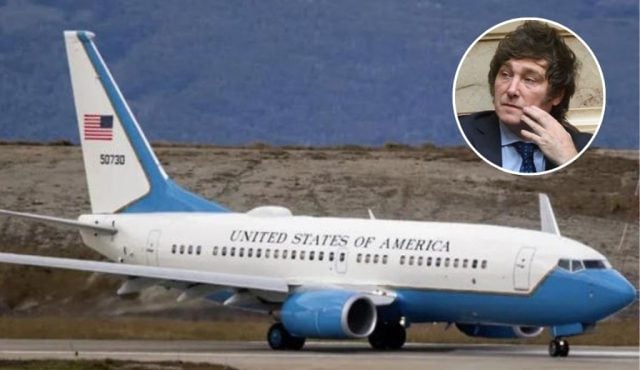
A Boeing C-40 Clipper from the United States landed over the weekend at Ushuaia «Malvinas Argentinas» International Airport, triggering immediate political, social, and institutional alarm due to the presence of a foreign military aircraft in Argentine territory without timely official explanations. This incident coincided with the government’s intervention at the port of the city, leading to demands for reports and clarifications from Javier Milei’s administration in light of the lack of transparency.
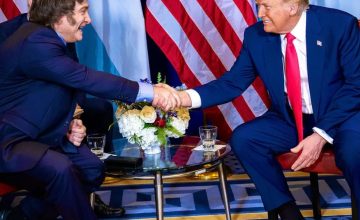
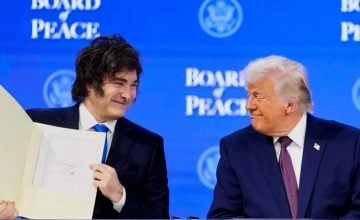
The aircraft, belonging to the U.S. Air Force (USAF), was later described by national authorities as an official visit by a bipartisan delegation from the House Committee on Energy and Commerce. However, the delay in providing information and the military nature of the flight fueled suspicions regarding the true objectives of the mission, particularly amid the strengthening alliance between «libertarian» President Milei and his U.S. counterpart, Donald Trump.
An Unannounced Landing and a Deafening Silence
Officials in the province indicated that local authorities did not have any involvement in the incident. The landing of the aircraft, combined with the secrecy from the Casa Rosada, prompted an immediate reaction on social media and among political circles. Suspicion grew alongside rumors of a potential bilateral agreement that could involve control of the Ushuaia port, one of the most significant infrastructures in southern Argentina.
Cristina López, a parliamentarian from Tierra del Fuego, has filed a request for information in the Senate demanding clear and urgent explanations.
“Ushuaia is not just any city. Tierra del Fuego is not a territory that foreign powers can move in without providing explanations,” the senator stated.
For the Tierra del Fuego representative, if the plane transported U.S. congress members or officials, “it is a serious matter,” both due to the type of aircraft used—a military plane—and the absence of information.
López raised a series of critical questions reflecting widespread concern: “Who traveled? How many are they? What agenda do they have in the province? Why was there no official communication or congressional intervention in the case of foreign legislators?”
U.S. Aircraft Arrival Coincides with Ushuaia Port Intervention
The arrival of the U.S. plane occurred precisely when Milei’s government decided to intervene in the port of Ushuaia, citing alleged diversion of funds and security issues.
Senator López firmly countered such arguments, stating: “There was no diversion of funds, and no transfers were executed to OSEF by the provincial government. If Ushuaia port were unsafe, it would also pose a risk for national intervention, which is a contradictory argument.”
Milei’s decision to intervene in this strategic infrastructure, critical for local development, commerce, tourism, Antarctic logistics, and sovereign projection in the South Atlantic, has already aroused strong criticism in the province. For López, these two events are not isolated but rather part of Milei’s plan to relinquish sovereignty. She asserted: “The Ushuaia port is being intervened while a U.S. military plane lands without public information. This is very serious.”
The senator recalled the central role Tierra del Fuego plays in Argentina’s Antarctic policy and the defense of national interests in the South Atlantic, a region embroiled in a delicate sovereignty dispute with the United Kingdom. In this context, she warned of the lack of clear definitions concerning the Integrated Naval Base of Ushuaia and cooperation agreements with the United States.
“Every decision made in Ushuaia directly impacts Argentine sovereignty. We will not accept that our province is managed as if it were a foreign military base,” she affirmed.
Delayed Explanations and a Vague Agenda
Only after several hours of speculation and a formal request in the Senate did the libertarian government inform that the delegation consisted of U.S. congress members from both the Democratic and Republican parties. Government sources unofficially assured that “everything is in order” and that “civilian rather than military facilities” were used at the airport.
The press office at the U.S. Embassy, led by Peter Lamelas—who recently stated that Trump sent him to Argentina “to support this government”—provided the only public details regarding the agenda.
According to the statement, the visit “includes meetings with government officials and key stakeholders to address environmental degradation, processing permits for mining and waste management, critical minerals processing, public health research, and medical security.”
However, the vagueness of this description, particularly regarding the “processing permits for mining management” and “critical minerals processing,” raised more questions than answers as it touches on sensitive topics directly related to sovereignty over Argentina’s strategic natural resources.
A Shadowy Trade Agreement?
Government sources, who requested anonymity, suggested to the media that the visit represents “a further step in signing and realizing the free trade agreement between Argentina and the U.S.,” adding that “there are many points to negotiate and standardize in a commercial agreement of this nature.”
While both countries announced a framework for a bilateral trade agreement proposing preferential access to certain products and tariff reductions, the final text has yet to be published.
Those same sources acknowledged that “there are norms and agreements to standardize and new labor and tax legislation different from the current one” before implementation, as reported by the newspaper El Argentino.
This lack of transparency regarding the specific content of the treaty fuels concerns across political, labor, and civil society sectors.
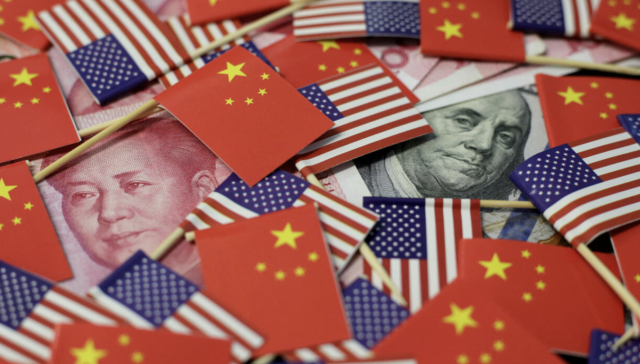
In parallel, according to information published by the site Agenda Malvinas, the delegation would gather information on two strategic projects that the Tierra del Fuego governor, Gustavo Melella, has revived with China: the construction of the New Ushuaia Thermoelectric Plant, with a $65 million investment, whose contract was signed in September with the Asian consortium Rainbow International Xi’an Engineering.
The second project is the Urea Plant, an initiative that Melella revived to transform natural gas into urea and methanol, which will also receive Chinese investments, reported La Nación.
Milei’s Government Defense: «Everything is in Order»
In light of the political uproar, Defense Ministry spokespersons attempted to quell tension. They indicated, off the record, that “the operation took place through formal channels and was not linked to any military deployment but rather a transport flight for a delegation of U.S. Congress members on an official mission in Argentina.”
They clarified that there was “no violation of national sovereignty,” as reported by the cited media.
The flight was said to have received a flight permit from COCAES (Aerial Training and Readiness Command), a mandatory document for foreign state aircraft. Regarding the flight plan, they only confirmed that “everything was in order and compliant with current regulations” without providing publicly verifiable documentation to support these claims.
More Questions Than Answers
The presence of a U.S. military aircraft at the southernmost part of the country, in a context of maximum geopolitical sensitivity and a developing strategic alliance with Washington, reopened profound debates regarding national sovereignty, control of strategic resources, and the limits of transparency in international negotiations.
The sequence of events—intervention of a strategic port, secret arrival of a military plane, delayed explanations, and a vague agenda—has left a sense of distrust among broad sectors of politics and society. The lack of timely information, the belated clarifications, and the opacity surrounding the ongoing trade agreement leave many more questions than answers about the real scope of this visit and its implications for the future of Argentina, particularly regarding its sovereignty in the strategically important Patagonian and Antarctic South.
Relacionados
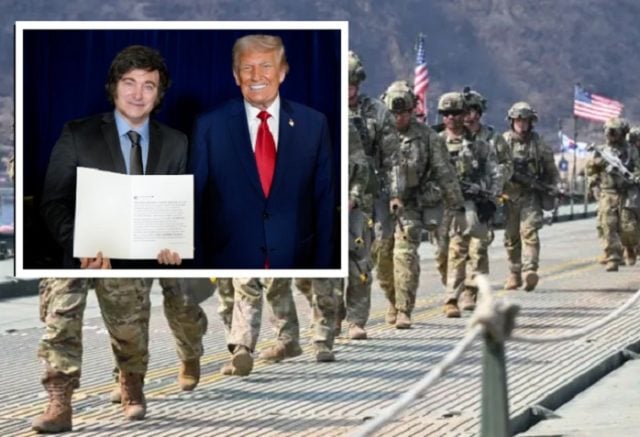
Milei Faces Uproar as U.S. Troops Enter Tierra del Fuego Without Congressional Approval
Hace 4 meses

Milei Loses a Key Player as Anti-Crime Platform Unravels: Espert Withdraws Candidacy After Drug-Trafficking Scandal
Hace 4 meses
Trump Criticizes Argentina's Economic Struggles: "They Are Dying, They Are Fighting to Survive"
Hace 3 meses