Original article: La verdad avanza: Cámara aprueba institucionalizar el Plan Nacional de Búsqueda de detenidos desaparecidos
Progress for Truth: Chile’s Chamber Approves Institutionalization of National Search Plan for Missing Persons
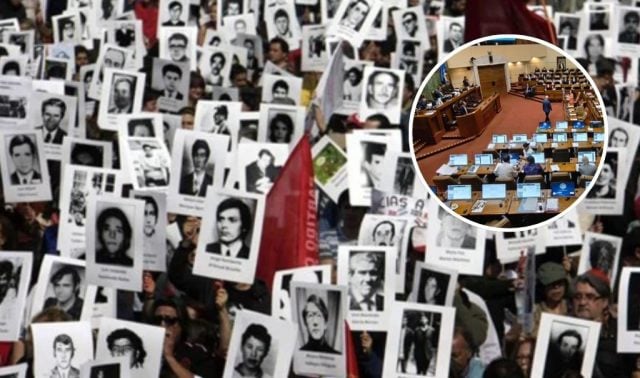
In a pivotal day for memory and human rights in Chile, the Chamber of Deputies approved a bill this Tuesday that institutionalizes the National Search Plan for Truth and Justice (bill 17839). This initiative aims to clarify the fate of victims of enforced disappearances during the military dictatorship. The bill, which received 79 votes in favor, 41 against, and 16 abstentions, now moves to the Senate for its second constitutional review.
The proposal ensures that the search for individuals who disappeared during Augusto Pinochet’s regime becomes a permanent state obligation, independent of the current government. With this legislative backing, the bill will proceed to the Senate, where it will be debated and voted on to become law.
Supporters of the measure are urging swift discussion, especially given the upcoming presidential transition and the need to safeguard this public policy against potential priority shifts under the incoming administration of the Republican José Antonio Kast, whose sector has downplayed human rights violations during the dictatorship, risking the historical debt owed to 1,100 families still seeking answers and justice after more than 50 years.
The initiative establishes a permanent legal framework for the search of missing persons between September 11, 1973, and March 10, 1990. The implementation of the plan will be overseen by the Undersecretary for Human Rights, which will create a special unit dedicated solely to this task.
Legal Safeguard for the Search for Truth and Justice
The main objective of this new legislation is to transform the National Search Plan into a permanent state instrument aimed at advancing the location, identification, and restitution of the remains of victims of enforced disappearances. According to the approved text, the initiative not only seeks to determine the final whereabouts of the victims but also ensures the inalienable right of their families and society to know the truth about what happened.
During parliamentary discussions, it was explained that this plan already functions as a public program, and the proposal aims to convert it into a permanent policy that operates independently of changing governments. In this regard, deputies pointed out that the plan is already funded and staffed, but requires stability for its long-term action.
Objectives of the Plan for Truth and Justice
The National Search Plan for Truth and Justice includes three clearly defined key objectives. First, it seeks to clarify the circumstances of disappearance and/or death, as well as the final fate of individuals who were forcibly disappeared during the specified period.
Secondly, it focuses on recognizing, promoting, and effectively implementing the right of victims’ families and society to truth, memory, justice, and prevention of recurrence.
Finally, it aims to enhance the effective participation of families, human rights organizations, and civil society in the search processes.
To ensure these goals are met, the project proposes the establishment of a Monitoring and Participation Committee, an entity tasked with knowing, advising, and making recommendations for the implementation of the plan. This body will consist of thirteen members who will serve pro bono for four years, ensuring continuity in the supervision of the adopted policies.
Additionally, the legal text mandates the Undersecretary for Human Rights to prepare an annual management report. This document must be presented to the President of the Republic, the Supreme Court, and the National Congress, detailing the activities and outcomes of the plan, with specific information on the achievement of defined goals and objectives.
Voices from the Debate
The discussion in the Chamber included extensive participation from legislators across various parties. Key contributors included Carolina Tello, Ana María Gazmuri, Johannes Kaiser, Lorena Fries, Arturo Barrios, Agustín Romero, Lorena Pizarro, Vlado Mirosevic, Luis Sánchez, Carmen Hertz, Roberto Celedón, Daniela Serrano, Emilia Schneider, Alejandra Placencia, Andrés Giordano, Hernán Palma, Consuelo Veloso, Marcela Riquelme, María Candelaria Acevedo, and Tomás Hirsch, among others.
One of the most significant moments was the speech by Deputy Roberto Celedón (IND), a co-author of the motion, who applauded the broad support the initiative received, except from lawmakers aligned with the far-right.
“It is very valuable and important because a sector of the right, especially from Renovación Nacional, led in this case by Ximena Ossandón, together with all democratic and progressive forces, voted in favor, which is commendable, and only the extreme right voted against it,” he stated.
The parliamentarian argued that the state’s duty extends beyond the potential discovery of remains. “It’s not just about eventual findings, because they may not be found, but about reconstructing all the stories regarding the truth of the events that occurred and who the authors were, even if the authors have already passed away. Knowing the truth as a people is fundamental,” he said, as reported by Bio Bío Chile.
Meanwhile, Deputy Carolina Tello (Frente Amplio) praised the end of the plan’s dependency on administrative decrees that could be altered by future administrations. Her argument centered on the historical debt of the state to the victims of the dictatorship:
“After a cold and bloody dictatorship, the state must ensure ongoing truth and reparation, fulfilling international commitments,” she indicated.
However, amid the debate, some expressed their objections to the institutionalization of this plan. According to the Chamber of Deputies, some right-wing parliamentarians argued that it rigidifies what could be corrected administratively and assessed that it does not advance in identifying victims nor improve the effectiveness of the policy in question.
Origins and Journey So Far
The proposal originated from a motion presented by Deputy Lorena Fries along with parliamentarians Roberto Celedón, Andrés Giordano, Claudia Mix, Javiera Morales, Patricio Rosas, Clara Sagardía, Jaime Sáez, Carolina Tello, and Ericka Ñanco.
It is important to highlight that the National Search Plan was originally presented by President Gabriel Boric in August 2023, during the commemoration of the 50th anniversary of the coup d’état.
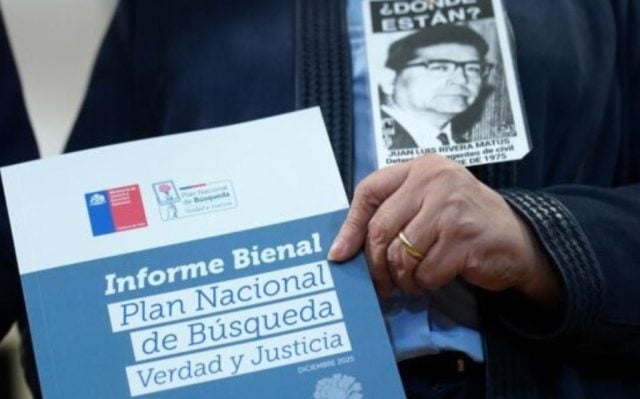
In December 2025, the President and human rights authorities delivered the first biennial report, detailing the progress of search efforts, including the creation of a unique victims list and a georeferenced trajectory map. During that period, 157 field actions were conducted, and progress was made in establishing the National Memory Archive.
Relacionados
Investigation into 1973 Execution of 14 Paine Farmers Reveals Human Genetic Material Linked to Ballistic Evidence
Hace 2 meses