Original article: “Reemplazar la gratuidad”: la columna que encendió alertas en el debate educacional
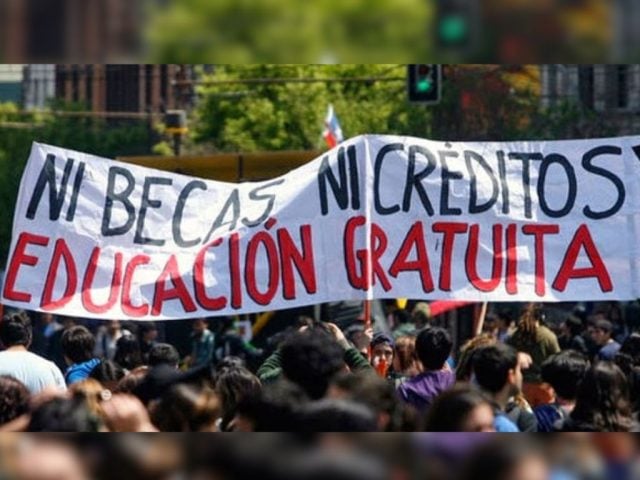
A column by Manuel Villaseca, published in El Líbero, has reignited the discussion surrounding the future of free higher education. In the piece, the economist suggests replacing the current system with a combination of tuition scholarships and a contingent income credit, a proposal that has raised concerns about its potential programmatic implications.
The column titled «A Decade Since Its Inception: Replacing Free Education» outlines the stance of Manuel Villaseca, who argues that the current free education policy—introduced in 2016 and later incorporated into the Higher Education Law—now covers only about 50% of enrollment. He claims that this situation incurs high costs for the government and places financial restrictions on institutions due to regulated tuition fees, deficits, and limits on growth.
Villaseca also noted that the fiscal spending associated with free education has risen significantly amidst a tightening budget scenario. He criticized the government’s FES project for perpetuating these issues.
In this context, he proposes replacing free education with a mixed system of tuition scholarships and a contingent income credit, arguing that this model would help maintain access for the most vulnerable students, provide greater sustainability for institutions, and reduce fiscal spending.
In a column for Crónica Digital, Álvaro Ramis suggested that José Kast does not need to explicitly comment on free education because—according to him—“others, carefully coordinated,” are the ones shaping those definitions in the public debate. In this context, Ramis cites Villaseca’s column as one of the signals that, in his view, function as a programmatic prelude. His argument has fueled questions about whether the proposals from the director of studies at Acción Educar might signal lines being considered by sectors close to the candidate.
The publication has raised doubts about whether this viewpoint could foreshadow a potential programmatic shift in a future Kast government. El Ciudadano reached out to the candidate’s team to find out if Villaseca’s ideas are being evaluated as part of their educational proposal, but no response was received by the time of this writing.
Following the publication, questions remain: Is this an isolated technical opinion or an early glimpse into the potential program of a Kast government? The lack of an official response prevents clarification on that point. However, it is evident that the debate over free education has returned just as electoral discussions are entering a decisive phase.
Relacionados
Kast's Cabinet Appointments Spark Controversy: Notable Figures Include Jouannet, Silva, Codina, Chomalí, and Farías
Hace 3 semanas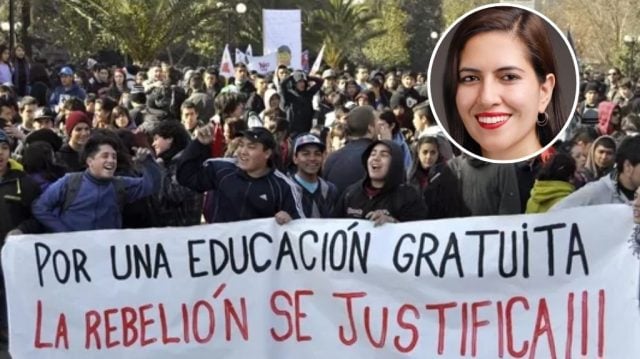
Latin American Magazine Highlights Oceanósfera's Impact on Transformative Marine Education in Chile
Hace 2 semanas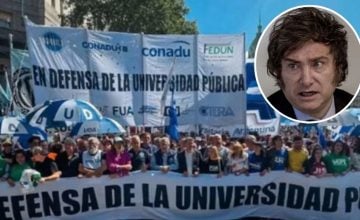
University Strike in Argentina: Unions Accuse Milei of Undermining Education Financing Law with "Poverty Budget"
Hace 3 meses