Original article: ¿Refugio o liquidez? La divergencia de la plata entre Shanghai y Nueva York pone a prueba la confianza del mercado
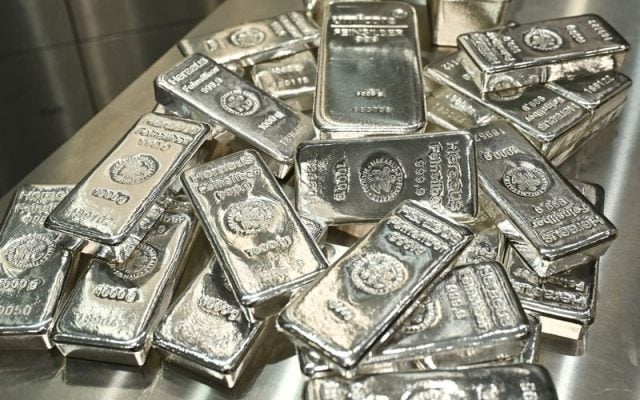
In recent weeks, global precious metals markets have exhibited asymmetric behavior that has captured the attention of investors and analysts alike. While silver maintains remarkable stability on the Shanghai market, its price in New York has faced downward pressure linked to a search for liquidity amidst a complex macroeconomic scenario. This divergence raises a crucial question: which market can we trust more?
El Ciudadano
The Scenario: Two Worlds, Two Strategies
On one hand, Shanghai, China, has demonstrated unusual firmness. The value of silver has remained within a narrow range, supported by solid industrial demand, capital controls that limit investment outflows, and a monetary policy from the People’s Bank of China (PBOC) focused more on stability than aggressive liquidity measures. For the Asian giant, silver is both a crucial industrial commodity for its technology and green energy sectors, and a safe asset within its reserve diversification strategy.
On the other hand, New York, United States, has witnessed a different dynamic where the price of silver has been dragged down. In a context where the Federal Reserve (Fed) has maintained (or adjusted) interest rates to combat inflation without stifling growth, the need for liquidity in the financial system has sometimes resulted in the sale of assets deemed «less critical,» including certain precious metals. A key precedent that illustrates this dynamic was the massive sell-off executed by investment bank Morgan Stanley, which, according to reports from COMEX traders, acted as a trigger for a more pronounced depreciation of the metal. The strong dollar and the quest for cash to cover positions or adjust balances have exerted sustained downward pressure on silver futures contracts.
Factors Behind China’s Stability
- Real industrial demand: China is the world’s largest consumer of silver for industrial uses, from electronics to solar panels. This base demand provides a solid floor.
- Control and autonomy: The precious metals market in Shanghai is more «protected» from massive global speculative flows. Government policies and the preferences of domestic investors (who view tangible assets as protection) have a powerful influence.
- Monetary strategy: The PBOC has avoided extremes of expansion and contraction, prioritizing exchange rate and internal financial stability.
Factors Behind the Pressure in the U.S.
- The imperative for liquidity: The U.S. financial markets, being the deepest and most global, are sensitive to changes in the cost of money. As appetite for cash (liquidity) increases, assets like silver may be sold to acquire dollars.
- Strength of the dollar: A strong dollar historically pressures the prices of commodities denominated in that currency.
- Speculative dynamics and institutional adjustments: The COMEX futures market is enormously influential and subject to movements by large institutions such as Morgan Stanley, whose massive sales to secure liquidity or rebalance portfolios can create waves of sellers. These adjustments respond more to global risk sentiment and treasury needs of big banks than to changes in supply and demand fundamentals.
Which Market is More Reliable?
The answer is not binary and depends entirely on the investor’s profile and horizon.
- Shanghai may appear more reliable for those seeking stability and a reflection of physical demand. Its relative insulation from global financial turmoil and specific actions from large investment banks makes it a situational safe haven, particularly for Asian investors or those exposed to the Chinese economy. It shows enviable resilience during times of volatility.
- New York remains more reliable for those who value immediate liquidity, transparency in global pricing, and reflection of global macroeconomic expectations. It is the reference market where prices are «discovered» internationally. Its volatility, sometimes triggered by specific operations like those from Morgan Stanley, is not just a risk; it can also present an entry opportunity at depressed prices.
Conclusion: Contextual Reliability
In the short term, Shanghai has offered a safer harbor, showing strength that stems from its controlled economy and domestic demand, far removed from panic selling for liquidity by major Western players.
In the long run, the reliability of the New York market lies in its unmatched liquidity and its role as a global financial barometer, although that same role makes it vulnerable to speculative shocks or liquidity adjustments from its key participants, as evidenced.
The current divergence is not so much a competition for supremacy, but a symptom of a fractured financial world. A prudent global investor would not choose one over the other definitively, but rather understand that the disconnection between both markets is, in itself, the best illustration of two conflicting logics: that of the state and industrial refuge versus that of the global financial asset subject to the whims of institutional liquidity. Silver, that metal straddling the line between industrial and monetary value, has become the perfect mirror of this tension.
El Ciudadano
Relacionados
Copper Prices Reach Historic High Amid Supply Issues and Stockpile Concentration in the U.S.
Hace 2 meses
Silver's Value Plummets 25% in Hours: The Crushing Blow to Small Savers and Financial System Hypocrisy
Hace 6 días

Central Bank Cuts Interest Rate to 4.5% Amid Rising Copper Prices and Improved Inflation Outlook
Hace 2 meses
Copper Prices on the Rise: Cochilco Projects US$4.95 per Pound in 2026 and US$5.00 in 2027
Hace 2 días