Original article: «Cientificidio» en la era Milei: Argentina será el único país de la región que no invertirá en investigación en 2026, según científicos
Under Javier Milei’s administration, Argentina is set to become the lone country in Latin America that will not allocate public funds for new scientific research projects in 2026. The decision by the Agency for Science, Technology, and Innovation to cancel previously awarded project grants (PICT) reinforces a process of underfunding that researchers have termed «scientific genocide.»
«Thursday, December 4, 2025, will sadly be remembered as a pivotal date in the dismantling of Argentina’s scientific system,» announced the Network of Authorities of Science and Technology Institutes (Raicyt), an organization representing over 400 leaders in scientific and technological organizations.
This measure entails the cancellation of the Scientific/Technological Research Projects (PICTs) from the 2022 call, which had already been awarded funding, along with the permanent closure of the 2023 call—previously postponed seven times and now definitively canceled as announced on December 4. Coupled with the absence of new calls in 2024 and 2025, this results in a complete lack of public funding for new research starting next year.
«In our faculty’s case, this decision eliminates funding for 109 scientific projects that had been selected through open and transparent competitions. In any case, the vast majority of researchers had already been lacking funding due to the paralysis of the Agency for Science and Technology,» explained Valeria Levy, Vice Dean of the Faculty of Exact and Natural Sciences at UBA and a researcher at CONICET, to Página/12.
Systematic Dismantling
The Agency for Science and Technology, established in 1996 and historically responsible for funding around 1,500 projects annually through PICTs across all knowledge areas, was transferred to the Ministry of Science, Technology, and Innovation’s new secretariat after its dissolution in 2023, now under Darío Genua, appointed by Milei. Since then, its activities have come to a halt.
«The term that defines this administration is disastrous. There is no dialogue, no room for discussion, no possibility of anything. In fact, there is explicit mistreatment of the entire sector,» accused Jorge Geffner, a member of Raicyt’s coordination, a Ph.D. in Biochemistry and senior researcher at CONICET.
The numbers confirm a drastic regression. According to reports from the EPC group, established by the previous administration of the Ministry of Science and Technology, investment in this sector will plummet to a historic low of 0.164% of GDP this year, reflecting a 45.3% deterioration in just two years, surpassing the 35.3% cut made during Mauricio Macri’s presidency. This ratio is even lower than the 0.177% reached in 2002 amidst the post-2001 crisis.
Chain Reactions and Brain Drain
The crisis extends beyond funding shortages for projects. Programs such as Building Science and Equipping Science have also been dismantled, and the number of grants has drastically decreased—from nearly 1,300 in 2023 to 600 now, which will end in a little over a year with no plans for new calls.
Salaries have deteriorated, averaging between 30% and 40% since December 2023, worsening the emergency. «The high academic quality in faculties like ours is due to having researcher-teachers conveying high-level, up-to-date scientific knowledge. Without salaries and funding, it becomes extremely difficult to work, leading to a massive exodus of teacher-scientists,» warned Levy.
A Paradigm Shift: Only ‘Useful’ Science for the Market
In response to the dismantling of traditional frameworks, the current administration of the Agency for Science and Technology, led by Natalia Avendaño, announced an alternative call that conditions funding on agreements with private companies and prioritizes immediate application projects (applied science), sidelining basic research.
«It wouldn’t be a bad idea if the project encompassed all areas of research or if it complemented other programs. But framed this way, it signifies the Agency ceases to exist. Except for a few small groups that manage some research projects with companies,» explained Geffner to the quoted media outlet.
Raicyt has warned against this change: «With this decision, the government destroys the complex and virtuous process of scientific and technological development, which involves total integration between basic and applied science… Just as obtaining a university degree is impossible without having gone through primary and secondary school, the scientific path is long and requires steps.»
Mobilization to Denounce the ‘Scientific Genocide’ Caused by Milei
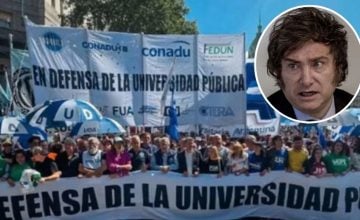
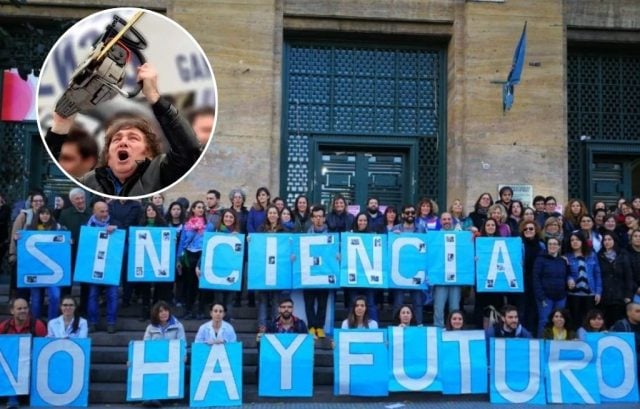
In light of this situation, the scientific community has called for a gathering on Wednesday, December 10, at the Scientific Pole in Palermo to reject the new cuts imposed by the so-called «libertarian» administration.
«This government and the architects of this policy will go down in history as the creators of scientific genocide, interrupting one of our country’s proudest traditions,» stated Raicyt.
They also extended a call to action: «It is up to us to uphold and fight for a quality Argentine Science that generates development, inclusion, and allows us to envision a better possible future.»
Meanwhile, Argentina’s outlook for 2026 appears bleak, as it stands on the brink of being the only country in the region without new public research funding.