Original article: Revés para Trump: Senado de EE.UU. avanza resolución para impedir nuevas acciones militares en Venezuela sin aval del Congreso
United States President Donald Trump faced a significant setback as the Senate took a decisive step to curb his powers regarding intervention in Venezuela. By a vote of 52 to 47, the Republican-controlled upper chamber approved a motion on Thursday to proceed to the final vote on a resolution that prohibits the far-right president from authorizing new military actions in the Caribbean nation without explicit Congressional approval.
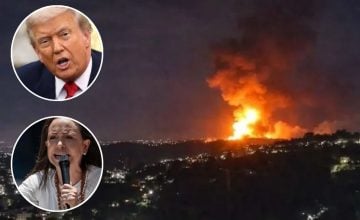
This move represents the first organized signal of discontent among traditional Republican ranks concerning the military operation carried out early in the morning on January 3 in various locations in Caracas and the states of La Guaira and Miranda, which resulted in the kidnapping of Venezuela’s constitutional president, Nicolás Maduro, and his wife, Cilia Flores.
Although Thursday’s vote was procedural — intended to «invoke cloture» to bring the resolution to a full vote — its outcome clearly indicates that the measure has sufficient support to be passed definitively.
The War Powers Resolution, co-sponsored by Republican Senator Rand Paul and Democrat Tim Kaine, requires only a simple majority (51 votes) for passage in the Senate.
The five Republican senators who crossed the aisle to align with the Democratic bloc were Rand Paul, Lisa Murkowski, Todd Young, Susan Collins, and Josh Hawley.
Content of the Resolution and Constitutional Complaint
The resolution specifies that the Trump administration «must first seek authorization from Congress before being able to greenlight any military operations in Venezuelan territory.» This stipulation aims to enforce what its promoters view as a violated constitutional mandate.
The U.S. Constitution establishes that it is Congress, not the President, that has the authority to declare war. However, the White House did not notify Congress in advance about the operation in Venezuela, arguing that it was a «police action» rather than a conventional act of war.
This omission had generated «strong discontent» among a sector of the Senate, especially since several legislators claimed that Secretary of State Marco Rubio had committed to informing Congress if the Government decided on a military attack in Venezuela.
Discontent was further fueled by the increasingly aggressive rhetoric from the Republican mogul, who in recent days has sent messages about «America’s supremacy on the continent,» intentions to «oversee Venezuela and control its oil for years,» and even the possibility of a «second operation» if the interim government, led by acting President Delcy Rodríguez, does not comply with Trump and his officials’ directives.
Republican Rebellion
The dissenting Republican senators explained their votes by appealing to constitutional principles and campaign promises.
For instance, legislator Susan Collins referred to her disagreement with Trump’s intentions as he has indicated his aim to manage Venezuela for an indefinite period.
Meanwhile, Todd Young pointed out that his goal was to reaffirm the role that the Constitution grants Congress as the power that decides on acts of war.
He emphasized that his aim is to «force the president to keep his campaign promise not to re-engage the country in the kind of endless conflicts that bogged down American forces and left thousands dead in Iraq and Afghanistan,» as noted by the newspaper El País.
Trump’s Fury
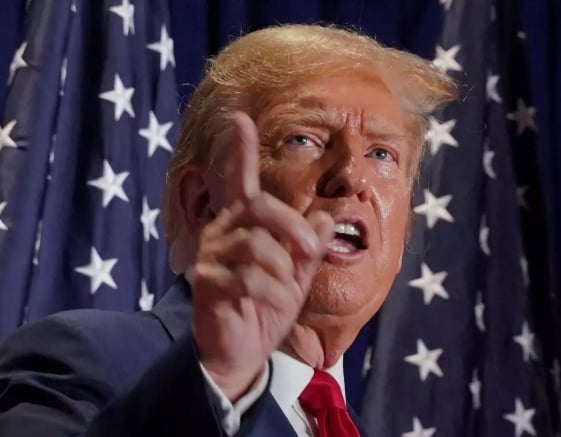
The rebellion of this group from the traditional Republican wing immediately unleashed Donald Trump’s fury. In a message posted on his social media platform, Truth, the president lashed out at his fellow party members.
«Republicans should be ‘ashamed’ of the senators who aligned with the Democrats to ‘try to take away our powers to combat and defend the United States of America,'» he wrote.
Trump went further in his personal attack, stating that none of the five legislators «should ever be re-elected to any public office again.»
He labeled the vote as an act that «severely harms U.S. self-defense and national security, limiting the president’s authority as commander-in-chief of the armed forces.»
Additionally, he dismissed the resolution as «unconstitutional,» arguing that it violates Article II of the Constitution concerning presidential powers.
Contradicting Trumpism’s Narrative
The outcome of the vote contradicts the narrative of unity and support that Trump and his team have disseminated since the military operation in Venezuela was executed. The president had presented himself to the public in a euphoric manner, celebrating the «brilliance» of the attacks carried out against the Caribbean nation, assuring that voters were «delighted» with Maduro’s capture.
In an interview with NBC earlier this week, he even claimed that the MAGA movement, which stands for «Make America Great Again,» supports his aggression towards Venezuela.
“MAGA loves what I am doing. MAGA loves everything I do,” he boasted, referring to this movement that groups his most conservative right-wing supporters.
However, the Senate vote suggests that support within the Republican political class is not unanimous.
What Will Happen with the Resolution?
The Senate is expected to debate and vote on the resolution next week. If approved, it will move to the House of Representatives, where Republicans hold a very narrow majority of just five seats (out of 435).
Although it may face an uncertain fate there, its legal trajectory will likely end in a deadlock: to become law, it would require the signature of President Trump himself, who has already made it clear that he would veto it.
Nonetheless, beyond its ultimate legislative fate, Thursday’s vote marks a political milestone. It shows that, despite Republican control of both chambers, there exists a red line that a faction of the American right is unwilling to cross: indefinitely ceding the power to declare war to the Executive branch, reviving a constitutional debate as old as the nation itself and imposing, at least symbolically, a check on Donald Trump’s interventionist and violent foreign policy.
Relacionados

"They Deceived Congress Outrageously": US Dissent Against Trump Accuses Him of Illegal Attack on Venezuela
Hace 2 meses
Majority of Americans Oppose U.S. Military Action in Venezuela; Calls for Congressional Approval
Hace 3 meses