Original article: Estudio advierte pérdida del hábitat del picaflor de Arica debido a la expansión de monocultivos
Chile’s northern region is home to one of the planet’s most arid ecosystems. In the midst of the Atacama Desert, agricultural valleys facilitate human communities, productive activities, and remarkable biodiversity.
However, the sustained growth of agricultural activities has led to increasing tensions between production and conservation, particularly in areas of high ecological value.
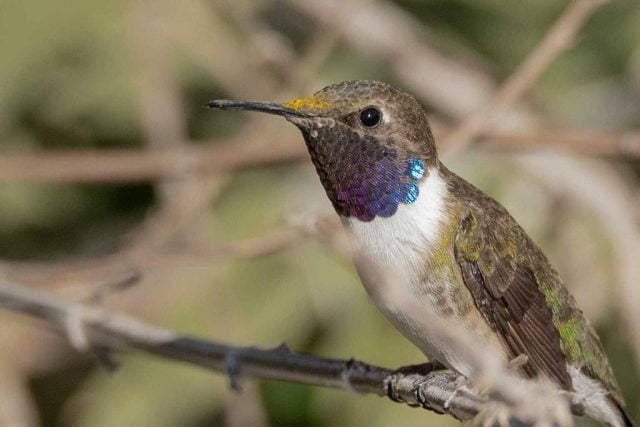
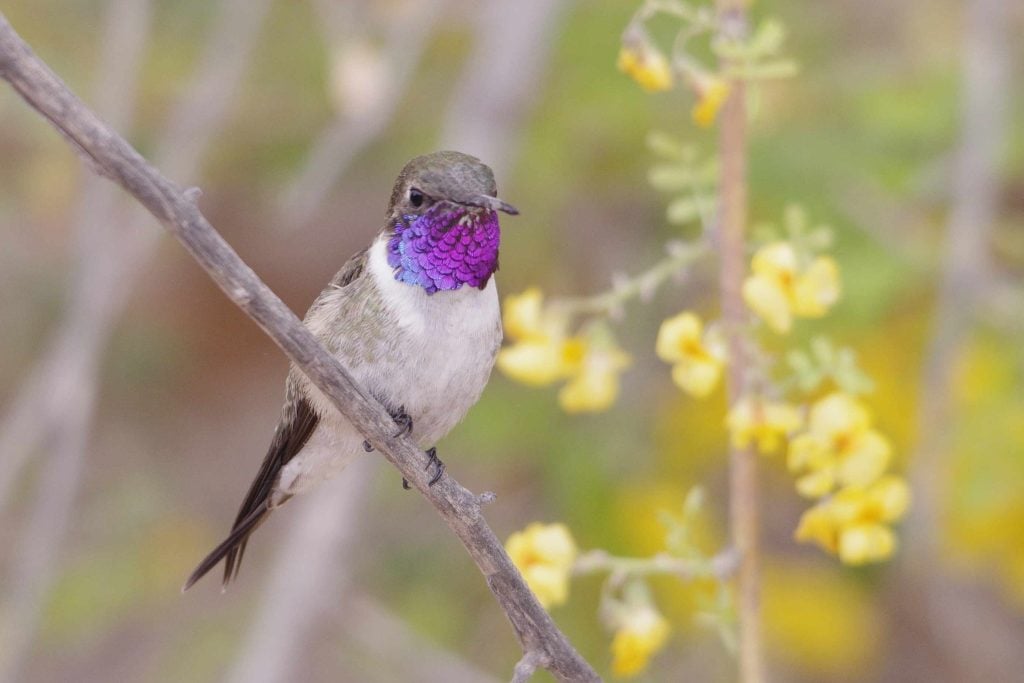
In this context, a study led by the University of Chile documents how the accelerated transformation of agricultural landscapes—marked by the rise of monocultures and intensive infrastructure—has diminished available habitat for native species, including the Arica hummingbird (Eulidia yarrellii), an endemic species facing extinction.
The research, titled «Rapid land cover change in agricultural valleys of the Atacama Desert, Chile,» was published in the scientific journal Arid Land Research and Management.
The study was spearheaded by Dr. Matías G. Castillo from the Wildlife Ecology Laboratory (LEVS) and the Ecology, Nature, and Society group (ECONAS), along with Dr. Cristian Estades, a professor at the Faculty of Forestry and Nature Conservation, an ornithologist specializing in the study and conservation of endangered birds and director of LEVS.
«The main goal of the study was to quantify how land cover changed between 2003 and 2019 in four agricultural valleys of the Atacama Desert. Using satellite imagery and over 20 years of ecological bird monitoring, the team identified a significant increase in areas dedicated to intensive production, particularly anti-aphid nets and greenhouses,» explained officials from the higher education institution.
In Azapa, this expansion not only progressed rapidly—with an average annual growth rate of 24.7% for nets over the period—but also involved a land conversion: more than 1,400 hectares of barren soil were transformed into human-use covers like nets and crops.
Meanwhile, there was a recorded decline of over 50% in fruit tree area, from 2,000 hectares in 2003 to 928 hectares in 2019.
«What we observed is a process of accelerated agricultural intensification, where more diverse and open production systems are replaced by homogeneous crops, with a higher load of agrochemicals and reduced habitat availability for wild species,» explained Dr. Matías Castillo.
According to the study, one of the most affected by this transformation is the Arica hummingbird. The data collected indicate a significant decrease in its presence in areas that have experienced intense agricultural expansion.
Isolated Valleys with No Retreat Margins
Unlike other regions, the valleys in northern Chile are surrounded by desert, which reduces their ecological connectivity.
For species requiring specific habitats, this means that the loss of native vegetation cover not only represents a threat but also creates a difficult-to-reverse barrier.
«The problem is that there’s nowhere to go. These are isolated ecosystems, and when an area is lost, recovery is complicated and slow,» warned the researcher from the University of Chile.
The situation is not only affecting birds: reptiles, bats, pollinating insects, and small mammals are also displaced by agricultural expansion when there is no ecosystem-focused planning.
Additionally, the analysis showed that population density was significantly associated with the magnitude of land cover change, suggesting that socio-territorial factors also influence the speed of landscape transformation.
The Importance of Territorial Planning
In light of this scenario, the research team emphasizes in their article the need for public policies aimed at planning land use with sustainability and biodiversity criteria.
At the same time, they call for strengthening ecological restoration programs and conserving biological corridors to facilitate species movement.
«We still have time. There are already local restoration experiences in collaboration with public institutions and civil society organizations. But to be effective, they must be accompanied by regulation and political will,» stated Dr. Matías Castillo.
Furthermore, the researchers hope that the evidence gathered will serve as technical input for decision-makers, especially in regions where agricultural pressure and water scarcity intersect with ecological challenges, such as in Arica.
In this context, the University of Chile reported that this study is part of Matías G. Castillo’s doctoral thesis, who is currently preparing a second article focused on population changes of specialist and generalist birds concerning these territorial transformation processes.
The Citizen
Relacionados
Construction Begins on Zapallar Reservoir in Ñuble, Set to Irrigate 10,000 Hectares of Agricultural Land
Hace 2 semanas
Zapallar Reservoir Project: Commission Upholds Approval Amid Key Gaps in Environmental Assessment
Hace 2 meses
Scientific Alert: Study Warns Over Half of Kelp Forests Along Chile and Peru Coasts May Disappear by 2050
Hace 2 meses