Original article: Más vale el intento: Fundar una izquierda de ruptura
By Leopoldo Lavín Mujica
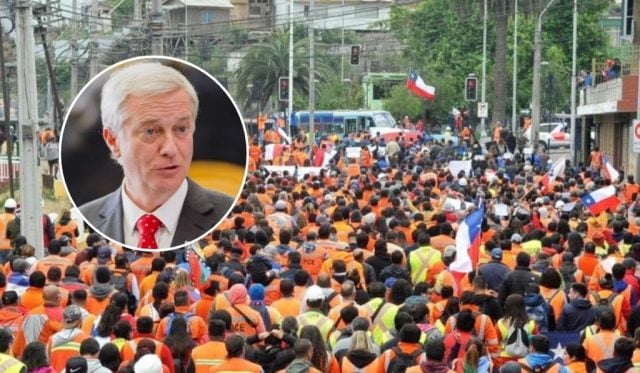
In its early weeks, José Antonio Kast’s government has revealed its true character: not merely neoliberal, but neo-reactionary.
It is unmistakably neoliberal, as evidenced by its significant initial measure—a fuel price hike that severely impacts family budgets, adhering to a fiscal adjustment framework that prioritizes budget balance over people’s well-being.
It is neo-reactionary because it intertwines economic orthodoxy with a narrative focused on order, security, and cultural renewal, aiming to discipline society under an authoritarian conservatism.
The dramatic decline in its approval ratings from 57% to 36% in just two weeks, according to major polling firms such as Cadem (47%), Panel Ciudadano-UDD (42%), and Black & White (36%), is no coincidence: it reflects the immediate rejection generated by this unvarnished modus operandi.
In light of this situation, the Chilean left finds itself at a critical juncture that requires decisive action. The leadership of the Socialist Party and the Frente Amplio, which led to the disappointing governance of Gabriel Boric—clinging to similar strategies and timidity as their predecessors—has shown its inability to forge a viable alternative.
While Socialist leader Paulina Vodanovic favors a “dialoguing center-left,” ready to collaborate with the Kast administration, the aware citizenry senses that such an approach lacks vision and is merely about institutional survival.
However, there exist leaders determined to pursue a different left. Daniel Manouchehri, Daniella Cicardini, and Gonzalo Winter—despite their contradictions—articulate a discourse aimed at breaking free from the current stalemate.
Yet, Winter embodies an ambiguity that must be addressed: during Boric’s government, he consistently supported the state of emergency in the Southern Macrozone, but now, with Kast in power, he has changed his stance. If solidarity with the Mapuche people only manifests when not in governance, the credibility of a new left will be called into question.
Et pourtant… the model of La France Insoumise (LFI) presents a clear horizon: a fundamental break from stagnant parties, a program challenging neoliberalism—price controls, strategic company recoveries, tax reforms, and taxes on the wealthy—alongside both economic and ecological planning, as well as structural anti-racism.
Nonetheless, the feasibility of this project is contingent on three unavoidable factors.
First, necessary debate: no more concealing contradictions; discussions must openly confront why Winter supported the militarization of Mapuche areas under his sector’s governance, why paralyzing neoliberal tendencies dominate the PS, and why current leaders obstruct any transformative emergence.
Second, political will: if Manouchehri, Cicardini, Winter, and others aspire to build hope, they must break with the structures that neutralize them—Vodanovic’s PS and the leadership of the FA—just as Mélenchon (former PS minister 2000-2002) broke from the French Socialist Party to co-found La France Insoumise with fellow political and social activists a decade ago.
Third, programmatic clarity: denouncing is not enough; a governing program needs to integrate economic, ecological, institutional, and cultural aspects in a synthesis that addresses popular needs.
The political moment is ripe. Kast’s government may further wear down, and quickly. This is a plausible scenario. However, the opportunity will be squandered if the left remains entangled in its internal squabbles.
Taking the founding step means cultivating the notion of a leftward rupture: regrouping from above and at the grassroots, creating a new force that does not have to seek permission to confront the existing model, avoiding past ambiguities, and placing the popular claims, currently without representation, at the center.
The citizenry has already faced disappointment once. There won’t be a second chance.
The Communist Party
Undoubtedly, this re-founding of a breakaway left cannot overlook the Communist Party, even if it is not the central focus.
The PC is experiencing a tactical defeat syndrome following Jeannette Jara’s loss in the runoff—where she garnered only 41.84% against Kast—processing this setback with a shift towards ‘constructive opposition’ that risks diluting its identity as the workers’ party, while its main leader, Daniel Jadue, remains judicially blocked—first with preventive detention and now with partial nighttime house arrest, after over a year of legal restrictions—with his activism suspended and few chances of leading any process.
Here, the historical opportunity lies in critical leaders from the PS, the FA, and sectors within the PC overcoming the trauma of recent defeats to dare to create something new.
In this context, it cannot be overlooked that the other right—the one presenting itself as moderate, dialoguing, and technocratic—will seek to position itself as an alternative in response to Kast’s weariness. Figures like Evelyn Matthei or sectors of the reformed Concertación such as Francisco Vidal or Tohá will try to capitalize on discontent by offering stability without upheaval, while maintaining the core of the existing model.
This is the space that the breakaway left must contest with its own project, for if it does not, voters may again fall into the trap of a false alternative that merely manages the status quo.
The political moment is both interesting and conducive to disruptive initiatives. Yet, the opportunity will be wasted if the left continues to be ensnared in its internal conflicts. Taking the founding action means raising awareness in communities of the need for a new force that does not require permission to confront the existing model, avoids repeating past ambiguities, and places at the forefront the popular demands currently lacking representation.
A significant portion of the populace has already been disappointed once. Fatigue and frustration are fertile ground for fascisms.
Leopoldo Lavín Mujica
Artículos Relacionados
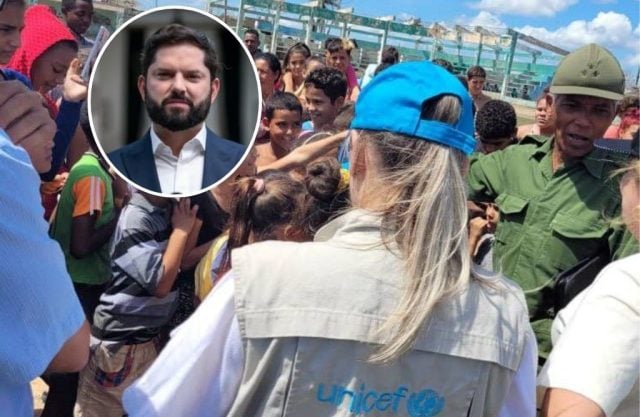
Chile Activates Humanitarian Aid for Cuba: President Boric Orders Contributions to UNICEF Focused on Child Welfare
Hace 2 meses