Original article: Trump contra las cuerdas en Irán: ninguna salida de la guerra es limpia ni barata
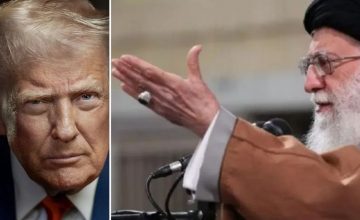
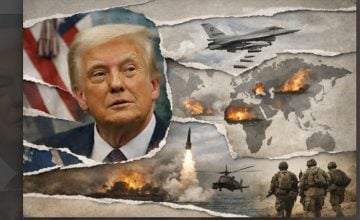
After nearly four weeks of conflict ignited by a joint US and Israeli attack on Iran, the administration of Donald Trump finds itself under immense pressure. A detailed analysis by The Economist reveals that the four potential options available to the US President for extricating the nation from this military conflict are fraught with risks, high costs, and unpredictable consequences.
Contrary to the triumphalist rhetoric that often surrounds the Republican magnate, the situation on the ground and at the negotiating tables presents a complicated picture. As per the British publication, while Trump claims that Washington is “crushing” Iran, he essentially has four choices on the table—negotiate, declare victory and withdraw, continue the status quo, or escalate the conflict—and has yet to choose any of them because, simply put, “none are good.”
Ceasefire?: The Dead End of Negotiation
The first option, agreeing to a ceasefire with Iran, appears to be the least likely because the path to negotiations is riddled with distrust.
According to the cited publication, the Islamic nation, which has suffered attacks on two occasions during talks with the far-right government, is wary of sitting down again with US representatives.
Meanwhile, the diplomatic environment is, at best, hostile. Oman, the country that has traditionally acted as a mediator between Washington and Tehran, has irritated its neighbors in the Gulf due to its approach deemed sympathetic towards the Persian nation.
The analysis suggests that even if both parties were to agree to resume dialogue, a successful agreement is far from guaranteed. The demands from each side remain fundamentally irreconcilable. While the United States would impose “strict limits on the missile program and an end to Iranian support for regional militias,” Iran would demand “war reparations and the closure of US military bases in the region,” as reported by RT based on The Economist’s publication.
The ‘Trumpian’ Option: Declare Victory and Flee
Faced with the improbability of a negotiated agreement, Trump might resort to a maneuver he has used in the past: declare victory and end the war. Some of the President’s advisors encourage him to announce that Iran’s military capabilities, navy, and missile factories have been destroyed.
The Economist characterizes this approach as the most ‘Trumpian’ option, a strategy that entails spinning an inconclusive aggression as a decisive triumph. The outlet recalls a clear precedent when, last June, the US President proclaimed that the Iranian nuclear program had been “obliterated,” only to later describe it eight months later as an emerging threat.
However, a withdrawal at this point would not come without costs. An immediate exit would allow Iran to maintain control over the Strait of Hormuz, a maritime route through which around 20% of the world’s oil and gas trade flows, essential for exports from countries like Saudi Arabia, the UAE, Kuwait, and Iraq.
From the perspective of US domestic politics, abandoning the conflict now would give Tehran seven months for the shock of oil prices to ease before the November legislative elections, a timeframe that could be lethal for Trump’s and the Republican Party’s aspirations.
The Third Option: Prolonging Stalemate Without Resolution
The third avenue for the far-right administration is to continue with the current strategy: prolong the bombings for weeks. This stance would receive backing from high-ranking Israeli military officials and hardline sectors within the Trump administration. The theory behind this option is that additional weeks of attacks could further diminish Iranian military capabilities or, optimally, lead to the collapse of the Persian government while the White House buys time to send more ships and form an escort coalition in the Strait.
However, the British outlet questions the viability of this plan. Rather than capitulating, Iran has shown remarkable resilience and retaliation, evidenced by counter-offensives like Operation “You Will See IV.” It cautions that the Persian nation is capable not only of continuing attacks on regional targets and keeping the Strait of Hormuz closed but also of “striking other fronts” and ramping up attacks on critical infrastructures in the Persian Gulf. This option, far from resolving the conflict, merely guarantees its prolongation and expansion.
The Fourth Option: Escalation as the Last Resort
Finally, the riskiest option is the so-called “escalate to de-escalate,” a phrase attributed to Treasury Secretary Scott Bessent. This route would involve executing Trump’s harshest threats: targeting Iranian power plants, taking control of Jarg Island—the main oil terminal of Iran—or seizing three strategically disputed islands with the UAE, situated at a crucial point near the Strait.
However, this approach is fraught with military and political risks. The Economist posits that US soldiers would need not only to capture these islands but also to hold them “under the almost certain fire of drones.” An assault on Iranian nuclear facilities would constitute a larger-scale operation, requiring the commandoes to secure hostile territory for days, while Gulf states would become even more vulnerable to retaliation from the Islamic nation.
Escalation, warns the cited publication, is not an end in itself. It presents a fundamental strategic dilemma: if Trump takes Jarg Island, what does he do with it afterward if Iran refuses to negotiate an agreement? “Having initiated this war, Trump now faces the realization that none of the exits available to him are clean or cheap, and he has no easy way to end what he started.”
Trump Delays Attacks on Power Plants and Speaks of “Productive Conversations” Denied by Iran
Amid this web of unfavorable options, Donald Trump announced on Monday that he ordered his Department of War, led by Pete Hegseth, to postpone military strikes against Iranian power plants and energy infrastructure for five days.
This decision, as the Republican magnate stated on his Truth Social network, responds to “very good and productive conversations regarding a complete and total resolution” of hostilities between both nations.
“I am pleased to report that the United States and Iran have maintained, over the last two days, very positive and productive discussions on the total resolution of our hostilities in the Middle East,” he wrote.
Trump claimed that the dialogue in the last two days has been “deep, detailed, and constructive” and suggested that the delay in attacks would continue depending on “the success of ongoing meetings and discussions.”
The statements from the White House occupant come right after the Iranian Revolutionary Guard announced they would retaliate “in kind” against the United States if attacks against Persian power plants occur.
“Iran will respond by attacking the power plants of the occupying regime and those of regional countries supplying electricity to US bases, as well as the economic, industrial, and energy infrastructures in which Americans are involved,” they stated in a communication.
Additionally, the Iranian agency Fars reported that there are no direct or indirect communications with the United States, despite Trump’s claims.
“An Iranian security official dismissed the US assertions regarding indirect discussions between Tehran and Washington amid the war, highlighting that President Donald Trump has backed down from his threats after realizing that the Islamic Republic would target all power plants in West Asia,” it indicated.
“There is no direct or indirect contact with the United States,” stated Fars, citing the official, emphasizing that the US President retreated from his threats about attacking Iran’s energy infrastructures after Tehran’s stern warning to retaliate.
It was noted that “pressure from financial markets and the related threat concerning bonds in the United States and the West increased, which was another significant factor” to consider.
The current crisis is the result of a joint aggression launched by Israel and the United States in the early hours of Saturday, February 28. With the declared aim of “eliminating threats” from the Islamic Republic, the bombings resulted in the deaths of Iran’s Supreme Leader, Ayatollah Ali Khamenei, and several high-ranking military officials, including Secretary of the Supreme National Security Council, Ali Larijani, Commander of the Basij militia, Gholamreza Soleimani, and the Minister of Intelligence, Esmail Khatib. Mojtabá Khamenei, the son of the deceased Supreme Leader, has been chosen as his successor.
Since the onset of hostilities, over 1,300 civilians have died in Iran, and more than 18,000 have been injured, according to authorities in the Persian nation. Thousands of civilian infrastructures, homes, medical centers, and schools have been destroyed or severely damaged.
In retaliation, Tehran has launched numerous waves of ballistic missiles and drones against Israel and US bases in the Middle East.
Furthermore, Iran’s decision to almost completely block the Strait of Hormuz has caused global fuel prices to skyrocket, plunging the world economy into a new energy crisis.
With options dwindling and the human and geopolitical costs escalating, the Trump administration finds itself in a deadlock where no exit is clean or cheap, as evidenced by its decision to postpone all military attacks against Iranian power plants and energy infrastructures.
Artículos Relacionados

Trump Isolated: Europe Refuses to Send Ships to Hormuz After Iran Offensive, Declares 'This Is Not Our War'
Hace 4 días