Original article: Paro indefinido y marchas diarias: la Central Obrera acusa que el “gasolinazo” de Paz traslada el ajuste a la clase trabajadora
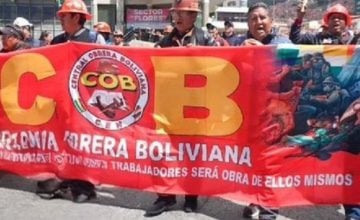
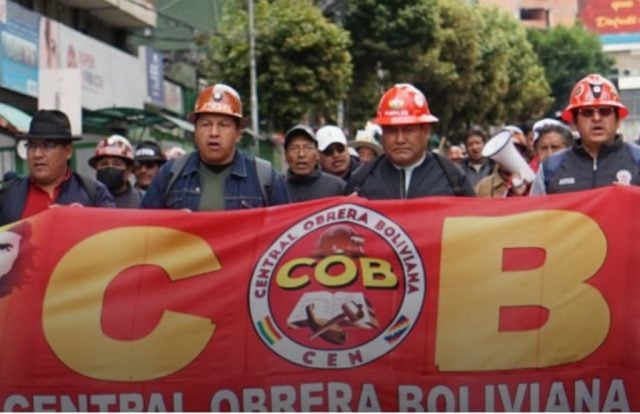
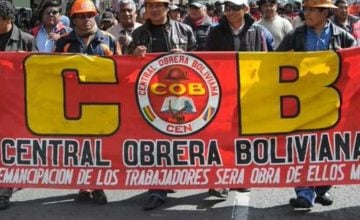
The Bolivian Workers’ Central (COB) reaffirmed its commitment to an indefinite nationwide strike, accompanied by daily protests in the capital, in opposition to Supreme Decree 5503 issued by Rodrigo Paz. They label it a «fuel price hike» that shifts the weight of the fiscal crisis onto the shoulders of the working class.
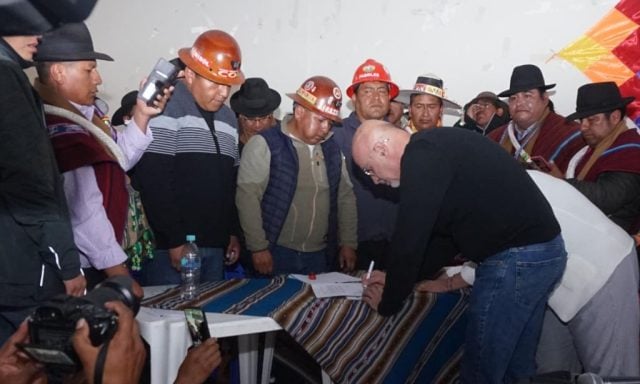
This decision was announced by COB’s executive secretary, Mario Argollo, who emphasized that the mobilization will persist even during the year-end holidays, underscoring the union’s resolute stance against a regulation adversely affecting household economies.
“It has been decided to continue mobilizing despite the holidays; our position is firm, and we will work to make this decree understood by citizens. There will be protests in various departments across the country, meaning the mobilization will be national,” Argollo stated.
Supreme Decree 5503, enacted by Paz’s government under the premise of addressing a deep fiscal crisis, primarily focuses on reducing fuel subsidies, which has led to an immediate spike in gasoline and diesel prices. The COB, along with opposition lawmakers, transport unions, neighborhood councils, farmers, and grassroots organizations, argue that this policy represents a direct economic adjustment burden falling on workers and low-income sectors.
In fact, the government’s so-called «Decree for the Homeland» generated a substantial and immediate rise in fuel prices, with gasoline increasing from 3.70 to 6.96 bolivianos per liter, and diesel rising from 3.72 to 9.80 bolivianos.
The COB claims that the «fuel price hike» not only removes subsidies for gasoline and diesel but also «facilitates the transfer of strategic resources to private domestic and foreign entities.»
Protests Erupt in the Streets
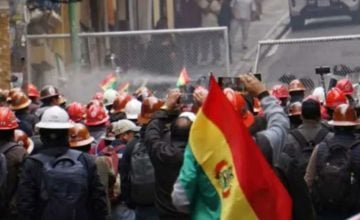
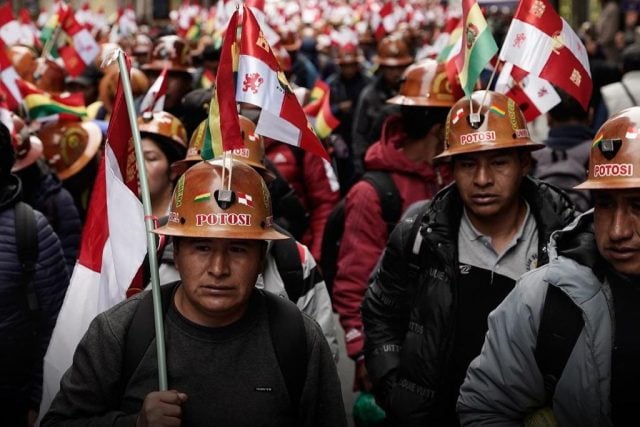
Since last Monday, La Paz has been a hotbed of continuous protests, initially led by mining sector unions, who have maintained a constant presence near Plaza Murillo, the epicenter of Bolivia’s political power. According to Argollo, these groups will stay in the city «despite the year-end holidays.»
Tensions escalated last Tuesday when security forces under Rodrigo Paz’s government repressed a demonstration near the plaza, using tear gas to disperse protesters. This incident has been condemned by human rights organizations and adds a political conflict dimension to the prevailing social unrest.
Understanding the Conflict: The Decree and Its Implications
Beyond the increase in fuel prices, the government’s decree includes several adjustments that, according to analysts and unions, directly affect public transport costs and the basic family basket. The anticipated domino effect is a generalized rise in the cost of living and a consequent erosion of purchasing power for wages already beleaguered by inflation.
Union and popular sectors unanimously denounce that the regulation «shifts the burden of economic adjustment onto workers and low-income sectors.»
Additionally, various social organizations have warned that the decree «lacks effective protection or compensation mechanisms for the most vulnerable sectors of society,» which, they caution, could deepen social inequalities in the country.
COB’s Strategy: Extend the Strike and Raise Awareness of the Decree’s Consequences
In response to this situation, the COB has outlined two clear strategic axes. The first is direct action through an indefinite and staggered strike that will progressively impact various sectors and regions alongside daily marches aimed at maintaining pressure in the streets.
The second axis, equally important, is the widespread dissemination of the decree’s content.
The labor central has initiated a campaign to «better educate citizens on this decree’s real implications,» according to Argollo.
To this end, delegates from multiple departments have arrived in La Paz, and marches and informational assemblies have been planned in other regions to ensure national mobilization, as reported by TeleSUR.
The COB has made it clear that it will continue with pressure measures and mobilizations until the controversial decree is repealed.
With the indefinite strike declared, daily protests scheduled, and the resolve of the protesters to not back down during the holidays, the situation for right-wing president Rodrigo Paz is critical.
Relacionados
"Down with the Gasoline Price Hike": Miners Mobilize in Bolivia Against Fuel Subsidy Cuts
Hace 2 meses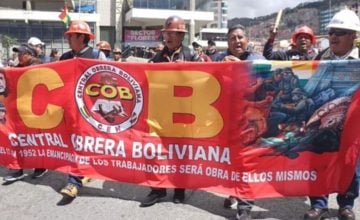
Bolivia's Major Labor Union Implements Blockade at Government Headquarters in Protest Against Fuel Subsidy Cuts
Hace 2 meses
Bolivia's Fuel Subsidy Removal Sparks Protests: President Rodrigo Paz Faces Calls to Resign
Hace 2 meses