Vijay Prashad: «The Rising Tide of Far-Right Populism in Latin America»
Historian and journalist Vijay Prashad analyzes the rise of the Latin American far-right, unified by anti-communism, a libertarian agenda, and cultural wars. Funded by elites and supported externally, they gain electoral ground while the left faces a crisis in presenting an effective alternative.
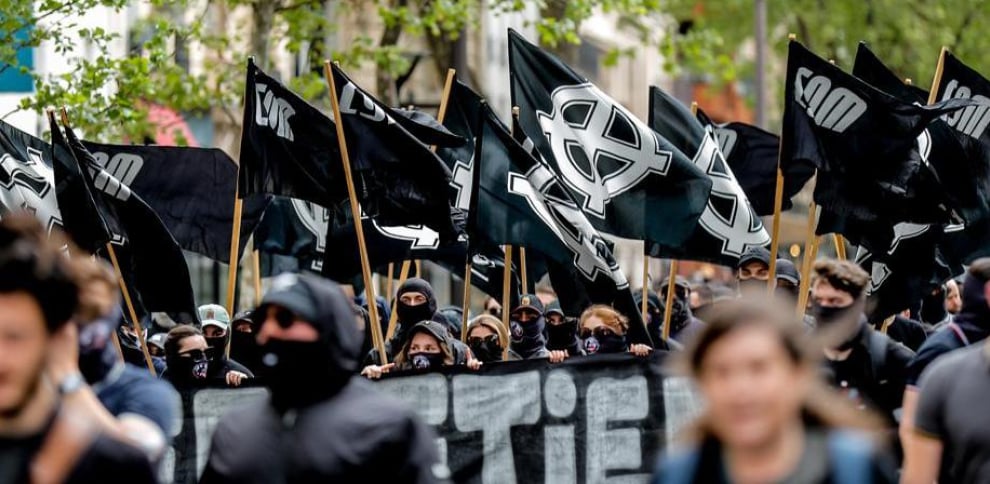
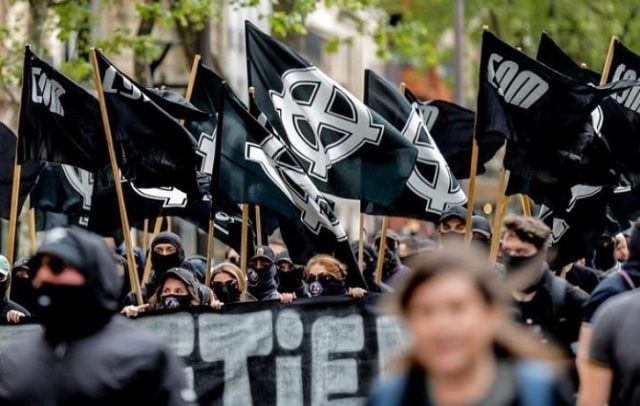
In a captivating analysis for ElSiglo.cl, historian and journalist Vijay Prashad dissects the elements fueling the «furious tide» of far-right politics in Latin America. Prashad identifies a robust ideological framework founded on three main pillars: visceral anti-communism, advocacy for libertarian economic policies, and the promotion of aggressive cultural wars. According to the author, this tripartite alliance, represented by figures like Kast and Milei, effectively galvanizes segments of the population, backed by international networks and funded by established elites, as detailed in the article.
The piece warns that, despite setbacks such as Bolsonaro’s imprisonment, far-right forces are making inroads in the electoral landscape across several countries, from Chile to Colombia, capitalizing on a profound crisis of narrative and proposals on the left. Prashad argues that these movements present themselves as saviors, even as their agendas threaten to dismantle social gains. For a comprehensive understanding of this regional phenomenon and its historical roots, readers are encouraged to explore Vijay Prashad’s full analysis.
The Rising Tide of Far-Right Populism in Latin America
These three elements (anti-communism, libertarian economic policies, and cultural wars) unite the far-right across Latin America. They provide a solid ideological framework to galvanize segments of the population and convince them that they are the saviors of the hemisphere. This Latin American far-right is supported by Trump and the international network of the Spanish far-right (the Madrid Forum, created in 2020 by the Disenso Foundation, the think tank of the far-right party Vox). It is strongly funded by the old elite social classes, which have gradually abandoned traditional right-wing parties for these new and aggressive far-right parties.
Vijay Prashad. Historian, Journalist. “Globetrotter”. 12/2025. The far-right in Latin America is angry. Jair Bolsonaro of Brazil and Javier Milei of Argentina always appear furious and often speak loudly and aggressively. Toxic testosterone seems to seep from them, spreading across the region. It would be easy to attribute this to the neo-fascist impact characteristic of Donald Trump, but that would be inaccurate. The far-right has much deeper roots, linked to the defense of the oligarchic families with origins dating back to the colonial era across the viceroyalties, from New Spain to the Río de la Plata. Without a doubt, these far-right figures are inspired by Trump’s aggression and by Marco Rubio’s entrance as a fervent advocate for far-right interests in Latin America, now serving as the U.S. Secretary of State. While this inspiration and support are significant, they are not the cause of the far-right’s resurgence, a rising tide of anger that has been swelling across Latin America.
At first glance, it seems that the far-right has experienced some defeats. Jair Bolsonaro is facing a lengthy prison sentence due to his role in the failed coup attempt on January 8, 2023, which mirrored Trump’s own failed coup attempt on January 6, 2021. In the first round of the presidential elections in Chile, the Communist Party’s candidate, Jeannette Jara, won the majority of votes and will lead the center-left bloc in the second round (December 14). Despite all attempts to overthrow the Venezuelan government, President Nicolás Maduro remains in power, mobilizing large segments of the population to defend the Bolivarian Revolution against any threat. In late October 2025, the majority of countries worldwide voted in favor of a UN General Assembly resolution demanding an end to the blockade on Cuba. These indicators—from Bolsonaro’s imprisonment to the vote on Cuba—suggest that the far-right has not been able to advance its agenda everywhere and through all channels.
However, beneath the surface, there are signs that Latin America is not witnessing a resurgence reminiscent of the so-called Pink Tide (following Hugo Chávez’s election in Venezuela in 1998), but rather experiencing the rise of a tide of anger that is gradually sweeping the region from Central America to the Southern Cone.
Upcoming Elections in South America
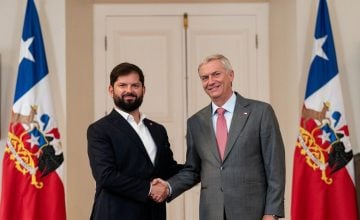
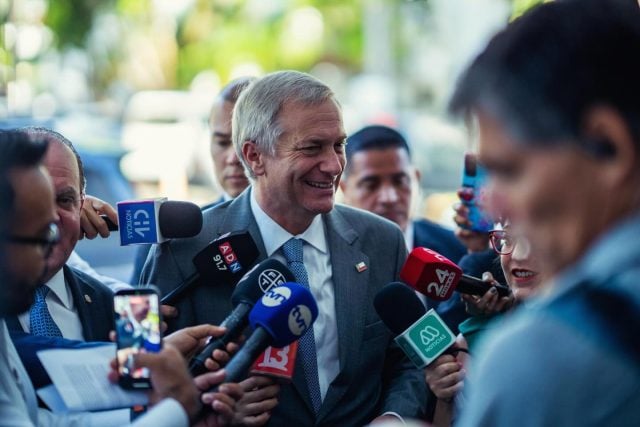
The first round of the Chilean presidential elections yielded a concerning result. While Jara from the Communist Party received 26.85% of the vote with a turnout of 85.26%, far-right candidate José Antonio Kast took second place with 23.92%. Traditional right candidate Evelyn Matthei garnered 12.5%, while the far-right candidate previously aligned with Kast and now to his right, Johannes Kaiser, secured 14%. Jara is likely to attract some centrist votes, but not enough to overcome the far-right’s advantage, which seems to command at least more than 50% of voters on their side. The so-called social liberal Franco Parisi, who placed third, supported Kast in 2021 and is likely to do so again. This means that in Chile, the presidency is likely to fall into the hands of a far-right man whose ancestors have roots in German Nazism (his father was a member of the Nazi Party and escaped justice with the Vatican’s intercession) and who believes that the 1973 to 1990 dictatorship in Chile was generally a good idea.
To the north of Chile, in Bolivia, newly elected president Rodrigo Paz Pereria, son of a former president, defeated far-right Jorge Tuto Quiroga (also a former president) in the second round of elections, which had no leftist candidates (this follows the uninterrupted governance of Bolivia by the Movement for Socialism from 2006 to 2025). Paz’s party holds a minority position in the legislature, hence he will need to align with Quiroga’s Libre coalition and is likely to adopt a pro-U.S. foreign policy and libertarian economic stance. Peru will have its own elections in April, where former Lima mayor Rafael López Aliaga is expected to win. While he rejects the far-right label, he upholds all generic far-right policies (ultra-conservative Catholic, advocate for severe security measures, and supporter of a libertarian economic agenda). Iván Cepeda from Colombia is the probable left candidate in the presidential elections set for May 2026, as Colombia does not allow second terms (meaning president Gustavo Petro cannot run again). Cepeda will face stiff opposition from the Colombian oligarchy who wish to reclaim control of the nation. It is too early to determine Cepeda’s opponent, but it could be journalist Vicky Dávila, whose far-right opposition to Petro is gaining traction in unexpected sectors of Colombian society. By mid-2026, it is likely that the majority of the westernmost states of South America (from Chile to Colombia) will be governed by the far-right.
Despite Bolsonaro’s imprisonment, his party, the PL (Liberal Party), remains the largest bloc in Brazil’s National Congress. Lula is likely to be re-elected president next year due to his immense personal connection with voters. The far-right candidate, whether it be Tarcísio de Freitas, the governor of São Paulo, or one of the Bolsonaro family members (his wife Michelle or son Flavio), will face him. However, the PL is expected to make inroads in the Senate. Its control over the legislature has already tightened the reins on government policy (at COP30, Lula’s representative made no proposals to address the climate catastrophe), and a victory in the Senate will solidify its control over the country.
Shared Agenda of the Rising Tide
The politicians of this rising tide share several commonalities. Most of them are now in their fifties: Kast (born in 1966), Paz (born in 1967), Venezuelan politician María Corina Machado (born in 1967), and Milei (born in 1970). They came of age in the post-dictatorship period in Latin America (the last dictatorship in Chile ended in 1990). The 1990s continued the economic stagnation that characterized the 1980s, the lost decade that shook these countries with low growth rates and underdeveloped comparative advantages, forced into globalization. In this context, the politicians of this rising tide developed their common agenda:
Anti-communism. The far-right in Latin America is shaped by an anti-leftist agenda inherited from the Cold War era, meaning their political formations often support the era of military dictatorships backed by the United States. Leftist ideas, whether from the Cuban Revolution (1959) or the Pink Tide era (after 1998), are anathema to these political forces; such ideas encompass agrarian reform, state funding for industrialization, state sovereignty, and the importance of unions for all workers and peasants. The anti-communism of this wave is rudimentary, the breast milk of these politicians, and is skillfully used to turn segments of society against one another.
Libertarian Economic Policies. The economic ideas of the Rising Tide are influenced by the Chilean “Chicago Boys” (including Kast’s brother Miguel, who was head of Planning under General Augusto Pinochet, and later served as Labor Minister and head of the Central Bank). Their tradition stems directly from the Austrian libertarian school (Friedrich Hayek, Ludwig von Mises, Murray Rothbard, and Milton Friedman). These ideas have been cultivated in well-funded think tanks, such as the Argentine Macroeconomic Studies Center (founded in 1978) and the Chilean Public Studies Center (founded in 1980). They hold that the state should be a force to discipline workers and citizens, and that the economy must be in private hands. Milei’s outrageous antics with a chainsaw illustrate this policy agenda not just to cut social welfare (the work of neoliberalism), but also to dismantle the state’s very capacity.
Cultural Wars. Riding the wave of anti-gender ideology and anti-immigration rhetoric, the rising tide has managed to attract conservative evangelical Christians and large segments of the working class, who feel disoriented by changes coming from above. The far-right argues that the violence in working-class neighborhoods stemming from the drug industry is fueled by «liberalism» and that only hard violence (as evidenced by El Salvador’s President Nayib Bukele) can be the solution; for these reasons, they wish to strengthen the military and police, setting aside constitutional limitations on the use of force (on October 28, the government of Claudio Castro, an ally of Bolsonaro in Rio de Janeiro, deployed police that killed at least 121 people in Operation Containment). The far-right has cleverly adopted various conspiracy theories about how “elites” have spread “globalized” ideas to harm and destroy their nations’ “culture.” This ridiculous notion comes from far-right political forces and traditional right-wingers who advocate for the large-scale entry of American businesses into their society and culture and who do not respect the historical struggles of the working class and peasantry to build their own national and regional cultural worlds. Nevertheless, the rising tide has successfully built the narrative that they are cultural warriors defending their heritage against the malignancies of «globalization.» Part of this cultural war includes promoting the individual entrepreneur as the subject of history and belittling the necessity of social reproduction.
These three elements (anti-communism, libertarian economic policies, and cultural wars) unite the far-right across Latin America. They provide a solid ideological framework to galvanize segments of the population and convince them that they are the saviors of the hemisphere. This Latin American far-right is supported by Trump and the international network of the Spanish far-right (the Madrid Forum, created in 2020 by the Disenso Foundation, the think tank of the far-right party Vox). It is heavily funded by the old elite social classes that have gradually abandoned traditional right-wing parties for these new, aggressive far-right parties.
Leftist Crisis
The left has yet to adequately assess the surge of these parties and has not been able to promote a vibrant agenda. A deep ideological crisis engulfs the left, which struggles to decide whether to build a united front with traditional right-wing and liberal parties to contest elections or to form a popular front among the working class and peasantry to create social power as a prelude to a proper electoral push. The example of the first strategy (the electoral alliance) comes from Chile, where the Concertación de Partidos por la Democracia (Concertación) was first formed in 1988 to keep the parties of the dictatorship out of power, and later, Apruebo Dignidad was established in 2021, leading centrist Gabriel Boric to the presidency. However, outside of Chile, few signs indicate that this strategy is effective. The latter has become more difficult as union rates have plummeted and the gig economy individualizes the working class, eroding its culture.
It is revealing that former socialist vice president of Bolivia, Álvaro García Linera, looked north to New York City for inspiration. When Zohran Mamdani won the mayoral election, García Linera stated, “Mamdani’s victory demonstrates that the left must commit to audacity and a new future.” It is hard to disagree with this statement; however, the agenda proposed by Mamdani primarily consists of saving New York’s dilapidated infrastructure rather than advancing socialism in the city. García Linera did not mention his own time in Bolivia when he attempted to build a socialist alternative alongside former president Evo Morales. The left will need to be bold and articulate a new future, but it must be one that arises from its own history of struggles and the construction of socialism.