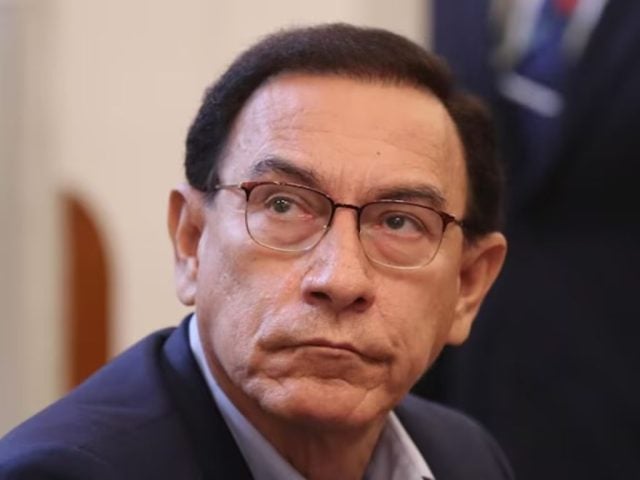
Original article: Fiscalía peruana acusa a expresidente Martín Vizcarra de recibir millonarias coimas: el juicio entra en fase decisiva
The oral trial against former president Martín Vizcarra (2018-2020) is entering its decisive phase after months of evidence presentation by the Public Prosecutor’s Office. They assert that the former leader received over 2 million soles (S/), equivalent to approximately 590,000 dollars, in bribes from construction consortia during his tenure as regional governor of Moquegua (2011-2014).
The Fourth Collegiate Court of the National Superior Court will soon decide whether to convict or acquit Vizcarra, in a ruling that could set a significant precedent in Peru’s anti-corruption fight.
Prosecutor Germán Juárez Atoche from the Special Lava Jato Team is seeking a 15-year effective prison sentence for Vizcarra: 6 years for the ‘Lomas de Ilo’ case and 9 years for the ‘Moquegua Hospital’ case.
He noted that during Vizcarra’s term as governor, a total of S/ 2.3 million may have been received through cash payments coordinated from the commercial and financial departments of the involved construction companies.
According to the indictment, Vizcarra «breached his functional duties in both public tenders» by accepting S/1 million from Obrainsa for the irrigation works at Lomas de Ilo and S/1.3 million (380,000 dollars) from ICCGSA for the construction of the Moquegua Hospital.
He allegedly provided privileged information and directed internal decisions that benefited both consortia in public tenders.
Key Evidence: Calls, Geolocation, and Testimonies
The Public Prosecutor’s Office has presented various pieces of evidence that, from their perspective, demonstrate the existence of an «illicit circuit» involving officials, construction executives, and administrative personnel in delivering money for the Moquegua projects.
– Call logs linking Vizcarra with representatives of the construction companies on key dates of the awarding processes.
– Chats and messages coordinating key meetings.
– Geolocation data from the former president’s phone, placing him in locations different from what he stated, contradicting his account of his whereabouts during crucial days of the negotiations.
– Testimonies from former associates and ex-officials of the Regional Government of Moquegua implicating Vizcarra, as reported by digital media outlet Caretas.
One of the most discussed points in the trial was a testimony that directly contradicted Vizcarra’s version, as he claimed to be in Moquegua on a day when, according to the Prosecutor’s Office, he was in Lima managing meetings related to the projects.
Request for Immediate Execution of Sentence for Vizcarra
The attorney for the Lava Jato case, Carlos Fernández, confirmed «the weight of the evidence presented» and requested «an exemplary and harsh sentence against the accused Martín Vizcarra.»
The Public Prosecutor’s Office proposed civil reparations exceeding S/4.6 million (1.3 million dollars), arguing economic damage to the State due to the manipulation of contracts.
For the Prosecutor’s Office, the evidence «reveals a systematic pattern of favoritism» that includes communications, suspicious contractual adjustments, and recorded fund movements between 2013 and 2014.
They also requested that any eventual sentence be enforced immediately, due to the former president’s alleged ability to influence witnesses.
Prosecutor Juárez Atoche has insisted that the eventual conviction must be «immediate execution,» meaning Vizcarra would enter prison without waiting for a second instance.
Additionally, it was requested that the eventual sentence be executed without delay, given the alleged potential of the former president to influence witnesses.
The Money Trail: Two High-Profile Cases
According to the prosecutor’s reconstruction, the illicit sequence began on November 4, 2013, when UNOPS, a United Nations entity that participated as a technical evaluator of the investigated works, requested an adjustment to the economic proposal of the consortium led by Obrainsa. The following day, Vizcarra contacted Elard Tejeda, manager of Obrainsa, to coordinate a meeting where an illegal payment was supposedly proposed.
The prosecuting body indicated that on January 24, 2014, calls were logged in which the ex-governor allegedly requested a «pending balance.» On that same day, Tejeda undertook internal management to obtain petty cash funds. The withdrawals occurred in two payments: S/400,000 (118,000 dollars) on January 27, 2014, and S/600,000 (180,000 dollars) on April 4 of that year.
Testimonies from reliable collaborators indicated that the orders came from the commercial management and were part of a customary scheme within the practices of the so-called «Construction Club.»
Meanwhile, the process for the Moquegua Hospital began in September 2013 with the opening of bids, where the consortium connected to ICCGSA submitted a proposal of S/126 million. The key moment occurred on November 27, 2013, when UNOPS requested a meeting that was moved to CADE, an event attended by Rafael Granados Cueto, former ICCGSA executive; José Manuel Hernández, a consultant linked to the sector; and Vizcarra.
On November 29, an express adjustment was approved, reducing the amount to S/123.4 million (36,000 dollars). Prosecutors state that «the speed of this decision reflected a prior agreement.» The case files include internal documents from ICCGSA reporting extraordinary expenses and fund outflows without clear justification, which reliable collaborators related to meetings where the amount intended for the «governor» was discussed.
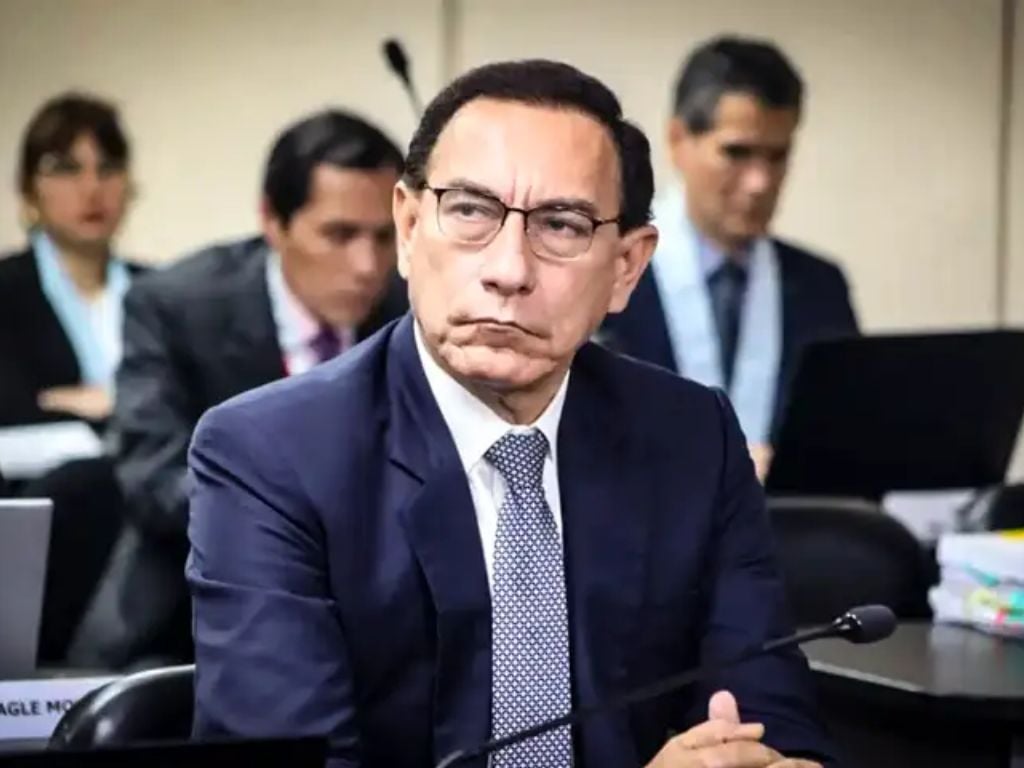
Vizcarra’s Defense: «I Never Received Illegal Payments»
In response to the allegations, former president Martín Vizcarra has maintained a firm rejection of all charges.
«There is no reason for the judges to find guilt in this process,» he stated while denying the possibility of seeking political asylum to evade a potential sentence.
«I state categorically, there is absolutely no possibility of asylum.»
The defense strategy has focused on questioning the validity of the testimonies and evidence presented by the Prosecutor’s Office. Vizcarra and his legal team argue that the case is «riddled with forced interpretations» and that reliable collaborators created «false versions to reduce their own sentences.»
The former president has also placed his case within a broader political context, linking it to the process that led to his impeachment in 2020 and has indicated he is awaiting a ruling from the Inter-American Court of Human Rights regarding the legality of his dismissal. Although he has announced he will not run for any political office while the trial progresses, Vizcarra confirmed he will support his brother Mario Vizcarra in his presidential candidacy for the 2026 general elections.
Future Steps in the Judicial Process
The trial is currently in its final phase. The current stage—the reading of final arguments—is considered by analysts to be the most delicate moment of this process, as the court has to evaluate whether the evidence presented is sufficient to convict Vizcarra.
The defense’s final arguments will be presented on Thursday, November 20, when the former president’s final intervention will also be heard. Subsequently, the court will begin its deliberation phase to issue a ruling, which could be announced by the end of November.
During this deliberation period, the court will review: the consistency of the digital evidence presented, the credibility of the testimonies, the coherence of the prosecution’s narrative against the defense, and the traceability of the alleged illegal payments, reported Caretas.
The verdict will mark one of the most important rulings in political corruption matters in recent years in Peru, in a case that has exposed the tensions between transparency, public works, and political power in the South American country.
Obtén tu Pasaporte y apoya a El Ciudadano
Elimina la publicidad, accede a contenido exclusivo y sé parte de la comunidad.
Cancela en cualquier momento · Sin permanencia