Original article: “Hoy son los espacios de memoria, mañana puede ser la libertad de prensa”: Advierten por recorte a la Fundación Salvador Allende
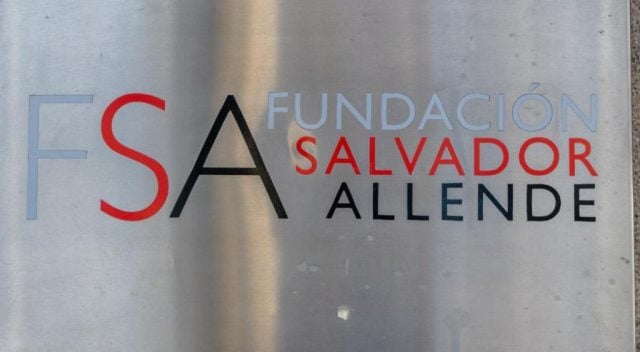
Organizations, research centers, institutes, and foundations have expressed deep concern following the National Congress’s decision to eliminate the budget allocation for the Salvador Allende Foundation, warning that this cut would prevent the organization from maintaining its essential operations throughout 2026.
In a public statement, the signing organizations, including the Instituto Igualdad, Chile21, Casa Común, Fundación para la Promoción de los Derechos Humanos, Fundación por la Democracia, Nodo XXI, Fundación Horizonte Ciudadano, Rumbo Colectivo, and Instituto de Ciencias Alejandro Lipschutz, recall that during discussions of the 2026 Budget, a provision recognized during Sebastián Piñera’s administration for the institution’s contributions to democratic culture and human rights was rejected.
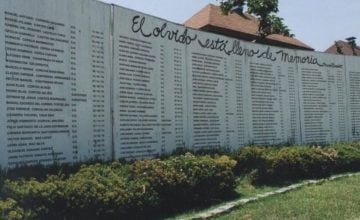
This follows the mixed commission’s restoration of funding for four memory sites: the Corporation of Political Prisoners of Pisagua, the José Domingo Cañas Memory House, and the National Memory Corporation. However, the Salvador Allende Foundation remains without public funding.
In response, the foundation itself deemed the decision «unjust» and «arbitrary,» warning that the complete removal of resources jeopardizes its ongoing work in areas such as historical memory, art, human rights, and civic education, and endangers the preservation of archives and the operational capacity of associated institutions.
«For decades, the Salvador Allende Foundation has tirelessly promoted memory, art, human rights, and democratic values,» they emphasized, noting their compliance with all applicable regulations and the reporting requirements mandated by the State.
The entity stated that «the decision is incomprehensible,» given its contributions to the country’s historical and cultural heritage, and it called upon the authorities to reconsider the exclusion, reminding them that its work «not only safeguards a fundamental part of Chile’s history but also contributes to public debate, strengthens democracy, and promotes equitable access to culture.»
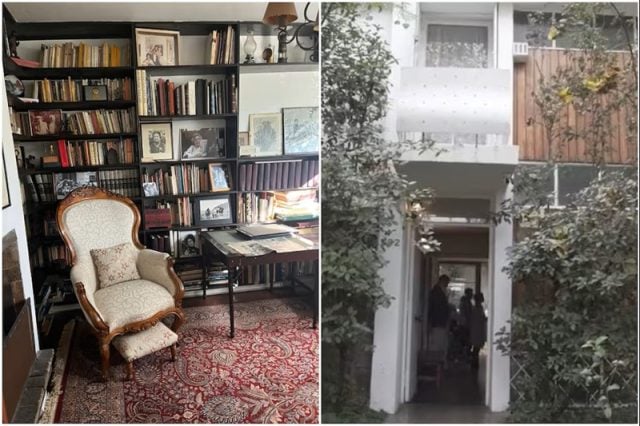
Despite the challenging budgetary context, the foundation reaffirmed its commitment to culture and democracy, confirming that it will continue to work to preserve the legacy of former President Salvador Allende.
«Today It’s Memory Spaces, Tomorrow It Could Be Press Freedom»
In light of this situation, the group of organizations, foundations, institutes, and study centers warned that «it would be a mistake to regard the rejection of this provision as an isolated event.»
In their statement, they pointed out that this situation «adds to troubling signals that call into question a national understanding—built over years and from diverse political positions—that allowed us to overcome divisions and promote coexistence based on respect for political plurality and a commitment to historical truth.»
They also noted the alarming trend of Chile drifting from nations that, despite political differences, protect their memory museums, presidential libraries, and national archives as pillars of an informed citizenship. Furthermore, it is concerning that this attack on a presidential legacy that advocated for peaceful and democratic means occurs amid apathy within the cultural, social, and political spheres.
The document emphasized the need to defend «the foundations of our democracy steadfastly, ensuring respect for human dignity and social peace.»
“As centers and institutes tied to this ideology, we express our full solidarity with the Salvador Allende Foundation and remind everyone of the stakes in our country as the far-right advances: today, it’s memory spaces; tomorrow, it could be press freedom or the freedom to assemble,” they warned.
«Indifference cannot be our response,» they asserted, referencing the verses of German Lutheran pastor Martin Niemöller:
«First they came for the socialists, and I did not speak out because I was not a socialist.
Then they came for the trade unionists, and I did not speak out because I was not a trade unionist.
Then they came for the Jews, and I did not speak out because I was not a Jew.
Then they came for me, and there was no one left to speak for me.»
Obtén tu Pasaporte y apoya a El Ciudadano
Elimina la publicidad, accede a contenido exclusivo y sé parte de la comunidad.
Cancela en cualquier momento · Sin permanencia