Original article: Luces navideñas “truchas”: 11 de 16 guirnaldas no cumplen norma y advierten riesgo de incendio y shock eléctrico
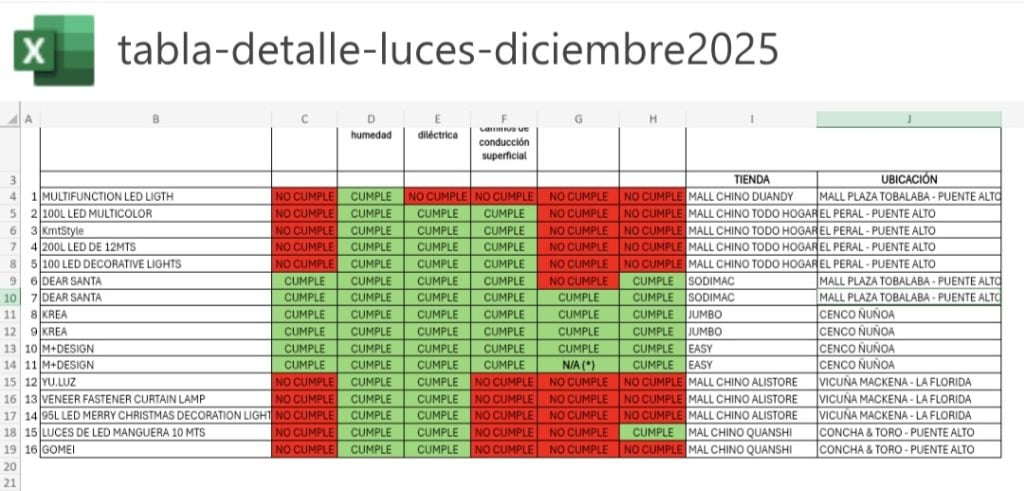
A recent alarming discovery ahead of the holiday season reveals that 11 out of 16 examined Christmas light garlands do not meet critical safety standards, putting homes at risk of fire hazards and electric shocks.
The analysis, commissioned by the Organization of Consumers and Users (ODECU) and conducted by the accredited laboratory Lenor Chile SpA, identified significant deficiencies in three essential elements of these products, primarily purchased from Chinese malls: mandatory labeling, plug dimensions, and electrical conductor gauge.
The report indicates that these deficiencies are central to user safety. While most lights passed basic electrical tests such as dielectric strength (the ability of an insulating material to withstand high voltage without breaking down or allowing current to pass through) and fire resistance, critical information gaps and non-compliance in physical components significantly increase fire and electrocution risks, particularly during a period of heightened use of decorative electrical items.
Non-Compliant Plug Dimensions Increase Risk of Fires and Electrocutions
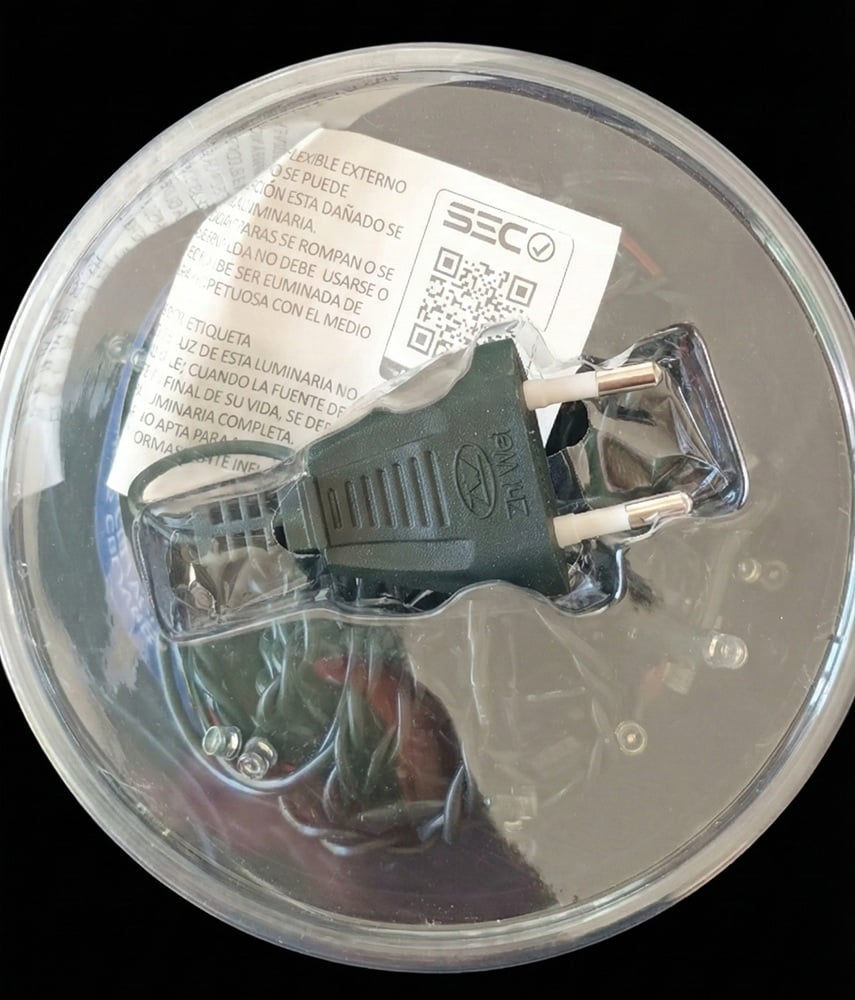
One of the most concerning findings relates to the dimensions of the plugs. Lenor’s laboratory explained that appropriate dimensional compliance is vital for ensuring safe electrical contact to prevent overheating.
“When the prongs are shorter or thinner than allowed, it can result in poor contact, leading to elevated temperatures and potentially causing fires. Moreover, a plastic casing that is too short exposes users to energized parts when plugging in or unplugging the device, increasing the risk of electric shock,” experts noted, emphasizing that proper plug dimensions are a critical safety requirement.
Lack of Technical Identity and Warnings on Products
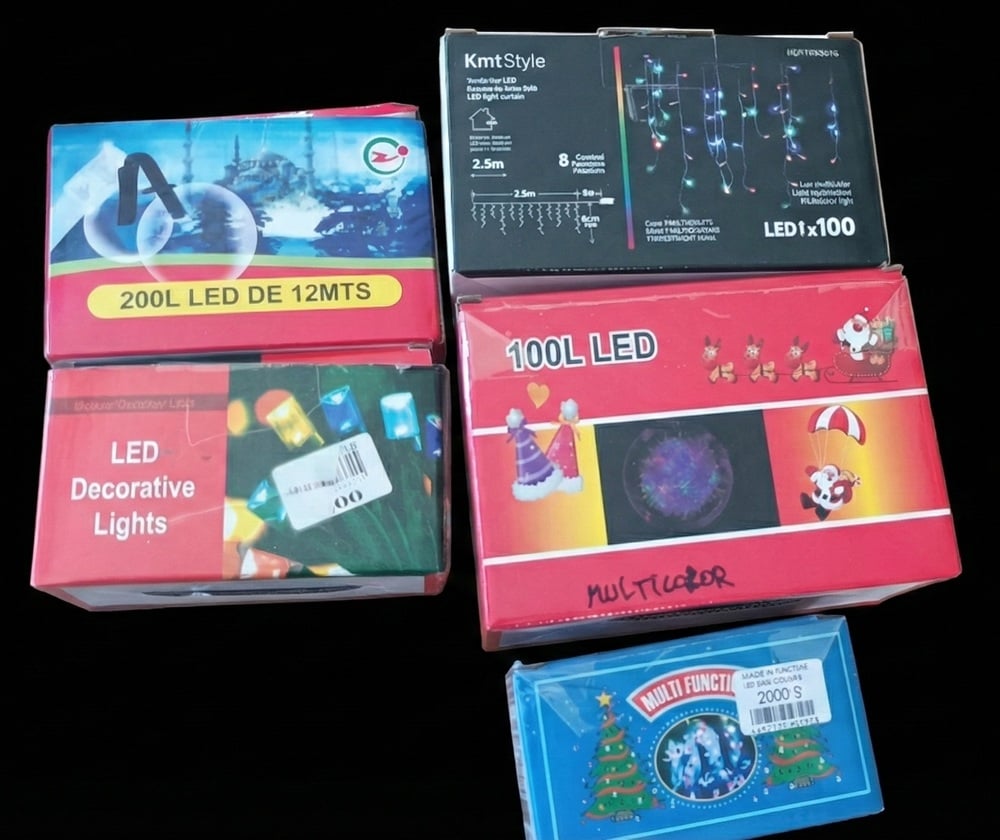
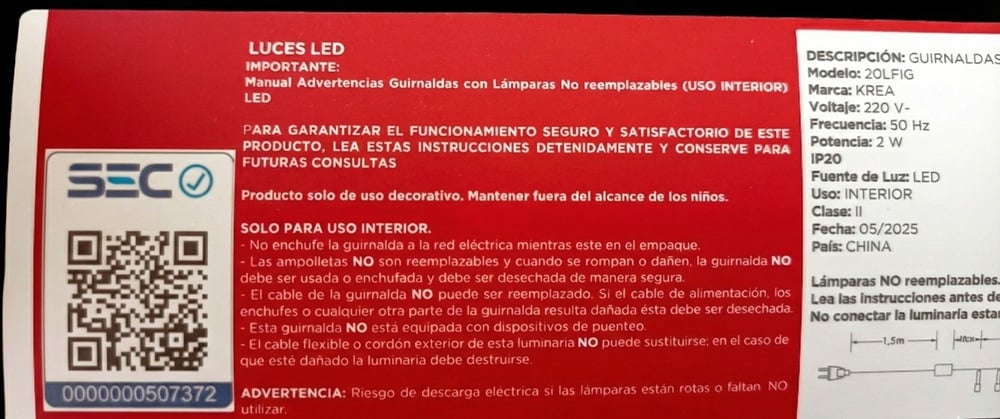
The study also highlighted a serious omission of mandatory labeling, which is essential information that should appear on the product and its packaging (voltage, wattage, permitted use, safety symbols, warnings). In simple terms, it serves as the product’s “technical identity” and the first guide for safe usage.
“The absence of this information leaves users without basic guidance for safe usage. Furthermore, the lack of warnings, symbols, or certification codes such as SEC’s QR code prevents verification of whether the product complies with existing regulations,” Lenor representatives indicated.
A lack of labeling deprives consumers of knowing whether the lights are suitable for indoor or outdoor use, what conditions they require, or what risks they may pose, potentially leading to improper and hazardous use.
Thin Wires Posing Overheating Risks
A third significant non-compliance pertains to the gauge (thickness) of the conductors. Several models feature wires that are thinner than permitted, increasing the risk of overheating.
“When the wire gauge is below the minimum requirement, it heats up beyond what its insulation can withstand, leading to melting, loss of insulation, and, in extreme cases, fires. This phenomenon is similar to what is observed in poor-quality extension cords, where thinner wires generate noticeable overheating,” explained the study’s researchers.
“Fake” Garland Lights: A Consumer Risk from Chinese Malls and Regulatory Oversight
Stefan Larenas Riobó, president of ODECU, stressed that the central issue is not the functionality of the lights but the lack of information and technical compliance.
“It is crucial to understand that the problem lies not in these lights failing to work. The issue is that they fail to inform users adequately. When a product does not provide basic warnings, it places consumers in an entirely avoidable risky situation,” he stated.
Larenas directly pointed to the source of the defective products, expressing concern that “it is particularly troubling that all items with non-compliance were purchased from Chinese malls, highlighting the need for stricter regulation of such businesses.”
Consumer Recommendations and an Urgent Call to Authorities
In light of this situation, ODECU recommends that consumers carefully review before purchasing a Christmas light garland: ensure that voltage and wattage are clearly indicated, verify if they are intended for indoor or outdoor use, check for visible warnings, and confirm that the plug meets regulated dimensions and appears robust. It is also vital to look for clear instructions inside the packaging.
“It is unacceptable that during a high-consumption period like Christmas, people are exposed to products that do not provide minimal information for safe usage. As a country, we cannot normalize the lack of labeling on electrical items. Products showing such non-compliance should not be sold in Chile,” Larenas remarked.
Finally, the organization made an urgent call to authorities, particularly the Superintendency of Electricity and Fuels (SEC) and SERNAC, to strengthen regulation on importers and distributors of decorative electrical items, with a special emphasis on informal businesses and high-sale seasons like Christmas, to protect family safety.
For detailed reports on each tested sample, click here.
To review a summary table, click here.
Artículos Relacionados
Luces navideñas “truchas”: 11 de 16 guirnaldas no cumplen norma y advierten riesgo de incendio y shock eléctrico
Hace 4 meses


China Establishes New National Standards for Lithium Batteries, Accelerating the Solid-State Battery Race
Hace 3 meses