Original article: “El salar de Atacama no le pertenece a este gobierno, le pertenece al Estado”: Tapia cuestiona la premura de Contraloría por el acuerdo SQM-Codelco
By Bruno Sommer
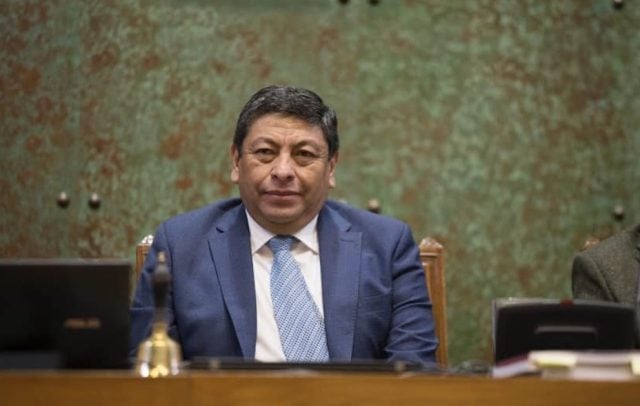
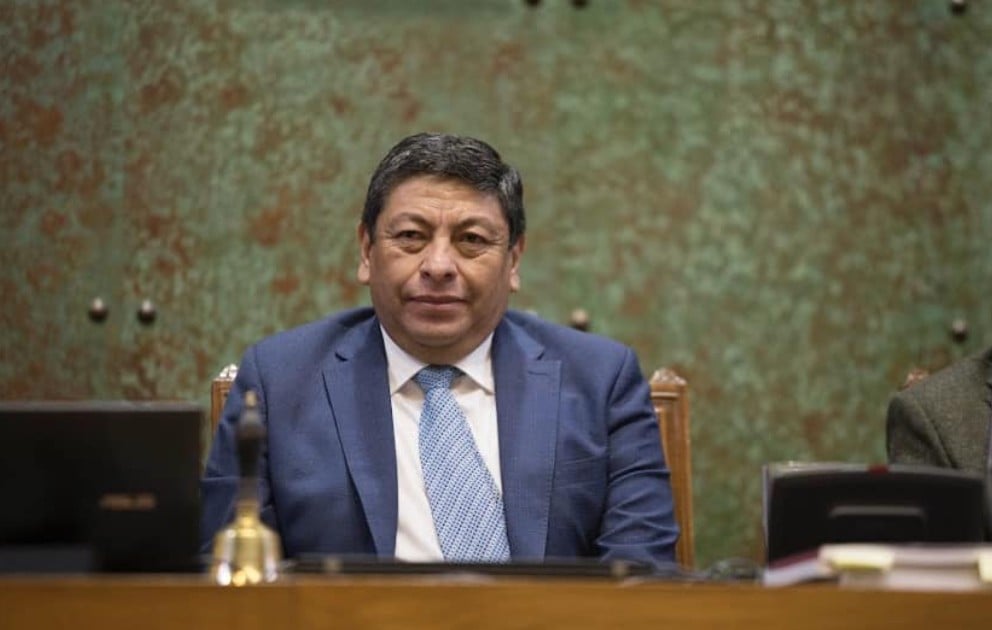
«The Atacama Salt Flat does not belong to this government; it belongs to the State.» With this statement, deputy Cristián Hernando Tapia Ramos (IND–PPD), representing the 4th District of Atacama and president of the Special Commission that investigated the agreement between Codelco and SQM, questions the haste surrounding the final stage of the lithium contract. This deal— one of the most lucrative and controversial under President Gabriel Boric— is currently with the Comptroller General of the Republic, awaiting the final endorsement from Comptroller Dorothy Pérez.
Tapia speaks not just from Congress: he began his political career in the labor movement of large copper mining, where he served as a leader and president of the Sindicato N° 1 of the Mantos de Oro Mining Company (Copiapó), in addition to heading regional and national mining organizations. From this experience, he warns of a lack of transparency, criticizes the direct dealings, and asserts that the Atacama Salt Flat— due to its strategic importance— should not be hastily closed off, especially during a process shadowed by allegations of secrecy.
—Deputy, before we delve into specifics, I want to take a step back to the moment prior to the formation of the Investigative Commission on the SQM-Codelco Agreement. I have information that Mr. Máximo Pacheco, president of the board of Codelco, attempted to prevent the creation of this commission. Can you tell me if this is true and how it unfolded?
—Yes, look, when you want to form an investigative commission, it usually doesn’t take more than, I don’t know, at most ten days. You talk to your colleagues—deputies—say, look, I have this commission, and I’ll get it signed, no problem. And instead of these ten days, which is normal, it took a month. When it was about to expire, we were pressed for time. Sometimes signatures fell off—we began with sixty-two signatures, and occasionally it dropped to fifty. On the last day, we were scrambling, and just a little before noon, we managed to get sixty. We immediately secured the two missing signatures, closed the process, and submitted it. So If Codelco is acting this way, it’s because they are hiding something, because they didn’t want this investigated, and that it should get resolved quickly before the end of the year, so it would go unnoticed, and the contract wouldn’t be reviewed. That’s what Máximo Pacheco intended. Because he who has done nothing, fears nothing, and if they tried to prevent it, it’s because they are hiding something.
«So if Codelco has this attitude, it’s because they are hiding something…»
Deputy Cristián Tapia
SQM-Codelco Agreement: Questions of Secrecy and Direct Dealings
—Once the investigative commission began, I recall following some sessions where you repeatedly requested Mr. Máximo Pacheco to exhibit the contracts with Morgan Stanley, to which he repeatedly refused. Ultimately, when the commission concluded, I understand he never presented them, or only submitted heavily redacted versions.
—Look, he only sent them, and I’ll see if I have it here handy so that people can see it. When he presented it—note that this contract was signed on March 30, 2023— and it’s a contract. For people to understand, I don’t know if you can see there. It is redacted, and in English. And when we talked again to Pacheco in the following session, asking why it was in that condition, he said, oh, there’s a confidentiality clause, meaning no one can know what is being paid, the work. When later our team managed to translate this, the contract states that Morgan Stanley will advise Codelco, and they will pay millions of dollars, which is redacted. This is akin to telling Morgan Stanley to study whether there are interested parties capable of exploiting the world’s best lithium-brine deposit for another thirty years, and what they could bring to the country additionally in terms of taxes, and so on. But, what more can they do? Since the contract states, it’s Morgan Stanley, justify why I should contract with Soquimich for the next thirty years. So, the question was, why directed to Soquimich? First question. Second, why should there be a confidentiality agreement with public funds, so nobody knows how much is spent? If it’s Máximo Pacheco’s money, he can do what he wants with it, but not with tax money that we need.
«Why the secrecy? Why hide things from the public?»
—Yes, deputy. One concern raised in the Investigative Commission and by various pro-transparency actors is that this multi-million-dollar lithium contract should have undergone a public and transparent bidding process. Why is it going the direct route with SQM?
—Look, I think the justifications, firstly, Máximo Pacheco is a liar. Over these almost four years on the mining commission, I have seen him lie straight to our faces. We’ve reflected to him that we are not naive, and his lies are childish lies. One of the most ridiculous justifications from Pacheco was that if this contract with Morgan Stanley, or linked to Soquimich, was not signed, we would have a productive valley. What does that mean? That come December 31, 2031, all the ponds containing lithium chloride would dry up, and to return to lithium production would take five years. Pacheco said it would take that long. Bitrán, a week later, came to the commission and said it would take three years for the country to incur losses. The minister Grau, who was also invited to ensure this was not a closed commission and we wanted to include those in favor of the agreement, also claimed it would take one year in the productive valley. It is completely absurd. The current contract that Corfo has with Soquimich states that by 2027 at the latest, a public tender must be initiated, as this contract expires on December 31, 2030. If things remain the same, without tendering, on January 1, 2031, one hundred percent of the Atacama salt flat reverts to the State. This is significant, and from there the State could certainly take charge; they could recover ownership, but first, like since the properties belong to them, they will invest in cutting-edge technology; that is, we will set aside the productive valley and begin to leverage modern extraction technology. So, on January 1, 2031, I start producing as the State. If not, I proceed as per the contract to initiate a bidding process. Hence, the country had two options: to fully exploit lithium or to undertake an open international tender. When I hear and heard the minister Álvaro García embarrassingly declare that Chile is not prepared, it’s absurd. The workers from management down to supervisors and laborers are all Chilean workers. It’s not as if NASA needs to carry everyone away because they are the only ones in the world capable of exploiting lithium. Hear me out, I worked twenty years in a mining company here in the Atacama region, starting at age twenty. A year into it, the company, where I was hired, sold all of its assets, and transferred to another company. Yet we kept working. I recall that six years later, that company, which was Placer Dome, sold to Canadian investors, only selling the assets. The contract states that they must maintain all workers and operations. It’s utterly absurd to suggest that on December 31, 2030, all those workers would simply go home. That’s what I believe is the greatest embarrassment and folly from the justification of why this team could not continue.
—A childlike lie, badly designed, because let’s remember that this productive valley would not be real since next to SQM is Albermarle, right? M. And I could increase Albermarle’s extraction quota, and that would cover the productive valley. Deputy, I want to take you to the current and crucial moment. This has reached the Comptroller General. You, along with other deputies, made a request for the Comptroller to review it. And… it has happened that she first planned to conduct an audit. A few hours later, she announces that she will take note of the agreement with certain conditions, with two conditions. What do you think about this reaction and how the Comptroller Dorothy Pérez has manifested it?
—First, I want to say that this request for Comptroller intervention was presented by the Commission; more than by the Commission, by the Independent PPD bench, which is, quote, part of the government, not the core of the government, but we are part of the coalition. So, this goes beyond whether it is a political stance or not; we are interested in transparency. So, we as a bench submitted this request, and we had received no response. Later, we went with the investigatory commission, delivering everything from the results of our work. And on the Thursday just past, we requested a meeting with the Comptroller, which, by the way, we had been trying to set up for three weeks but had not received a date. In that meeting, the Comptroller said, look, we have… Little room. We have a little window, but little room. Because two months ago, I was saying, look, if this happens, remember that we needed first an agreement with China, which is another agreement in parentheses, where China says, you must sell us. We will specify the percentage of lithium that we must buy from you. So if China tomorrow says, you sell us one hundred percent of the lithium, Chile has no right to sell lithium to other countries or companies. So, the Comptroller tells us, it was about an hour of meeting, she informed us, look, what we are thinking of so far, is to conduct an audit. Good, good, excellent. Thus, we need to watch how the note-taking goes, but she was never clear on saying, look, here first goes the audit, then the note-taking, or parallel audit and note-taking. So the following Friday, we woke very happy, as any sports fan does when their team wins, having the most delicious breakfast. Because my team couldn’t enjoy that breakfast before! The morning news was that the Comptroller had ordered an audit at Codelco. Good. Applause. But after six hours, another document was sent to us—those who had requested this intervention—stating that they would take note. So what sense does it make to conduct an audit that may take seven, eight months, when she has already taken note, and the contract will be signed in the coming days? I mean, a contract that will leave the State of Chile bound and on its knees before Soquimich, on its knees before Ponce Lerú and Augusto Pinochet. With the resources Ponce Lerú has, I believe his family—his fifth, sixth, or seventh generation—could live like a king for years to come. And it will be handed over. So one says, well, the Comptroller, with all due respect, was capable of investigating medical licenses, where there were approximately two hundred million dollars embezzled. But she was not able to stop a project that could yield for us. It’s what Rio Tinto bought, one hundred fifty thousand tons of production at six billion seven hundred million dollars. Here, there will be a production of three hundred thousand tons a year, fifty percent for Soquimich, fifty percent for Codelco. What should it be? Plus, when Tianqui bought the twenty-five percent stake from SQM, how much did they pay? Four billion dollars. For the twenty-five percent. If you take it to fifty percent, that’s eight billion dollars. One doesn’t need to be a tremendous scholar or a great engineer to understand this.
«So, what sense does it make to conduct an audit that will take seven, eight months, when she has already noted it, and the contract is going to be signed in these days?»
—I understand that in a SQM board meeting, they themselves acknowledged that this agreement with the Chilean State costs them zero pesos.
—Zero pesos. Those were the words of last March from their manager, Ricardo Ramos. So, when I hear Álvaro García say the State will take eighty percent from this contract, look, we are going to have a company, Tarar, that is fifty percent Soquimich and fifty percent Codelco. This company will have its own accounting, its financial statements, and the company in general will pay taxes. Any company—whether SQM or an Italian company—would pay the same taxes. The profits left after taxes will be split between each company. The tax for the State, for all Chileans, and taxes for Soquimich. How much did Soquimich pay for that? As you mentioned, zero pesos. Hence, indeed, this issue is embarrassing. It really does provoke anger; we discussed this off-mic. We are from the regions. Right now, I am in Vallenar. Shortly, I will be going to see people who lack water. Imagine a thirty-one-year-old girl who died in Tierra Amarilla and another connection I had a month ago. Why didn’t she receive a medication that cost forty million pesos? And here we are handing over money to the Pinochet family. Millions and millions of dollars…
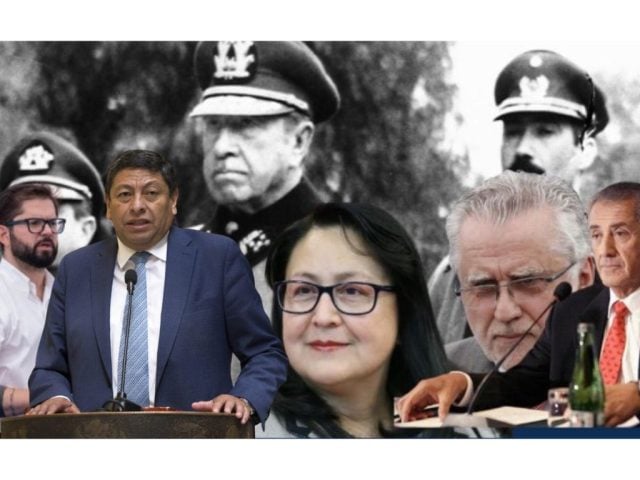
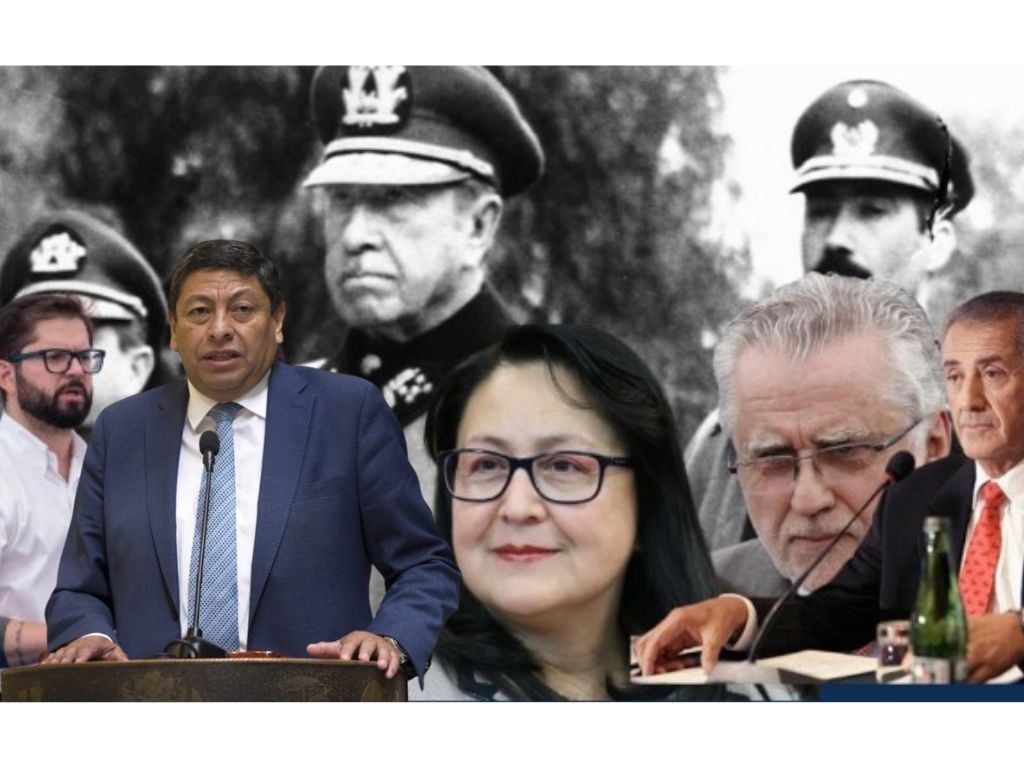
—Deputy, I remember one impediment set in the Senate was made by Senator Yanna Provoste; she requested that it be explicitly stated that there was no consanguinity in the lithium agreement with Ponce Lerú, as he is inheriting everything to his daughter, the dictator Pinochet’s granddaughter. This means this will remain in the hands of Pinochet’s grandchildren. She requested this explicitly, but it ultimately wasn’t respected. This government is bequeathing lithium to Pinochet’s grandchildren after all.
—That is definitive. I stated this in an interview; Pinochet is still alive. It’s as if Pinochet keeps haunting us, and many still kneel before it. The same ones who criticized him. Look, in 2018, when Corfo made this contract with SQM and Albermarle separately, many of those present, including President Boric, condemned that agreement. And while I believe that agreement was not bad, I think it brought resources to the surrounding communities and revenues to Corfo and the State. So how can you swiftly backtrack like this? There’s no respect for the Chamber, Bruno. We created an Investigative Commission to understand why it emerged. The Commission’s majority also belongs to the Mining and Energy Commission. We repeatedly brought Máximo Pacheco to explain and justify, and he never convinced anyone. Hence, we established the Investigative Commission with thirteen parliamentarians from all political parties, from the Communist Party to libertarians. And how was the voting in that commission? Eleven votes in favor, and only one abstention. And what were we stating? What do you vote on there? This was about three months of work where we invited everyone, as I said, economists, lawyers, academics, people in the field; Pacheco and Vitrano attended, including the government and Codelco. So what did they say? The conclusions and recommendations highlighted that we urged President Gabriel Boric to nullify this agreement and open an international public tender for everyone to compete. Even Soquimich could come to compete. No barriers were raised; they just had to compete. Because in the bidding base, which no one else can establish but the State, what do you say? Well, the conditions to bid are as follows. Look, in public procurement, as I was once mayor of Vallenar, in public affairs even if you want to throw a party for Mother’s Day, it has to be tendered. When you do it through direct assignment, the Comptroller does an accountability review. And the mayor, the finance chief, and the administrator must pay for that party. Here, a direct assignment and negotiation occurred without entering a bidding process involving millions and millions of dollars, where the country will cease to receive millions of dollars. Continuing from there, it was moved to the Chamber… Ninety-six votes favored this report, which requested the president, among other things, to nullify the agreement. Ninety-six votes from all political sectors. Two against and twelve abstentions. So, for President Gabriel Boric and Máximo Pacheco, their word holds more weight than ninety-six parliamentarians who represent the citizenship from Arica to Punta Arenas and Magallanes? They have the authority to make more decisions than Congress? We have twenty million inhabitants, and just two individuals, two people and their close ministers, alongside Soquimich and those with vested interests, are the only ones who find this project commendable.
The «Hurry» and the Note-Taking at the Comptroller
—I recall, and you will refresh my memory, that alongside the wide vote in the investigative commission for nullifying this project, there was another vote in the Chamber of Deputies months before, where it was also requested that this contract be nullified, right?
—Exactly, there was a special session to review this issue where we also called upon President Gabriel Boric for a very broad vote, asking that this agreement be nullified and not signed. The same conditions. That’s why I tell you, we transitioned from the Mining and Energy Commission, which we met all week, to a special session, where Máximo Pacheco failed to convince anyone with his lies, and then we moved to an investigative commission. So one wonders, well, what lies behind this? Why so blind? What is the hurry to sign before the government ends? That’s another issue; why, I return to the Comptroller. The Comptroller had the primacy here, why would she, along with her team… conduct an audit? It’s because they have all the documentation, contracts, the commission’s report, the Corfo-SOQUIMI contract, the Codelco-SOQUIMI agreement, and they will compile an audit. So, why? Did they find nothing, or was everything normal? The Comptroller clearly stated there were many irregularities. Therefore, many irregularities come from this contract with Morgan Stanley. Why allow the note to proceed? Why not wait for the audit to finish and see if it states, oh, wait, wait, wait? Here, the Corfo-SOQUIMI contract was disrespected to ensure a tender occurs. The Productive Valley is an outright lie, which we dismantled technically. Chile is failing to receive, in other words, Soquimich owes the State of Chile one billion dollars, one billion dollars due to mining extraction taxes. Because Soquimich claims that lithium is not a mineral. And yes, it is not metallic, but it is a non-metallic mineral. So it isn’t copper or iron; it’s simply non-metallic. So why is Albermarle, which has a similar contract with Corfo, paying these taxes correctly while SQM contests them? That’s another matter. They appeal the tax collection before the IRS.
—I am deeply disturbed by this note-taking condition from Comptroller Dorothy Pérez, because I see that she, in some way, is showing Máximo Pacheco the path to take to secure the final endorsement. She tells him, look Mr. Máximo Pacheco, you have until December 31 to respond, and one way is to remove the requirement for a final resolution from the investigation being conducted by the SEC in the United States, which is still ongoing. It’s like she’s giving him the recipe he needs.
—Look, that’s completely absurd, and it appears in the document, because when the Comptroller states, look, I have to refrain as Comptroller because the Court of Appeals in Antofagasta, Santiago, and the Supreme Court have already ruled on certain claims that have arisen in this process; I can’t do anything. But the point is that in the United States, there is still litigation, as you stated, and the resolution hasn’t come out yet. But on top of that, she says, look, better yet, why is this even included in the contract? You might remove it, and there I will provide you the note. So, one wonders, well… The trust we had up to now in our Comptroller, which we all assumed was a new Comptroller, committed to clearing away irregularities and corruption acts, we then find ourselves here. It’s as if someone steals a television from a supermarket, and the police catch them and say, wait—just take the television back to the supermarket, and you’ll be free. It’s a comparison to help the public understand how this whole process has unfolded.
—Yes, deputy, what I see with concern, because this government is ending in March, but the Comptroller has a position of trust from the president, who appointed her, yet she will remain in the position for eight years, meaning she will continue as Comptroller under Kast. If she were part of all this scheme, would she ultimately approve this agreement, which has a series of questions and will require a much deeper audit? That could rebound badly on her, wouldn’t it?
—Absolutely, without a doubt, because… Look, José Antonio Kast stated in his campaign, and I will quote what Jeannette Jara said. Jara remarked that if this passes to the government, she wants everything to be in State hands by the year 2031. A very nationalistic, positive stance. So what did Kast say? A somewhat more liberal stance, Kast asserted that we would initiate a bidding process as stipulated in the contract, which is also good. But there’s pressure to get this signed quickly before the government ends, as this document needs to be signed. If Kast arrives and the bidding occurs for the resources, he would have to fulfill his promise. I do not believe they will say, well, let’s continue with this. Thus, everything must be confirmed before the president exits. And what will happen post audit? If Máximo Pacheco is no longer here, he may not even be in Chile when it transpires. The president has six months of accountability once they leave office. So everyone shakes hands at the end, and we’re locked in until 2060, understanding that by 2060 there will be no lithium. And if there is, the current rhetoric indicates only Soquimich can exploit the Atacama Salt Flat. This line of thought means no lithium will remain. As a nation, we are handing away our wealth, and it genuinely hurts, Bruno; it truly hurts to witness this daily. The president of the republic stays up there; he doesn’t visit our neighborhoods. Máximo Pacheco won’t visit public hospitals; I’m from Vallenar, and here we don’t have private clinics. Any medical issue for me or my daughters requires a public hospital. But they don’t; they go to high-end clinics. They aren’t examining if people have access to water or electricity. They don’t visit public schools to assess teachers’ needs; they don’t check community health centers to see if there are doctors available. Imagine the Atacama region, a region that provides so much wealth for the country; we lack a vascular surgeon, for example. People with diabetes need amputations simply because we lack vascular surgeons. Meanwhile, these gentlemen are giving money to a wealthy family that has plundered our resources for years. That’s the truth, and it hurts me.
—That’s another matter because the Comptroller ought to be aware. There’s a report by Bitrán detailing how Ponce Lerú has long been burdening the treasury. For years, right?
And I wanted to ask you about this: the Comptroller Dorothy Pérez is primarily responsible for overseeing the private sector, which in this case is Ponce Lerú, while she should be monitoring public officials, specifically Mr. Máximo Pacheco. However, I wonder if the Comptroller focused on Mr. San Martín, a Codelco employee who was instrumental in creating Tarar S.P.A., and a former employee of Mr. Ponce Lerú.
—Yes, that’s exactly right; he worked for years at SQM, then transitioned, but this matter didn’t develop overnight. It’s been years in the making. Now, this gentleman San Martín switches over to Codelco to negotiate Chile’s interests while also being affiliated with Soquimich and Carey, a legal advisory office that has worked with Soquimich for decades but now is also an advisor to Codelco. So just imagine all these barbarities are coming to light, and when the public starts to realize this, they genuinely ask, how? I recall when we were on the Investigative Commission, two colleagues from the Frente Amplio and the Communist Party expressed the difficulty of understanding the situation. I came from the mining world and had to study it a lot; the information was somewhat obscured due to Ponce Lerú’s dealings over the years. So when I discussed it with them, in five minutes, they understood the issues, realizing the complexities. But neither the president nor Máximo Pacheco listened to their closest aides. Therefore, how can two people decide for the country? When you swear in as president, what do you pledge? To protect the heritage and do everything possible for the country’s growth, to reduce poverty, ensuring these resources are best managed for the good of the country. The reality is…
—Is there a cover-up going on?
—Definitely! This isn’t just me saying it. Any analyst would point out there is a cover-up. For instance, critics often target Venezuela and Maduro — as Venezuela is the largest producer of oil in the world, boasting the best reserves while its people live in poverty and without jobs.
—If the Comptroller truly sought transparency, her authority allows her to investigate, considering the same treatment is given to mayors for awarding contracts for simple functions. Here, for a multi-million-dollar contract through direct assignment, it should lead to accountability, right?
—Certainly, but this contract hasn’t been signed yet. So, right now, she cannot initiate an account trial.
—But she is permitting it to be signed…
—That’s the issue. Therefore, it’s as if she is showing them how to proceed to finalize it. Indeed, she could openly declare, I can invalidate the note-taking, but I don’t wish to; instead, simply proceed, and then I can express that the final contract handled adequately is completed after the auditing.
—I received word that the Comptroller is behaving this way due to receiving direct pressures from the Ministry of Finance, namely former Minister of Economy and current Minister of Finance Nicolás Grau, pushing her to facilitate the signing of this agreement. If this were true, it would be grave, as I understand the Comptroller is an autonomous body…
—Exactly. I also… If I am disappointed today, it would be much more disappointing if this expression had any backing. Because I’m aware that sections of the government have defended this agreement, regardless of their awareness of its flaws, recognizing it as treason against the country, despite knowing that it could yield six billion seven hundred million dollars for the treasury to remedy numerous issues. Still, they want to sign it regardless. If someone who understands these matters knows this is subpar and remains autonomous, in this case, the Comptroller should not yield to pressures. Many pressures exist; projects constantly face pressures, similar to messages urging to approve bills. We must remain aware of what we approve, not influenced by every pressure perceived. I can tell you, look Bruno, there is a very relevant piece of information; you are going to release a report—don’t release it. Why give way to pressures when you are free to decide? Particularly for something affecting the nation’s welfare; what hangs in the balance is a national asset.
—As you mention, clearly, there seems to be a narrative in place; certain actors are defending the indefensible to uphold this contract, pushing it for approval. An economic factor I believe the Comptroller should consider is that at this government’s onset, lithium reached historic pricing, valued at eighty thousand dollars per ton. At that moment, if the Chilean State had initiated an open public tender, we wouldn’t be discussing today a figure of twelve billion dollars, we could be looking at twenty-four billion dollars.
—Exactly. But that was not pursued. It’s a massive detriment to the State. Who pays this detriment? No one bears the cost. Someone might say, no, what’s the price today? I don’t know, fifteen thousand dollars; eighteen thousand dollars, but Soquimich’s study indicates prices will rise gradually; by 2030, more so than likely by 2031, the prices will peak. The Comptroller could demand external studies. I’ll share something additional regarding what you mentioned earlier: when President Boric unveiled the national lithium policy on April 23, 2023—no one knew what he was going to announce. What did he promise in that announcement? He promised there would be a national lithium company. Two and a half years later, where is the national lithium company? It doesn’t exist. Why Codelco? When the administration of Codelco has been disastrous. I mean, we have the Rajo Inca project, which was supposed to entail two billion dollars in investment, yet it has ballooned to about four billion dollars, and they are just beginning production. Further, we’ve witnessed ten fatal accidents in these three years of Codelco’s leadership, including two accidents earlier this week at Ministro Hales and Rodomiro Tomic, resulting in truck fires. Is Codelco even the suitable entity to lead lithium efforts, given it cannot offer good returns on copper or ensure worker safety? Is the Codelco administration the right one? Absolutely not. And ENAMI, isn’t the suitable agency either. Thus, why hasn’t the National Lithium Company been formed in the last two and a half years? A National Lithium Institute should be in place, enabling young people completing high school to learn about lithium. Thus, when 2031 arrives, we will have suitable personnel trained, but two and a half years in, we still don’t have the National Lithium Institute. I’m referring to April 23, 2023. On May 22 of the same year, 2023, Corfo sent a letter to Codelco, stating that they wished for Codelco to manage the lithium business and all future contracts, especially concerning the Atacama Salt Flat. When did Máximo Pacheco respond? Two days later, on May 24, 2023. And do you know what date the contract originates for Codelco with Morgan Stanley to rationalize this exploitation by Soquimich? March 30, 2023, prior to announcing the national lithium strategy and before Corfo asked Codelco to take responsibility for this lithium venture.
—So, this indicates there was a cover-up beforehand…
—But the cover-up was a grand conspiracy, a full-blown operation. And does the Comptroller know this? Yes, because we delivered this information to her. It’s ultimately trifling. Therefore, how is it justifiable that such a crucial contract has so many questionable facets, and all those facets seem to be black? I mean, what positive angle exists in this contract? I mean, when Minister Álvaro García insists it’s positive that Codelco will become the largest producer globally, but how does anyone benefit from this? You could have the largest supermarket in town, but if I sell my products at fifty cents instead of a dollar, I am losing money; thus, I am merely the largest supermarket with no profit.
«But the cooking was an open flame, six-course cooking.»
—Deputy, one more element among all the vices, because there are several, and I’m surprised either the Comptroller is unaware or simply doesn’t know, but she states in her report about the judicial rulings, that she can’t comment. She remains silent on various ongoing actions. Hence, this creates errors in her account…
—Absolutely. Just as I said, since Soquimich doesn’t wish to pay the State one billion dollars in taxes, Soquimich is entangled in an ongoing judicial order. Their courts haven’t decided what will occur regarding that billion dollars. Hence, there’s an active ongoing case, even pending matters; the Comptroller should not have and cannot provide the note.
—Well, she gave them until December 31 and showed them a way to proceed. This issue will remain in the spotlight in the forthcoming days; it’s been the most newsworthy economic agreement throughout these four years of the administration, even if some media have chosen not to address it adequately. When we’re discussing Chile’s future, this economic treasure is incomparable. There’s nowhere else in the world with the PPMs of lithium that the Atacama Salt Flat possesses. I recognize your strong defense of pushing for a transparent bidding process. Before we conclude this discussion,
I have a final query for you: will the Comptroller question Mr. Máximo Pacheco regarding the involvement of the Maricunga salt flat in this national lithium strategy, concerning the purchase of ownership by Mr. Martín Borda, a personal friend of Mr. Máximo Pacheco? Because I believe their children enjoy jet skiing together. Did Máximo Pacheco pay two hundred thirty million dollars with state money for a seemingly non-existent lithium company, a mere paper entity?
—Precisely. I’m from the Atacama region where that salt flat lies, but there are inconsistencies because if Codelco buys those properties, there are no assets whatsoever. We often characterize it — Deputy Marco Antonio Zulantay remarked that it doesn’t even have a wheelbarrow—it has nothing, yet it was purchased for two hundred thirty-six million dollars. Additionally, there’s a lawsuit pending at the Antofagasta Environmental Courts. I believe that deposit might not be exploitable. Moreover, the State Defense Council declared in 2022 that the deposit cannot be exploited for various reasons which we can discuss later. Hence, I asked Bitrán, what happens if the Antofagasta Environmental Tribunal decides the deposit is non-exploitable for environmental reasons? Who will refund the two hundred thirty-six million dollars? Do you know what Bitrán did? He shrugged his shoulders. So Moya pays. Why? Where will the Codelco board be at that point? This information is also known to the Comptroller. So here, they siphon off funds. Now, did all that money reach the company, or was any portion taken along the way? That raises a tremendous question. These vested interests aren’t trivial; they signify the financial resources of all Chileans. For this reason, I find this issue utterly embarrassing. We have conducted this work since the outset, which is our duty to legislate, but also to oversee government actions and public service. Thus, have they tried to silence us? Sure thing! Did they aim to suppress the investigative commission? Certainly! But well, if President Máximo Pacheco… if the Antofagasta Court of Appeal, if the Santiago Court of Appeals, if the Supreme Court, if the Comptroller are unwilling to hear us, I don’t know how they’ll handle their conscience tomorrow, or hope that one day they’ll visit a hospital and see people without medical appointments, or they’ll witness individuals still living in camps because they lack housing. These resources could have been invested for a better purpose.
«The Atacama Salt Flat does not belong to this government; it belongs to the State.»
—We hope the Comptroller reacts to all the information you have provided through the Investigative Commission and that finally, she takes the clauses she established for the note-taking seriously. What stands out is a complete audit, lasting whatever time is necessary, eight months or a year. Only after that, should the note be taken. That is the logic…
—There’s no justification for rushing this. We have five years left. Five years remain until this contract ends. What’s the rush? The Atacama Salt Flat does not belong to this government; it belongs to the State. Therefore, another president must take the reins. Even when José Antonio Kast takes office next year, he still has a year until this contract concludes. So please, listen to those of us who represent the people and deal with their daily woes. If these funds belong to a private company they can do as they wish, but they’re state funds and resources that do not belong to just anyone.
By Bruno Sommer
Obtén tu Pasaporte y apoya a El Ciudadano
Elimina la publicidad, accede a contenido exclusivo y sé parte de la comunidad.
Cancela en cualquier momento · Sin permanencia