Original article: En medio de cuestionamientos, CODELCO y SQM sellan acuerdo hasta 2060 y crean empresa NovaAndino Litio
Codelco and SQM Establish NovaAndino Lithium Partnership Through 2060 Amid Controversies
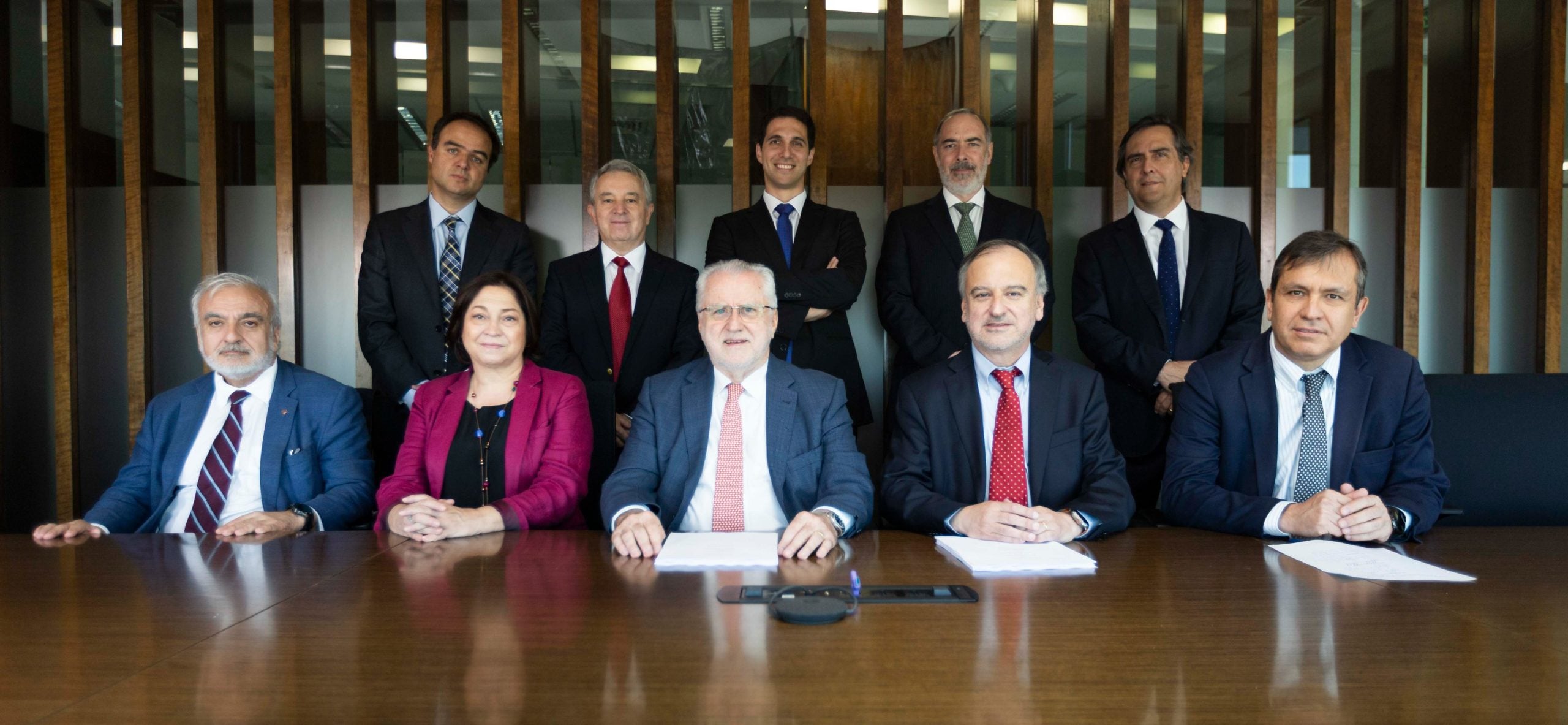
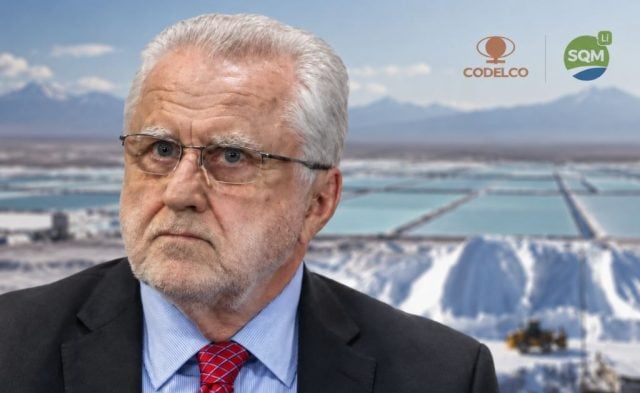
The National Copper Corporation of Chile (Codelco) and Chilean Chemical and Mining Society (SQM) have officially launched NovaAndino Lithium SpA, a joint venture dedicated to lithium exploration, extraction, production, and marketing in the Salar de Atacama for the next three and a half decades, until 2060.
This unprecedented entity in the country arises from the merger of Codelco’s Minera Tarar SpA and SQM Salar SpA, and is established as a public-private partnership with a state majority and leadership. The first meeting of the board, comprised equally of three representatives from each company, is scheduled for Monday, December 29.
According to CODELCO, the new company will consolidate all SQM’s lithium business assets, permits, international offices, technical knowledge, and human resources following a reorganization process between 2024 and 2025. The companies informed through a Fact of Importance to the Commission for the Financial Market (CMF) that the agreement guarantees operational continuity in the Salar de Atacama under current contracts with the Production Development Corporation (Corfo) that will be in effect until 2031.
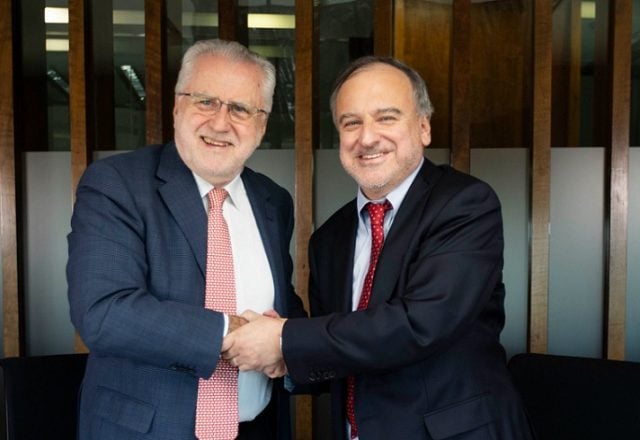
The chairman of Codelco’s board, Máximo Pacheco, described the move as «strategic» for the state to actively participate in producing a «key resource for the global energy and digital transition.»
A Long-Term Alliance
This culmination is the result of the Association Agreement signed on May 31, 2024, a process that, according to the companies, was reviewed by over 20 organizations and institutions both in Chile and abroad and included an extensive indigenous consultation led by Corfo. All agreement details have been made publicly available on the www.acuerdocodelcosqm.cl website. Ricardo Ramos, CEO of SQM, emphasized that the joint venture allows for «projecting the development of the Salar de Atacama» by combining «complementary capabilities for the benefit of Chile and global markets.»
As part of the partnership commitments, SQM transferred all of its mining concessions in the Salar de Maricunga to Codelco, significantly strengthening the state’s position in the area and enabling future projects. The companies also reported that the merger will have a positive and material impact on Codelco’s financial results for the end of 2025, which will be reflected in the financial statements as of December 31.
Controversy Over Direct Negotiation and Political Pressures
Despite the official announcement, the agreement has been shrouded in intense controversy. Deputy Cristián Tapia (IND–PPD), president of the Special Commission in the Chamber investigating the deal, has been one of the most vocal critics. In a interview with El Ciudadano, Tapia accused Codelco of trying to «impede» the formation of the investigative commission, suggesting that there were pressures for parliamentarians to withdraw their signatures from the request. «If Codelco has this attitude, it’s because they are hiding something,» the lawmaker asserted, also questioning the «urgency» to finalize the agreement before the current government’s term ends.
One of the most contentious points is the decision to engage in a direct negotiation with SQM, bypassing an international public tender. Tapia and other critics argue that under the current contract between Corfo and SQM, which expires in 2030, the state had two clear paths: to recover 100% of mining properties for direct exploitation or to call for an open tender. Instead, a bilateral negotiation was chosen. The deputy termed the official justification of avoiding a «productive valley» (disruption in production) as a «lie» and a «shame,» claiming it was technically dismantled by experts during parliamentary investigations.
Lack of Transparency, Audits, and a Procedural Flaw
The criticisms extend to the opacity in the process. Tapia revealed that during the investigative commission, Máximo Pacheco initially refused to disclose the advisory contract with investment bank Morgan Stanley, ultimately presenting it «redacted» (with censored information) and in English. According to the deputy, this contract, dated March 30, 2023, not only established a confidential payment using state funds but also contained incentives for Morgan Stanley to ensure the agreement with SQM was successful.
The controversy also reached the General Comptroller’s Office of the Republic. The oversight body, after receiving a request from the PPD bloc, initially signaled its intention to conduct a thorough audit. However, hours later, it issued an official letter conditioning the «taking of account» (approval) of the agreement, requesting Codelco to remove a clause regarding an SEC investigation in the United States. For Deputy Tapia, this is akin to «showing the way» to approve the contract, rendering a future audit that could take months useless. «What sense does it make to conduct an audit that will take seven or eight months… when the account has already been taken and the contract is set to be signed soon?» he questioned.
The legality of the process itself is called into question. In a letter addressed to El Mercurio and published by El Ciudadano, economist Manuel Cruzat Valdés outlines what he classifies as a «procedural flaw». He states that while Corfo is obliged to tender the lease of its mining properties upon expiration of the contract with SQM in 2030, Codelco does not have that obligation. Cruzat details the timeline: in May 2023, Codelco began direct negotiations with SQM; in October 2023, Corfo transferred the properties for lease to a Codelco subsidiary; and in December 2023, Codelco announced the agreement with SQM. The central question of the letter is: «Would the Corfo – Codelco agreement then be instrumental in avoiding a tender process that the former would be obligated to conduct?» If so, the entire operation would be flawed from the outset.
Thus, NovaAndino Lithium SpA emerges under the promise of a «new era for Chilean lithium,» but also under the shadow of accusations of a lack of transparency, questioned procedures, and what its detractors see as a perpetual transfer of the state’s strategic resources without competition and without maximizing benefits for the country.
Obtén tu Pasaporte y apoya a El Ciudadano
Elimina la publicidad, accede a contenido exclusivo y sé parte de la comunidad.
Cancela en cualquier momento · Sin permanencia