Original article: La alianza Codelco-SQM nace con deuda: Socio privado emite bonos por US$ 500M para su puesta en marcha
The historic public-private partnership set to shape Chile’s lithium future embarks on its journey burdened by significant financial weight. SQM, the private partner, is turning to international markets to incur debt in order to fund the implementation costs of this strategic agreement. Is this a promising or troubling start for the controversial partnership?
By Bruno Sommer
Far from celebrations and formal announcements, the alliance between SQM and Codelco reveals a stark financial reality: it urgently needs fresh capital. In a telling move, Sociedad Química y Minera de Chile (SQM) plans to issue hybrid bonds worth $500 million in international markets, marking its first foray into credit since September 2024.
The operation, confirmed by sources to Bloomberg, will begin promoting among investors this week, aiming explicitly to finance the rollout of the monumental agreement that, starting in 2025, will merge its operations in the Salar de Atacama with those of the state copper company in a long-term joint venture.
«In addition to incurring debt, SQM will lend money to Nova Andino lithium with an increase in rates, effectively acting as a bank,» a knowledgeable source told El Ciudadano.
The Fuel of Debt
The technical details reveal a pressing need. The issuance will consist of 30-year hybrid bonds with a five-year non-call period, an instrument that enables SQM to strengthen its balance sheet without dramatically increasing its debt ratio in the eyes of credit rating agencies. The funds will be explicitly allocated to refinance existing debt and for «general corporate purposes,» a euphemism for the colossal $2.7 billion investment program the company must execute over the next three years to meet the alliance’s goals.
«This issuance is proof that the agreement with Codelco does not come with a state check. The capital for the transition and expansion largely comes from the private partner’s debt,» noted an investment banker close to the operation.
The pact, celebrated as a triumph of public policy, establishes a clear operational asymmetry from day one:
Codelco contributes its extraction quota from the Salar de Atacama (a state asset) and its governance.
SQM contributes its technology and operations and crucially must mobilize most of the initial investment capital by turning to the international debt market.
«We are witnessing the financial baptism of the alliance, and it is with debt,» analyzed a sector specialist. «SQM is betting that the future cash flow from the joint venture, backed by the stability of the agreement until 2060, will be more than sufficient to cover the interest on this loan. It’s a wager on future lithium prices and the efficiency of the joint operation,» he concluded.
Risks on the Table
The decision is not without risks. Hybrid bonds typically have higher coupon rates than traditional corporate debt, compensating for their greater risk. This means that from its inception, the alliance will carry an additional financial burden that must be met with operational profits.
If lithium prices face a prolonged decline or if transition costs soar, the pressure on SQM’s cash flows – and by extension, the projected profitability of the joint venture – will be immediate. «It is a necessary step, but exposes the financial vulnerability of the model in its early years,» commented a credit analyst who requested anonymity.
The issuance, expected to finalize its terms in the coming days, marks the end of the design phase and the beginning of the concrete and costly execution of the public-private lithium model.
Obtén tu Pasaporte y apoya a El Ciudadano
Elimina la publicidad, accede a contenido exclusivo y sé parte de la comunidad.
Cancela en cualquier momento · Sin permanencia
Artículos Relacionados
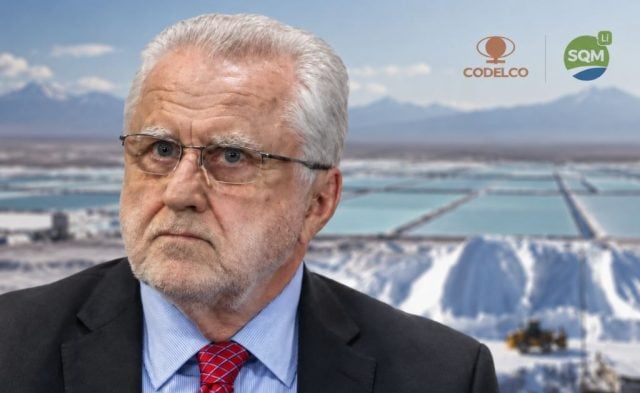
Expert Accuses Codelco-SQM Deal Under Máximo Pacheco of Data Manipulation for 2025 Closure
Hace 3 días