Original article: Corresponsales y periodistas advierten que retiro de señal de TeleSUR y Rusia TV en Bolivia genera sospechas sobre «inadmisible censura»
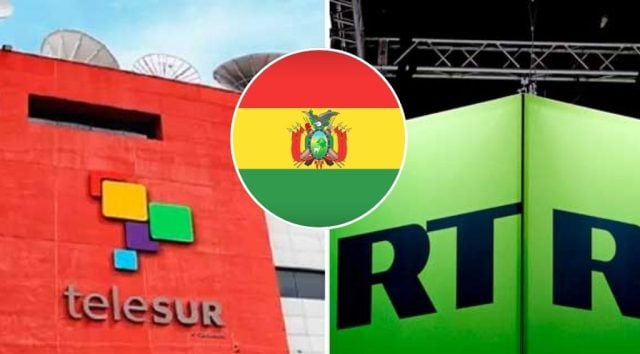
The International Correspondents Association (ACPI) and the National Association of Journalists of Bolivia (ANPB) expressed their concern regarding the decision by the National Telecommunications Company (Entel) to remove the signals of TeleSUR and Russia Today (RT) from their television services starting January 17, deeming it a potential act of censorship.
Entel announced the removal of TeleSUR and RT from its channel lineup, citing «administrative issues.» This decision has been characterized as «predictable and condemnable» by the multinational network’s leadership, igniting alarms among key journalist associations in Bolivia and foreign correspondents, who warn of «unacceptable censorship.»
In a notification dated January 15, Entel informed its users that «effective January 17, 2026, the channels Russia Today (204) and TeleSUR (206) will be removed from the IPTV, DTH satellite TV, and Entel TV Smart services due to administrative matters.»
The brief announcement by the organization, which justified its decision based on «administrative issues,» prompted an immediate response from teleSUR’s president, Patricia Villegas, who stated through her social media that the action is as «predictable as it is condemnable,» highlighting that there are «no reasons» for this step.
«What has been presented does not deceive anyone. Bolivia, you know it, we stand together!» she added, referencing potential political motivations.
Concerns Over ‘Unacceptable Censorship’ and ‘Curbs on Freedom of Expression’
In a joint statement, the ACPI and the ANPB expressed their apprehensions and issued a serious warning about the implications of this decision.
«We express our concern over the National Telecommunications Company’s (Entel) decision to remove the signals of TeleSUR (206) and Russia Today (204) from its fiber-optic TV and satellite services and the Entel TV Smart app starting January 17,» the document states.
The associations argue that this decision, which is justified on alleged administrative grounds that have not been properly detailed, infringes on the audiences’ right to receive a serious, transparent explanation in line with the responsibilities of a state-owned enterprise.
«The insufficient explanation provided both in the official company announcement and through customer service raises legitimate suspicions that this is an inadmissible act of censorship and a violation of freedom of expression,» they contended.
The concerns of the journalism guilds are not solely based on the opacity of the current announcement. The statement emphasizes that «this concern is reinforced by the history of similar situations that have occurred in Bolivia in previous years.»
Specifically, they referred to the situation in November 2019, under the transitional government of Jeanine Áñez, when Entel terminated the contract with TeleSUR, initially citing «technical problems» and later a «reorganization of the TV lineup.»
During that instance, a letter signed by the then-national customer manager of Entel stated: «According to the reorganization of the TV lineup, we inform you of our intention to terminate the General Conditions for transmitting the signal of the new Television of the South.»
The signal returned in November 2020, under the presidency of Luis Arce, who announced its return after a year off the air in the highland nation.
Restrictive Spiral and Call to Action
In their statement, the ACPI and ANPB go beyond the specific complaint and issue a warning about the danger of normalizing such actions.
«We also warn that the arbitrary silencing of media outlets and journalists can open a spiral of severe consequences for freedom of expression, extending censorship practices to levels that are challenging or even impossible to reverse,» they asserted.
According to these organizations, this situation «harms all of society and exposes media and journalists to the risk of future decisions being even more restrictive against those who do not align with official discourses.»
In response to this scenario, the associations issued a dual call. On one hand, they «urge the Bolivian government to fully guarantee freedom of expression, ensuring respect for the plurality of voices regardless of the types of actors involved, as well as the public’s right to access information through the channels they freely choose.» On the other hand, they «ask the bodies committed to defending freedom of expression to remain vigilant and actively accompany the process of deepening democracy in Bolivia.»
Obtén tu Pasaporte y apoya a El Ciudadano
Elimina la publicidad, accede a contenido exclusivo y sé parte de la comunidad.
Cancela en cualquier momento · Sin permanencia
Artículos Relacionados

Following Milei's Insults, Accredited Journalists Report Vandalism and Theft in Casa Rosada Press Room
Hace 2 semanas