Original article: Yemen impulsa proyecto de liberación, renacimiento y defensa de autodeterminación frente a intentos de dominación de Arabia Saudita y EE.UU.
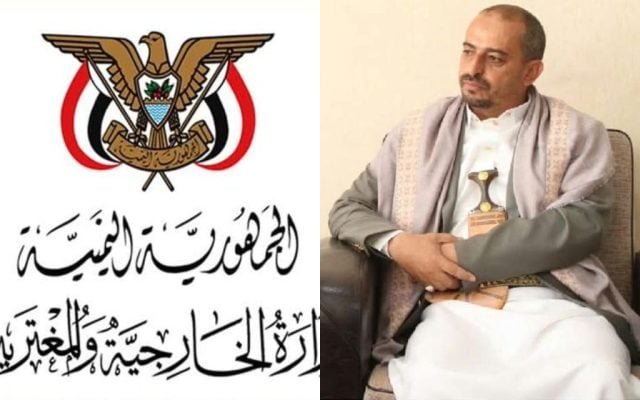
Acting Foreign Minister Abdulwahid Abu Ras emphasized that Saudi Arabia seeks not only control of the southern region but aims for overall dominance over Yemen. He highlighted that the recent military restructuring in the south and east exposes the Saudi strategy of «unification under guardianship» as a facade for political and territorial subjugation.
Yemen is not engaged in a mere internal conflict but is fighting a decisive battle for its self-determination against an international coalition determined to dominate it, stated Acting Foreign Minister Abdulwahid Abu Ras.
He pointed out that the «project for national liberation and rebirth» being advocated by the Yemeni nation directly conflicts with the interests of Saudi Arabia, the United States, and Israel.
The high-ranking Houthi official conducted an interview with journalists Lois Pérez Leira, the Executive Secretary of the Anti-Imperialist International of Peoples, and Santiago Masetti, discussing the plight of his country, which has suffered from what he termed «years of external aggression, economic blockade, and destabilization promoted from abroad.»
Abu Ras categorically dismissed the international narrative that presents the war as an internal conflict, clarifying that it is an open dispute for national sovereignty.
He denounced an imperial offensive aimed at halting the national liberation project, directly pointing fingers at the United States and Saudi Arabia as the primary actors in a regional domination strategy.
Abu Ras explained that Saudi Arabia seeks not just control over the south but aims for total domination of Yemen, arguing that their strategy of «unification under guardianship» is essentially a project of political and territorial subjugation designed to nullify Yemeni sovereignty.
«What exists is an open dispute for national sovereignty,» he insisted.
«Trump Will Not Achieve Any Progress in Yemen»
Rather than limiting the conflict to the Arabian Peninsula, Abu Ras indicated that Washington plays a central role in the conflict, attributing it logistical and intelligence support to the coalition led by Riyadh, as well as the stringent economic blockade imposed on Yemen.
However, he dismissed any chance of progress under an eventual administration of President Donald Trump.
«Trump will not be able to achieve any progress in Yemen,» he asserted, framing the confrontation with Washington in historical and ideological terms.
«It is a historical duty to confront American imperialism and arrogance in defense of future generations,» emphasized the Yemeni diplomat.
The Foreign Minister extended the scope of analysis, connecting the Yemeni experience with other global confrontation scenarios, particularly in Latin America. He specifically mentioned Venezuela, which on January 3rd experienced a series of military attacks by the United States, culminating in the abduction of constitutional President Nicolás Maduro and his wife Cilia Flores.
The Yemeni Project: Liberation, Rebirth, and Engagement with the Global South
In light of this offensive, Abu Ras presented the Yemeni resistance not merely as a defensive reaction but as the backbone of a national self-determination project.
He indicated that his country is pursuing a «project of national liberation and rebirth,» which prioritizes independence in decision-making and autonomous development, thus clashing with Saudi and Israeli interests, backed by the United States, triggering military aggression and economic stranglehold.
Consequently, he reaffirmed that the defense of self-determination has become the core of the country’s political and sovereign strategy.
Simultaneously, he highlighted that Yemen views Latin America as a key region, marked by a shared history of external interventions and struggles for sovereignty.
«There are common experiences and a mutual understanding against the same adversary,» he noted.
«It Is Not Just About Yemen»
Finally, the acting foreign minister called on global public opinion to look beyond media narratives aligned with imperialism.
He urged societies observing the conflict from abroad to «question the dominant information and understand that what is happening in Yemen is part of a global dispute.»
«It is not just about Yemen; it is about the right of peoples to decide their own destiny,» he warned.
Obtén tu Pasaporte y apoya a El Ciudadano
Elimina la publicidad, accede a contenido exclusivo y sé parte de la comunidad.
Cancela en cualquier momento · Sin permanencia