Original article: Encuentro del Papa con mineras reabre críticas por crímenes socioambientales impunes
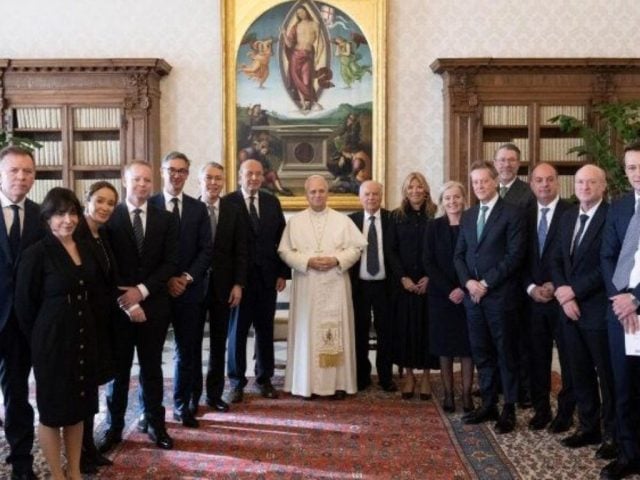
Against the backdrop of unpunished socio-environmental crimes, Pope Leo XIV welcomed leaders from transnational mining firms to the Vatican on January 24. Although the ‘Building Bridges Initiative’ aims to provide a space for dialogue on a just energy transition, the meeting was met with pain and rejection from pastoral networks throughout Latin America.
For victims of companies like Vale and BHP, it is contradictory that the Church extends its doors to those who prioritize profit over life, especially as anniversaries of tragic events caused by these companies are being commemorated.
What Happened at the Meeting?
The Church emphasized that the goal of the meeting was to encourage socio-environmental dialogue, aiming to shift the mindset of “extractors” toward becoming “guardians.” They asserted that mining should not be an end in itself, but rather a commitment to the common good that promotes human fulfillment and reduces the risk of environmental collapse.
The meeting employed a method of listening and direct dialogue, where the dilemmas of the energy transition and the inevitable role of mining were discussed, with natural gas presented as a bridging energy source. Vatican representatives noted a shared commitment to reject extractive models that do not generate real benefits for local communities and valued the informed engagement of the Pope.
The Legacy of Mining Exploitation in Latin America
The commemoration of the seventh anniversary of the Brumadinho disaster—a dam collapse in southeastern Brazil that resulted in 272 fatalities—serves as a reminder of one of the most serious socio-environmental crimes in the region, illustrating the devastating consequences of predatory mining, capable of annihilating territories and communities for economic profit.
In this context, concerns arose regarding the meeting between Pope Leo XIV and energy and mining sector executives just ahead of this commemoration. Pastoral organizations warn that such events are often used by companies to enhance their image and seek social legitimacy, particularly in areas facing community resistance.
Communities and pastoral agents accompanying mining victims denounce attempts to co-opt religious leaders and reject the notion of the Church acting as a mediator without first listening to those suffering the impacts. They insist that dialogue is only legitimate when it stems from a preferential option for the poor and victims, many of whom have been persecuted or killed.
Ecclesiastical networks in Latin America have reiterated their rejection of violent extractive mining and corporate strategies seeking institutional support in the absence of real sustainability. In this light, they urge the Church not to adopt neutral stances but to ally with communities and the protection of creation.
Ultimately, they called upon the Pope to meet directly with mining victims and the religious leaders accompanying them, listening to their proposals and alternatives for living in harmony with nature. The plea is to reject false solutions and pursue models that ensure socio-environmental justice and a dignified future for upcoming generations.
Which Companies Participated?
First on the list is BHP, responsible for numerous ecological disasters, including the collapse of the Fundão dam in Mariana, Brazil, which unleashed a massive flow of toxic sludge that severely impacted the Doce River in 2015.
The disaster resulted in the deaths of 19 individuals and the complete devastation of communities, affecting businesses, over 30 municipalities, and several communities, leaving about 600 people homeless. It also killed 14 tons of freshwater fish and damaged 600 kilometers of river, which has yet to recover.
Also present was Vale, implicated in catastrophic environmental disasters in Brazil, ranging from dam collapses with hundreds of casualties to recent allegations of heavy metal contamination in rivers and Indigenous communities, raising doubts about large-scale mining.
Joining them was Ivanhoe Mines, which has faced severe environmental impacts at the Kamoa-Kakula mine in the DRC, where seismic-related floods prompted closures and exposed the fragility of mega-mining, which is also associated with forced displacements and human rights violations.
Additionally, Rio Tinto attended, a company with a history of serious socio-environmental damage, including the Panguna mine in Papua New Guinea, whose impacts even led to armed conflict, now raising concerns in Chile regarding its lithium project expansions and ties to the government.
Mercuria was also present, a Swiss commodity trading giant criticized for its low tax burden; in 2025, it reported profits of $1.3 billion while paying only 0.08% in taxes, according to Bloomberg.
The meeting also included Sigma Lithium, facing allegations in Brazil’s Jequitinhonha Valley of environmental and social damages, including deforestation, lack of community consultation, and lawsuits over contamination, health issues, water scarcity, and property damage.
Present was Pilbara Minerals, lithium producers in Western Australia, under scrutiny for high water consumption, tailings management, and carbon footprint, with impacts on Indigenous communities and biodiversity; concerns mirrored in their operations in Brazil and Chile.
Another company represented was Lundin Mining, which has faced labor and social conflicts in Chile and Argentina, alongside criticisms over negligence and a history of investigations tied to war crimes in Sudan, with its projects in San Juan raising alarm over water use and environmental impacts.
The meeting also featured Ganfeng Lithium, a key player in China’s strategy for critical minerals, facing conflicts in Latin America over labor issues, environmental impacts, high water usage, and community disturbances, particularly in Argentina and Mexico.
Pan American Energy also attended, facing environmental scrutinies in Argentina due to fracking and pollution episodes, with allegations regarding risks to Lake Mari Menuco—a water source for over 600,000 people—hydrocarbon leaks, and impacts on Mapuche communities and fishing.
Also present was Integra Capital, facing socio-environmental criticisms in Argentina for lithium projects linked to water stress and wetland damage, while in Peru it faces repeated sanctions for contamination and environmental non-compliance, despite state benefits and debt forgiveness.
Attending was Corporación América, linked to the «notebooks of bribes» scandal following judicial confessions regarding payments to former officials and its closeness to President Javier Milei, raising concerns about corporate influence in politics.
Lastly, the event included the presence of the Inter-American Council for Commerce and Production (CICyP), criticized for promoting intensive agro-industrial models associated with deforestation, biodiversity loss, and high environmental impacts, particularly in the Amazon.
From the affected communities, the call is for the Church to first listen to mining victims and those supporting their struggles, emphasizing that without truth, reparations, and socio-environmental justice, discussions about energy transition or care for creation are futile.
Relacionados
Right-Wing Leaders Unite in Quito: Jerí and Noboa to Lead Binational Cabinet Focused on Security and Border Issues
Hace 2 meses
COP30 Kicks Off With Powerful Protests: Environmental Advocates Raise Their Voices in Belém
Hace 3 meses
Argentina's Patagonia on Alert: New Legislation May Allow Chile's Salmon Farming Crisis in Tierra del Fuego
Hace 2 meses