Original article: «Una agresión de EE. UU. a Irán es un ataque a los BRICS y al mundo multipolar», señala analista geopolítico iraní
According to Mohammad Marandi, a professor at the University of Tehran, the U.S. is desperately trying to preserve its empire.
By Marco Fernández. Original publication in Portuguese at Brasil de Fato.
Just after the kidnapping of Venezuelan President Nicolás Maduro and his wife, First Lady Cilia Flores, in the early days of the year, the White House directed its regime change machinery towards another energy power: Iran. Nearly 47 years after the Islamic Revolution, this has always been a thorn in the side of the U.S. and primarily Israel.
Tehran is the world’s biggest supporter of the Palestinian cause and, effectively, the largest obstacle to the Zionist project of a ‘Greater Israel’, which presupposes the expulsion or extermination of the Palestinian people from their land. Therefore, toppling the Iranian revolutionary government has always been a priority for Washington and Tel Aviv.
Like Cuba, Iran is also a target of severe sanctions from the West, imposed in various waves since the revolution that ousted the Shah Reza Pahlavi. These sanctions have caused immense damage to its economy and its people, and since October, they have been exacerbated by a new round imposed through the United Nations (UN).
Furthermore, the U.S. has admitted to conducting financial attacks aimed at devaluing the Iranian currency in recent months, creating enormous economic pressure, which initially led to legitimate and peaceful public protests.
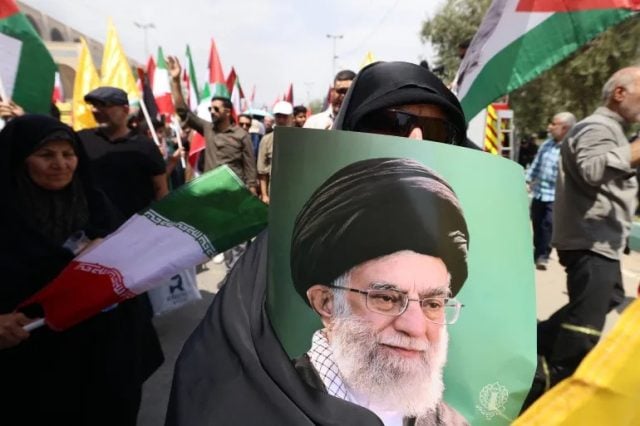
However, after a few days, particularly on January 8 and 9, these protests were infiltrated by agents organized by external forces from the U.S. and Israel (as both publicly acknowledged), resulting in significant destruction and casualties on the streets, and were met with a strong crackdown by Iranian security forces. In reaction, massive pro-government demonstrations took place on January 12.
Since then, the U.S. has been deploying numerous military forces to the region, and Trump spent days threatening to bomb Iran. However, in recent days, he appears to have backed off after Iranian threats indicated that a U.S. attack would result in a regional war. A first round of negotiations between the U.S. and Iran took place last Friday (the 6th) in the United Arab Emirates, seemingly without any significant results. Both countries have stated they are discussing the possibility of a second round of negotiations.
To analyze this situation, Brasil de Fato spoke with Mohammad Marandi, a professor of English literature at the University of Tehran and a leading voice in geopolitical analysis regarding Iran on Western channels.
Marandi is the son of an influential figure in the Islamic revolutionary movement, pediatrician Alireza Marandi, who served as Minister of Health of the Islamic Republic on two occasions. He was born in the U.S., where he lived until the age of 13, as his family was exiled fleeing the dictatorship of Shah Pahlavi.
Shortly after returning to Iran at age 16, Marandi volunteered to fight in the war against Iraq, where he narrowly escaped death four times – having been shot twice and targeted by chemical attacks twice.
Marco Fernandes: In recent days, the U.S. sent its navy to the Persian Gulf region, and Trump threatened to attack Iran, attempting to force negotiations for the country to suspend its nuclear program, relinquish its ballistic missiles, and cease supporting Palestinian resistance in the region. What are the chances of negotiations under these terms? What is the Iranian government willing to negotiate?
Mohammad Marandi: The Iranian position is quite clear. In reality, it is clear that they are not going to negotiate their military capabilities. Therefore, their missile program is off the table. They will not negotiate their regional alliances. Hence, those are also off the table.
The nuclear program is something Iran is willing to discuss, but not the enrichment itself. That is also out of the question. What can be negotiated is a mechanism to ensure that Iran’s nuclear program is peaceful. This is something we have done before, and which Trump himself destroyed: the JCPOA [Joint Comprehensive Plan of Action]. So that is what Iran is prepared to negotiate.
Of course, Iran will expect a much better deal at the negotiation table than the one from 2015. Because Iran has advanced since then and was betrayed by the U.S.’s violation of this agreement. Iran has suffered because of it. Therefore, the only thing truly open for negotiations is a structure under which Iran’s uranium enrichment program can operate while addressing the potential concerns of Western nations.
MF: The Iranian government has recently responded that any attack on the country will be met with a regional war against the U.S. and its allies. If this happens, what are the potential military and economic consequences of a regional conflict? The Wall Street Journal published an article stating that Trump backed down from an attack at this time due to insufficient defense for his allies in the region in case of an Iranian counterattack. How do you evaluate this statement?
MM: Yes, that’s a position that the Iranians have articulated, and they will definitely follow through with what they said they would do. If the U.S. attacks Iran, even if it is a limited attack, the Iranians will respond with all of their strength. Iran will not accept aggression and will not allow the U.S. to feel emboldened to commit further aggression. Therefore, if the U.S. decides to attack Iran, there is no doubt that the U.S. will suffer a very strong counterattack.
The recent protests, which began over a legitimate economic issue – the devaluation of the rial – were clearly exploited by external forces, such as the Mossad (acknowledged by Mike Pompeo and Israeli authorities), to destabilize the revolutionary government. Western media have fanned a ‘scandal’ over the supposed thousands of deaths attributed to the repression of the protests, yet there is no mention of the number of police and officials killed by foreign intelligence agents. What really happened during those days?
It is quite clear what happened. The West is inventing a narrative. They carried out a conspiracy against the country, first pressuring the rial, something the U.S. Treasury Secretary has admitted to twice and even boasted about. Then, there were peaceful protests with no arrests or police persecution. But after a few days of protests, which were not very large, we saw a sudden influx of demonstrators, provocateurs, and well-trained terrorists. They killed a large number of police on the night of Thursday, January 8. And on January 9, the police and security forces confronted them. In total, 3,117 people died, including police and many innocent bystanders who were targeted by these terrorists to increase the toll to justify U.S. intervention.
And, indeed, as you pointed out correctly, the Mossad admitted its role. They issued a statement in Persian claiming they are on the ground. [Mike] Pompeo, the former Secretary of State during Trump’s first term, stated twice in a tweet, and also on Channel 13 in Israel, that the U.S. and Israel are on the streets with the demonstrators. Furthermore, Channel 14 in Israel reported that they brought weapons into Iran, resulting in the deaths of hundreds of police officers.
After that, we witnessed a media campaign from Western outlets with absurd numbers, basically to justify war. The Iranian government published the number of casualties and the names of each person, along with their identification details. Overall, Western media ignored this, not even providing a response. But the U.S. and the West lack the conditions to provide alternative numbers, because they simply fabricate figures.
MF: The U.S. Treasury Secretary, Scott Bessent, recently boasted publicly about a financial attack on the Iranian currency, which reportedly caused a sharp devaluation of the rial. Besides this supposed ‘financial attack’, have the new sanctions imposed by the U.S. and the EU through the UN, using the snapback mechanism after the JCPOA negotiations collapsed (since October), had any effect, making foreign trade even more difficult for Iran? How severely has the economic war imposed by the West impacted the Iranian economy?
MM: The snapback mechanism largely failed because the Russians and Chinese refused to recognize it. The U.S. and Europeans coordinate with each other, and also with certain countries in the region to exert pressure on other entities, other countries. So, we have decades of sanctions and maximum pressure sanctions. We’ve had them for years. But this was a coordinated effort to suddenly collapse the currency to initiate and inflame violent unrest.
As I said, during those riots, those protesters acted like ISIS. They burned 15 people alive. They destroyed hundreds of banks. In just 48 hours, they literally destroyed hundreds of expensive ambulances and fire trucks, public buses, and hundreds of educational centers and libraries, as well as numerous mosques. It was extraordinary how quickly they acted and how well-trained they were to carry out that operation.
MF: In summary, why does the U.S. continue to seek to overthrow the Islamic revolutionary government after nearly 50 years, despite having failed thus far?
MM: In reality, there are two reasons. One is that after the revolution, Iran became independent of both the Western bloc and the Eastern bloc, and that independence was something that neither the U.S.-led bloc nor the Soviet Union and its bloc appreciated. Therefore, they cooperated against the country.
After the fall of the Soviet Union, the U.S. continued to antagonize Iran. Additionally, Iran’s support for liberation movements around the world, including in South Africa, Latin America, and certainly in Palestine, has also been a primary reason for their hostility. The liberation movement that bothers the U.S. the most is that of the Palestinian people. Even now, that is the main reason for U.S. hostility toward Europe.
MF: Both Western governments and media have promoted the son of the former Shah Reza Pahlavi as a possible ‘option’ in any potential regime change operation. Mr. Pahlavi has been out of Iran since the revolution. How is his popularity in the country currently?
MM: He is not popular among the Iranian people. He has not lived in the country for the last 50 years. His father and grandfather were extremely corrupt, and his father created the feared secret police SAVAK. When the revolution occurred, they stole billions of dollars and took them abroad. Today, he is often seen with Netanyahu and is calling on Israelis and Americans to bomb Iran. Obviously, a person like that will not have support among ordinary people. He is also somewhat of a ridiculous figure, and his family faces many problems that are constantly mocked by ordinary Iranians. Therefore, he lacks legitimacy and popular support. He is merely a tool of the empire to mobilize its resources against the country.
MF: What has been the role of Iran’s strategic partners, China and Russia, during the tense weeks of U.S. attacks and the Zionist regime? Are they supporting Iran economically or militarily? To what extent can an attack on Iran at this moment be interpreted as an attack on BRICS?
MM: The Russians, Chinese, and Iranians cooperate extensively. They have broad commercial and economic relations. They do not provide assistance in the sense of giving something to Iran for free. Iran purchases what it needs from Russia and China, particularly from Russia. The cooperation is very close. Russia also buys what it needs from Iranians, both militarily and civilly. Trade routes among the three countries are also expanding. The north-south corridor between Iran and Russia and the New Silk Road with China are advancing.
Relations with Russia have evolved more swiftly in some respects, because both countries are under total sanctions, which facilitates cooperation. However, due to China’s weight, the relationship with China is obviously very important. And yes, there is no doubt that an attack on Iran is an attack on BRICS. It is an assault on a multipolar world. The U.S. is desperately trying to preserve its empire.
MF: A common critique from progressive and anti-imperialist circles in Latin America of Iran is to label the country as a supposed ‘theocracy’, given that the head of state is the Supreme Leader, an ayatollah. At the same time, Iran conducts democratic elections for both president – involving a rotation of different political orientations – and for the Parliament. How would you characterize Iran’s political system?
MM: I believe that in Latin America, the left is often influenced by Western narratives. Therefore, they are often mistaken about Iran. Iran is an Islamic Republic and, thus, is not a theocracy; it is an Islamic democracy. All democracies have their limitations, and an Islamic democracy is also a limited democracy. Of course, I do not consider Western countries to be democratic. And I think that, after Epstein, it became quite clear that the West is governed by the ‘Epstein class’. And democracy is just a façade.
But in Iran, the leader is elected by an assembly of experts. He can be dismissed by this assembly. We have the president and the parliament, both of which are elected by the people, and there are local elections for cities and municipalities. There are also elections overall. It is not a utopia, but Iran is much more open and democratic than the U.S. allies in our region. As I said, the West has exposed itself for what it really is, especially after Epstein.
MF: The revolution is nearing its 50th anniversary and has shown impressive resilience, being targeted by the U.S. from the very first day of the popular movement that led to the revolution. For instance, consider the development of science, where Iran has achieved significant milestones (pharmaceuticals, military advancements, nuclear program, etc.), despite the heavy sanctions imposed by the West. What do you believe are the main achievements of the revolution for the Iranian people after almost half a century of resistance and attempts to build a sovereign path for their country?
MM: Iran has achieved much under maximum pressure sanctions and the war that the U.S. and the West imposed on Iran through Saddam Hussein and, more recently, through Israel, and despite the terrorism that the West has inflicted upon the country. We see that the country has made significant advancements in high technology, and I believe its defense capabilities reflect that. The very fact that Iran has been able to defend itself against the joint attacks of the U.S. and Israel and has been able to respond in a way that forced them to retreat demonstrates, in my opinion, the broader capabilities of Iran as a technologically advanced nation.
The universal education in Iran, which was very low before the revolution, especially for women, is now among the highest in the world, both in school and university levels. If there were no sanctions, Iran today would likely be ahead of most developed nations in the Global South, and even many Western countries. Under wars, terrorism, and sanctions, Iran achieved so much. Therefore, I believe that with the rise of BRICS and the decline of the Western Empire, the coming years will be easier for Iranians to develop, and we hope to have the opportunity to address shortcomings that we have today as a result of global powers’ hostility.
Translated by Javier Pineda.
Obtén tu Pasaporte y apoya a El Ciudadano
Elimina la publicidad, accede a contenido exclusivo y sé parte de la comunidad.
Cancela en cualquier momento · Sin permanencia