Original article: El tío de Donald Trump que evaluó los documentos incautados de Nikola Tesla tras su muerte
Following Nikola Tesla’s death, it was John G. Trump, the uncle of future U.S. President Donald Trump, who was tasked with reviewing the documents of the revolutionary scientist. The connection between John George Trump and Nikola Tesla has sparked curiosity and speculation ever since.
In January 1943, as the world was embroiled in war and the United States closely monitored any technological advancements that could disrupt military balance, one of the most enigmatic inventors of the 20th century passed away in New York: Nikola Tesla. Just hours after his death, federal agents entered his room at the New Yorker Hotel and confiscated his technical belongings, labeling various documents as classified.
The electrical engineer John G. Trump, Donald Trump’s future uncle, was chosen to evaluate those papers. This is the story.
By Bruno Sommer
A MIT Scientist Specializing in High Voltage
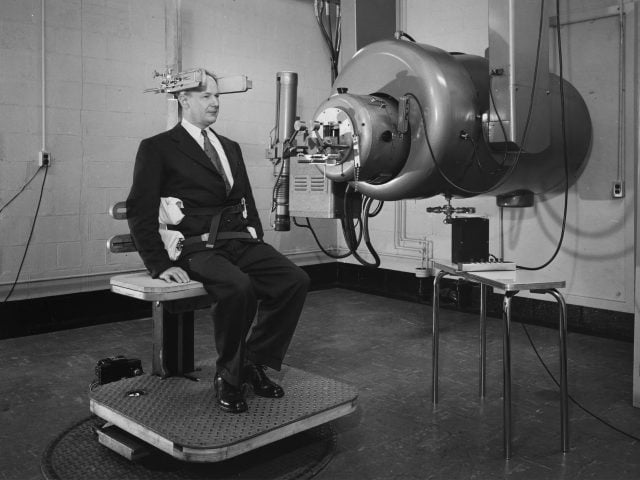
John George Trump (1907–1985) was a professor at the Massachusetts Institute of Technology (MIT), where he built a distinguished career in electrical engineering. His specialties included high voltage, electric generators, and technologies related to radiation.
During World War II, he participated in research linked to radar and medical applications of X-rays, both strategic fields for U.S. defense. Unlike the political and business profile of his controversial nephew decades later, Trump was grounded in the academic and scientific realms, enjoying a well-respected technical reputation.
Upon Tesla’s death, Trump was appointed to analyze the scientific documents to determine if they contained practical developments of strategic military value. At the time, sensationalist press reports suggested that Tesla was on the verge of developing a «Death Ray.»
After reviewing the material, he created a report that primarily concluded there were no functional devices ready for military application among the documents and that many ideas were theoretical or speculative. He added that, ultimately, there was no evidence of an operational weapon as described by Tesla in interviews with the media of the time.
His evaluation was pivotal in history; the government deemed the papers did not pose an immediate threat to national security. At least, that was the official version.
The Office of Alien Property: Control During Wartime
The seizure of Tesla’s documents was managed by the Office of Alien Property Custodian (OAPC), a federal agency established during World War I and reactivated during World War II.
The agency’s role was to control property belonging to citizens identified as «enemy aliens,» manage properties and assets that could pose a strategic risk, and prevent sensitive technologies from falling into enemy hands, among other responsibilities.
Although Tesla had lived in the United States for decades and had become a U.S. citizen in 1891, his Serbian origins and the war context prompted authorities to act cautiously in monitoring him.
The OAPC collected the documents, classified them after his death, and requested a technical evaluation by John G. Trump before deciding on the fate of the documentation.
The Report from Donald Trump’s Uncle
Federal Bureau of Investigation
Department of Justice of the United States
Washington, D.C.
January 11, 1943
MEMORANDUM FOR MR. LADD
SUBJECT: NIKOLA TESLA
DECEASED – JANUARY 7, 1943
The Office of the Alien Property Custodian reported that Nikola Tesla, the inventor, passed away on January 7, 1943, at the New Yorker Hotel in New York City. Due to the possibility that some of his documents might contain ideas of value for enemy nations, particularly in light of Tesla’s recent statements regarding a «death ray,» it was decided that his belongings should be examined.
On January 8, 1943, Special Agents from the New York Office took possession of Tesla’s personal effects, including trunks and documents located in his hotel room.
The items were made available to Dr. John G. Trump, Professor of Electrical Engineering at the Massachusetts Institute of Technology and Technical Advisor to the National Defense Research Committee, who was tasked with examining the documents to determine if they contained ideas of importance for the current war effort.
Dr. Trump examined the material on January 8 and 9, 1943.
Dr. Trump reported that he found no evidence that the documents contained new, solid, or practical principles for achieving the results that Tesla had described. He noted that Tesla’s thoughts and efforts over the previous fifteen years were primarily speculative, philosophical, and somewhat promotional, often relating to the wireless production and transmission of energy but did not include new, solid principles or practical methods to achieve such results.
Dr. Trump stated that, while the documents included theoretical discussions on various possible developments, there was no indication of practical devices or viable plans that could be utilized at this time.
It is suggested that the property be turned over to the Alien Property Custodian for disposition.
Where Did Tesla’s Papers End Up?
After the official review, a significant portion of the material was eventually handed over to Tesla’s family, specifically to his nephew, Sava Kosanović, a Yugoslav diplomat.
Over time, most of those documents ended up in Belgrade, where they are now part of the archive of the Nikola Tesla Museum.
Here, manuscripts, blueprints, correspondence, and personal objects of the inventor are preserved. The museum hosts tens of thousands of original documents.
However, some researchers argue that certain files may have remained within U.S. agencies, although there is no conclusive public evidence of revolutionary technology being retained in secrecy.
Notably, statements from Donald Trump in recent weeks mention a new secret weapon called «The Discombobulator,» which he bragged about using during the kidnapping of Venezuelan President Nicolás Maduro.
It was Trump himself in an interview published Friday by the New York Post regarding reports that the U.S. possesses a directed energy weapon who stated, «We have ‘The Discombobulator.’ I’m not allowed to talk about that.»
By Bruno Sommer
Obtén tu Pasaporte y apoya a El Ciudadano
Elimina la publicidad, accede a contenido exclusivo y sé parte de la comunidad.
Cancela en cualquier momento · Sin permanencia