Original article: Irán anuncia ataque a petrolero de EE.UU. y afirma control del Estrecho de Ormuz en tiempos de guerra
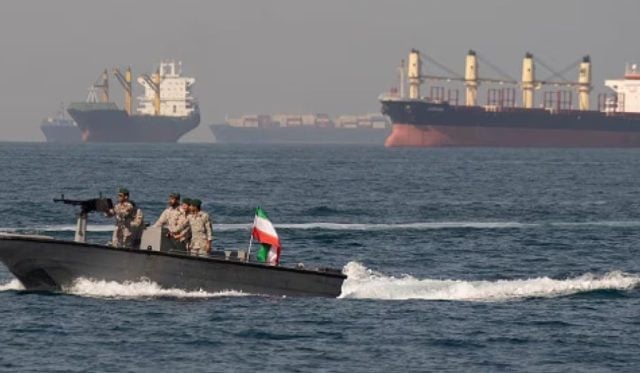
In a move that could have severe repercussions for the global economy, the Iranian Revolutionary Guard announced on Thursday that it successfully carried out an attack on a U.S.-flagged oil tanker in the northern waters of the Persian Gulf.
This operation, confirmed in an official statement by the public relations arm of Iran’s elite military force, not only represents a response to the U.S. government’s actions under President Donald Trump and Israeli Prime Minister Benjamin Netanyahu regarding their joint aggressions against Tehran, but also comes with a broader geopolitical declaration: the proclamation of effective control over the strategic Strait of Hormuz during wartime.
The statement asserts that this action is fully compliant with international regulations and resolutions.
According to the military body’s announcement, reported by Al Mayadeen, “all parties must heed the prior warnings issued against the passage of military, commercial, and other vessels associated with the United States, ‘Israel’, European countries, and their allies,” making it clear that the interdiction extends beyond warships to include all merchant and civilian vessels with links to Washington, Tel Aviv, and their allies.
Additionally, they confirmed that military forces are maintaining vigilance and will attack any vessel attempting to illegally traverse the maritime passage.
In a conversation with El Ciudadano’s morning program, journalist and international analyst Pablo Jofré Leal outlined the potential impact of a complete closure of the strait.
“The total closure of the Strait of Hormuz is critical,” he stated, emphasizing this maritime route through which approximately one-fifth of the world’s oil and liquefied natural gas flows, positioned between Iran and Oman, and essential for exports from countries like Saudi Arabia, the United Arab Emirates, Kuwait, and Iraq.
In response to President Donald Trump’s statements, promising to escort ships wishing to transit the strait, the analyst suggested a disparity between the threat and actual action.
“Just a day before the declaration of total closure, the occupant of the White House, Mr. Trump, claimed they would escort any ship wanting to cross the Strait of Hormuz. One thing is to say it; another is whether they will actually do it,” he remarked.
The strategic importance of the Strait of Hormuz is such that its blockade, according to Jofré’s analysis, could cause seismic disruptions in regional security, triggering a global energy crisis since nearly all Middle Eastern oil production passes through this maritime route.
“There is a latent threat of a situation that can escalate from tense to direct action, which would undoubtedly create an even greater fracture in the region’s security levels. They no longer have it, but it would increase to a maximum level, as it involves oil and gas, so I believe that deserves attention,” he warned.
Iran: «We Will Not Allow a Drop of Oil to Leave the Region»
In parallel to the naval confrontation, Iran has opened a second front against U.S. and Israeli critical infrastructure, demonstrating its capability to project power beyond its maritime borders.
The Iranian military has expanded its operational reach northward, detailing in its twelfth war report, as part of Operation «True Promise 4,» the launch of drones against targets in Israeli territory.
According to the military report, the unmanned aerial vehicles struck fuel tanks located at Ramat David Air Force Base, one of the main installations of the Israeli Air Force, situated in the northern occupied Palestinian territories.
This synchronized attack aims to dismantle the energy and military logistics of the Zionist regime, striking at its fuel reserves deep within its defensive apparatus.
The Revolutionary Guards also identified their adversaries’ pipelines as legitimate targets for attacks.
«We will not allow a drop of oil to leave the region,» they asserted, as reported by Al Mayadeen.
